DbcultAccessing Vault...
Cult Review
Senior Film Conservator
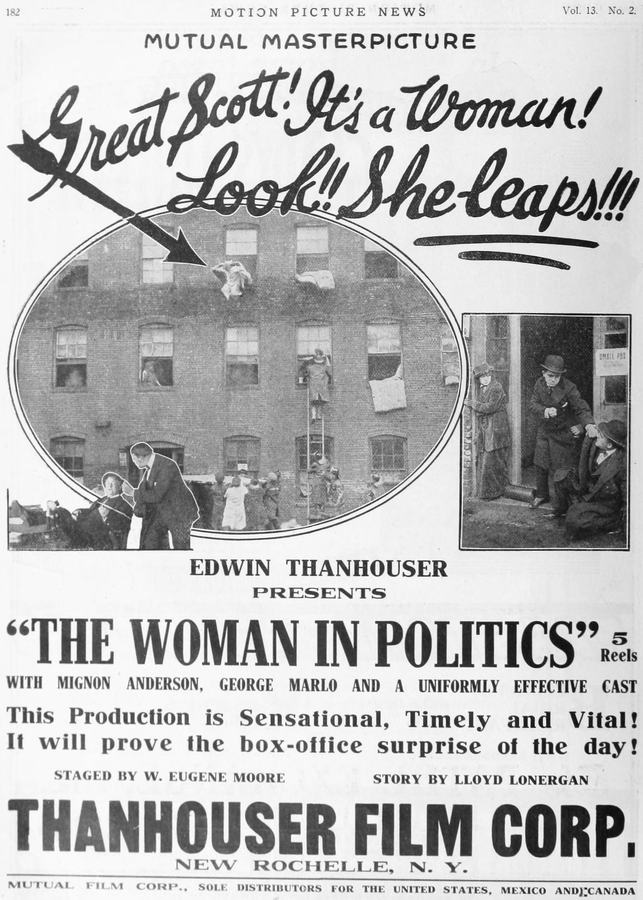
In the annals of early cinema, few narratives capture the zeitgeist of social reform and individual courage with the same unflinching intensity as 'The Woman in Politics'. This 1916 production, a potent blend of melodrama and social commentary, thrusts its protagonist, Dr. Beatrice Barlow, into the heart of a city riddled with corruption and public health negligence. It's a testament to the era's burgeoning awareness of civic responsibility, a cinematic clarion call against the shadowy machinations of power that sought to prioritize profit over human welfare. The film, penned by Philip Lonergan, transcends mere entertainment, offering a mirror to the societal struggles of its time, echoing themes that, disquietingly, continue to resonate in contemporary discourse.
At its core, the film is a magnificent showcase for Mignon Anderson, whose portrayal of Dr. Barlow is nothing short of captivating. Anderson imbues Beatrice with a formidable blend of intelligence, conviction, and an almost revolutionary tenacity. Her character is not merely a figurehead for progress; she is an active, dynamic force, challenging the patriarchal and corrupt structures that seek to silence her. When Dr. Barlow, newly appointed to the city health commission, discovers the egregious conditions of a tenement – a slum owned by the unscrupulous Mayor Glynn – her professional integrity demands action. Her subsequent denouncement of the property as unsafe and unsanitary is met not with reform, but with swift and ruthless retaliation: her summary dismissal. This initial confrontation sets the stage for a protracted battle, transforming a public health advocate into an unwitting crusader for justice. Anderson's nuanced performance, relying on the expressive power of silent film acting, conveys a spectrum of emotions from righteous indignation to quiet resolve, making her a truly compelling figure.
The antagonist, Mayor Glynn, personifies the insidious nature of political graft, a character whose influence extends beyond municipal office to control the very channels of public information. The revelation that the city's newspaper is also under Glynn's dominion underscores the pervasive reach of his corruption, effectively stifling any local avenue for Dr. Barlow to expose his misdeeds. This portrayal of a controlled press is particularly prescient, highlighting the fragility of democratic institutions when truth-telling is suppressed. S. Charles Gould as Mayor Glynn delivers a performance that, while typical of the era's villain archetypes, effectively conveys a sense of entitlement and moral bankruptcy. His disdain for public welfare, his casual use of power to enrich himself, and his readiness to crush any opposition paint a stark picture of the challenges faced by reformers.
Barlow's strategic pivot, writing directly to the governor, demonstrates her resourcefulness and unwavering commitment. The granting of a hearing, scheduled for the following month, offers a glimmer of hope, but the interim period is fraught with peril. The narrative escalates dramatically with the discovery of a smallpox case within the very tenement Barlow had condemned. Her desperate, albeit unsuccessful, attempts to enforce a quarantine are met with resistance, culminating in a physical struggle with a health official. This scene is a visceral depiction of the uphill battle against systemic obstruction, a moment where abstract policy becomes a desperate, hands-on fight for survival. The sudden appearance of a mysterious man, who intervenes to thrash the official and aid Barlow, introduces an element of clandestine heroism, hinting at a broader network of justice operating in the shadows. This anonymous protector, later revealed to be the governor's private secretary, Arthur Bauer, becomes a pivotal figure, a deus ex machina who consistently arrives to steer the narrative away from disaster.
The film delves into the ugly tactics of political smear campaigns, a tactic that feels chillingly contemporary. Glynn and his cronies, unable to defeat Barlow on merit, resort to personal defamation, hiding a man in her hotel room to compromise her reputation. This calculated attempt to discredit a woman by destroying her moral standing is a powerful commentary on the vulnerability of female figures in public life, a theme that resonates perhaps even more strongly today. However, the vigilance of Barlow's enigmatic ally foils this nefarious plot, adding another layer to his protective role. The rapid succession of dramatic events – the tenement catching fire, Barlow's heroic rescue by the mysterious man, her subsequent lure to a sanitarium, and her unjust imprisonment – maintains a relentless pace, keeping the audience on the edge of their seats. These moments, though heightened for dramatic effect, speak to the extreme lengths to which corrupt powers will go to silence dissent and the profound isolation experienced by those who dare to challenge the status quo. The sanitarium sequence, in particular, evokes a sense of gothic dread, reminiscent of the forced institutionalization often used to silence women deemed inconvenient or 'hysterical' in that era. It's a stark reminder of the vulnerability of individuals when confronted by an all-powerful, unscrupulous system. This aspect of the plot could even draw a thematic parallel with the psychological torment and isolation found in works like The Picture of Dorian Gray, though here the imprisonment is physical rather than purely moral.
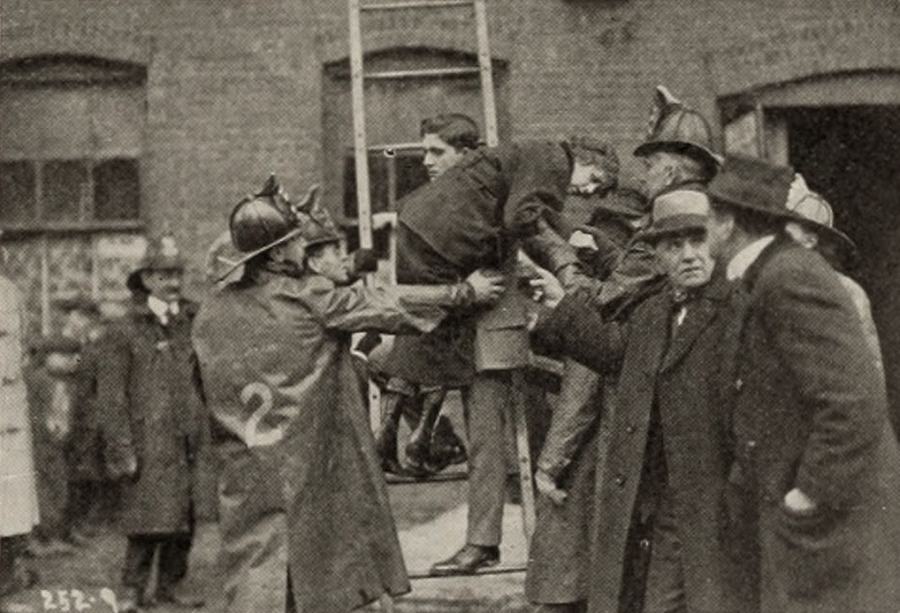
The climactic sequence is a masterclass in silent film suspense. The mysterious man's relentless pursuit, his dramatic discovery of Barlow's imprisonment, and the subsequent arrest of her keepers are executed with precision. His ability to bring her to the gubernatorial hearing just in time, allowing her to present irrefutable evidence against Mayor Glynn, provides a cathartic release. The mayor's imprisonment signals a triumph of justice, a moment of societal cleansing that the audience, by this point, fervently desires. The final revelation of the rescuer's identity – the governor's private secretary – ties all the narrative threads together, providing a satisfying resolution and validating the notion that even in the darkest corners of corruption, there are forces working towards righteousness. Arthur Bauer, as this initially anonymous figure, plays his role with a quiet authority that makes the eventual reveal impactful, transforming him from a convenient plot device into a fully integrated part of the narrative's moral fabric.
Beyond Anderson and Bauer, the supporting cast contributes significantly to the film's texture. Eugene Moore, George Marlo, and Ernest Howard, though perhaps in less prominent roles, round out the ensemble, adding depth to the various characters within the corrupt political machine or the beleaguered populace. Their performances, constrained by the conventions of silent cinema, nonetheless convey their characters' motivations and reactions effectively, contributing to the overall dramatic tension. The direction of 'The Woman in Politics' (though uncredited in the provided details, it likely fell to a skilled hand of the era) demonstrates a keen understanding of narrative pacing and visual storytelling. The use of intertitles is judicious, complementing rather than dominating the visual narrative, allowing the actors' expressions and actions to carry the bulk of the emotional weight. The camera work, while perhaps not revolutionary, is effective in conveying the claustrophobia of the tenement, the urgency of the chase sequences, and the gravitas of the courtroom drama. The director's ability to orchestrate complex scenes, from physical altercations to a burning building, speaks to the technical prowess achievable in early 20th-century filmmaking.
'The Woman in Politics' stands as a powerful testament to the enduring struggle for social justice. It champions the individual's capacity to challenge systemic corruption, particularly highlighting the crucial role of a principled woman in a male-dominated political landscape. Dr. Barlow's unwavering commitment to public health, even in the face of immense personal danger, resonates deeply. This film's narrative of a strong, independent woman fighting for what is right places it in a lineage of impactful female-led stories, perhaps alongside films like Judith of the Cumberlands or even the more lighthearted yet determined protagonist of How Could You, Caroline?, both of which feature women navigating complex challenges with agency and resolve. The film's exploration of journalistic integrity, governmental oversight, and the abuse of power remain remarkably pertinent, proving that while the specific technologies and cultural trappings change, the fundamental human drama of good versus corruption persists.
The film's intricate plot, crafted by Philip Lonergan, is a marvel of early screenwriting, weaving together multiple threads of intrigue, suspense, and social commentary into a cohesive and compelling whole. Lonergan's ability to build tension, introduce unexpected twists, and deliver a satisfying resolution without sacrificing thematic depth is commendable. The narrative structure, while relying on some melodramatic conventions common to the period, uses these tropes to effectively amplify its message. The underlying message of the film – that vigilance and integrity are essential bulwarks against the erosion of public trust – is communicated with clarity and force. This film serves as a valuable historical document, offering insight into the social anxieties and reformist impulses of the early 20th century, particularly concerning urban living conditions and political accountability.
In a broader cinematic context, 'The Woman in Politics' can be seen as an early example of the political thriller, demonstrating how cinema could be harnessed not just for escapism but for pointed social critique. While it might lack the psychological depth of a film like Othello or the grand spectacle of some contemporary epics, its focused narrative and strong moral compass give it a unique power. The film's depiction of the lengths to which corrupt officials will go to protect their interests, and the sheer audacity required to expose them, resonates across generations. It reminds us that the fight for transparency and justice is often a lonely and perilous one, but ultimately, a necessary endeavor.
Ultimately, 'The Woman in Politics' is more than just a historical artifact; it is a vibrant, engaging piece of cinema that speaks to timeless struggles. Its powerful protagonist, its intricate plot, and its unwavering moral stance make it a compelling watch, inviting audiences to reflect on the persistent challenges of corruption and the enduring importance of individual courage in the pursuit of a more just society. It’s a film that deserves to be rediscovered, not just for its historical value, but for its potent and still relevant message. The journey of Dr. Beatrice Barlow, from principled commissioner to imprisoned crusader and ultimately, triumphant reformer, remains an inspiring testament to the power of one individual to ignite change against overwhelming odds.
IMDb —
1921
Community
Log in to comment.