DbcultAccessing Vault...
5.2/10
Senior Film Conservator
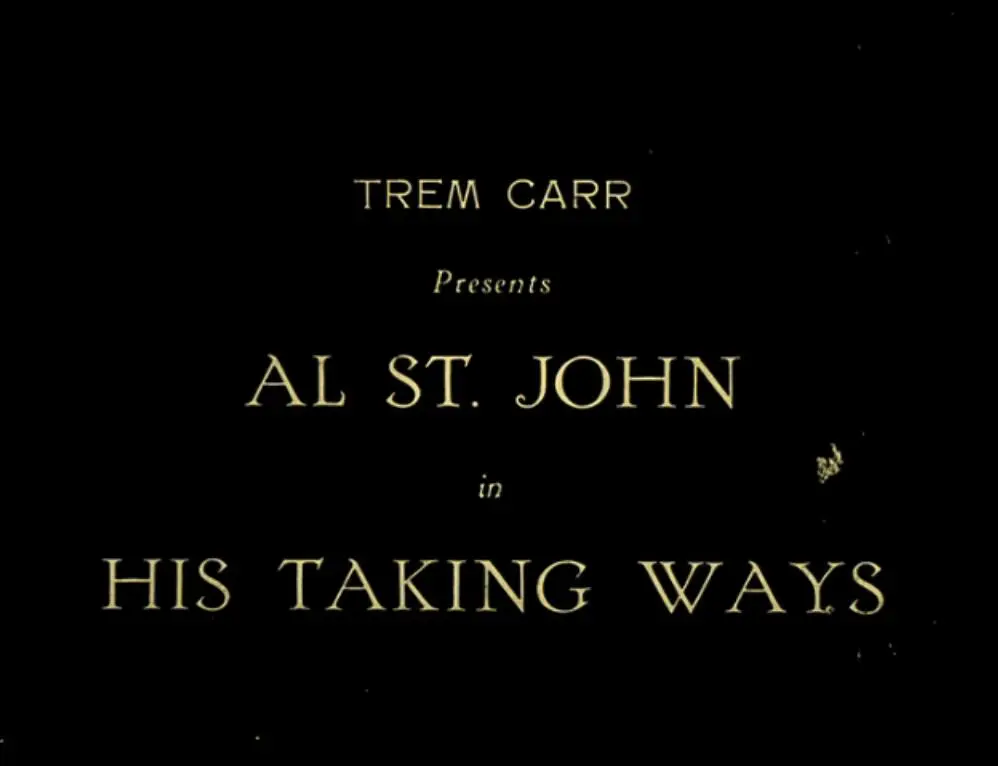
A definitive 5.2/10 rating for a film that redefined the boundaries of cult cinema. His Taking Ways remains a cornerstone of transgressive art.
Is 'His Taking Ways' worth watching today? Short answer: yes, but with significant caveats. This early silent comedy is a delightful, if slight, diversion for enthusiasts of the era and those curious about the roots of physical humor, though it will likely test the patience of mainstream viewers accustomed to modern narrative pacing.
It’s a film that embodies the raw, unpolished energy of early cinema, a snapshot of a time when the camera was still finding its rhythm and comedic beats were often broad, physical, and relentless. For a certain audience, this is precisely its charm. For others, its brevity and reliance on a single, escalating gag might feel more like a historical curiosity than genuinely engaging entertainment.
This film works because: Its central premise is simple yet ripe for comedic escalation, brilliantly executed through Al St. John’s committed physical performance and the relentless, almost absurd, pursuit that anchors its runtime.
This film fails because: The plot, while effective for its genre, is undeniably thin, offering little in the way of character depth or thematic resonance, which can make its rapid-fire gags feel repetitive to a modern sensibility.
You should watch it if: You have a genuine appreciation for silent-era slapstick, enjoy films that prioritize physical comedy over intricate plots, or are studying the evolution of comedic timing and cinematic chases.
In a landscape dominated by meticulously crafted narratives and complex character arcs, the pure, unadulterated joy of silent slapstick often feels like a relic. Yet, 'His Taking Ways' serves as a vibrant reminder of its enduring power. The film doesn't attempt to intellectualize its humor; it simply aims for laughter through physical exaggeration, mistaken identity, and a healthy dose of chaos.
The setup is classic: the anxiety of home invasion, a universal fear, quickly devolves into a farcical game of cat and mouse. What begins as a domestic inconvenience—a clumsy homemade alarm—rapidly spirals into a public spectacle. This transition from private worry to public embarrassment is a hallmark of the era, and 'His Taking Ways' executes it with a surprisingly effective, almost balletic, frenzy.
One could argue that the film's greatest strength lies in its unapologetic commitment to the bit. The idea of trading a burglar for a terrible coat is inherently funny, but the subsequent realization that the coat might be valuable adds a layer of delicious irony. This twist elevates the initial gag, transforming a simple act of divestment into a frantic, pajama-clad odyssey. It’s a testament to the writers, even if uncredited here, that such a straightforward concept could generate so much kinetic energy.
The film’s humor, while undoubtedly dated in some respects, still possesses a universal quality rooted in human folly. The exasperation of Charles King, the nimble evasion of Al St. John, and the sheer absurdity of the object of their conflict—a coat—transcend the silent medium. It’s a raw, visceral comedy that speaks to the primal urge to laugh at misfortune, especially when it’s not our own.
Compared to more intricate silent comedies like those from Chaplin or Keaton, 'His Taking Ways' is decidedly less ambitious. It doesn’t aim for social commentary or character depth. Its goal is singular: to make you laugh through a series of escalating physical gags. And in that specific, narrow objective, it largely succeeds, providing a valuable historical context for the evolution of comedic filmmaking.
The success of any silent film, particularly a comedy, hinges almost entirely on the expressiveness and physicality of its performers. 'His Taking Ways' is no exception, and it's here that the film truly shines, largely thanks to the energetic presence of Al St. John and the relatable exasperation of Charles King.
Al St. John, as the burglar, is a whirlwind of acrobatic grace and mischievous intent. His movements are fluid, almost rubbery, allowing him to navigate the domestic space and later the streets of Culver City with an impressive agility. There’s a particular sequence where he effortlessly dodges King’s attempts to reclaim the coat, a display of comedic timing and physical prowess that feels both spontaneous and perfectly choreographed. He embodies the 'rascal' archetype with a charm that makes his thievery almost forgivable, a crucial element for a successful comedic antagonist.
His facial expressions, though perhaps broad by today’s standards, are perfectly legible for the silent era, conveying surprise, cunning, and frantic desperation as the chase intensifies. While often overshadowed by giants like Buster Keaton or Harold Lloyd, St. John demonstrates a distinct comedic voice here, relying less on intricate contraptions and more on pure, unadulterated physical comedy. One might even argue his performance in this short offers a more direct, less stylized form of slapstick than some of his more celebrated contemporaries.
Charles King, playing the beleaguered husband, provides the perfect foil. His transformation from worried homeowner to pajama-clad pursuer is a masterclass in escalating absurdity. King’s initial attempts at home security—a flimsy alarm system—are endearing in their futility. His exasperation is palpable, a silent scream of a man whose domestic peace has been shattered not once, but twice, first by the burglar and then by his own wife's questionable sartorial choices. His frantic chase through the streets, still clad in his nightwear, is a visual gag that never quite loses its punch. It’s a testament to his commitment that he maintains a sense of dignity even as he’s reduced to such a ridiculous state.
Lucille Hutton, as Mrs. King, has less screen time but leaves an impression. Her role is primarily to be the unwitting catalyst for the chaos, first by creating the 'terrible' coat and then by its potential, unforeseen value. Her brief appearances effectively ground the domestic setting before it explodes into public spectacle. John Rand and John Sinclair, in their supporting roles, contribute to the tapestry of the bustling world the two leads inhabit, though their parts are more functional than memorable.
The ensemble works in concert to create a believable, if exaggerated, world where a coat can ignite a city-wide chase. It’s a testament to the power of silent acting that so much character and motivation can be conveyed without a single spoken word, relying instead on gesture, movement, and expressive faces.
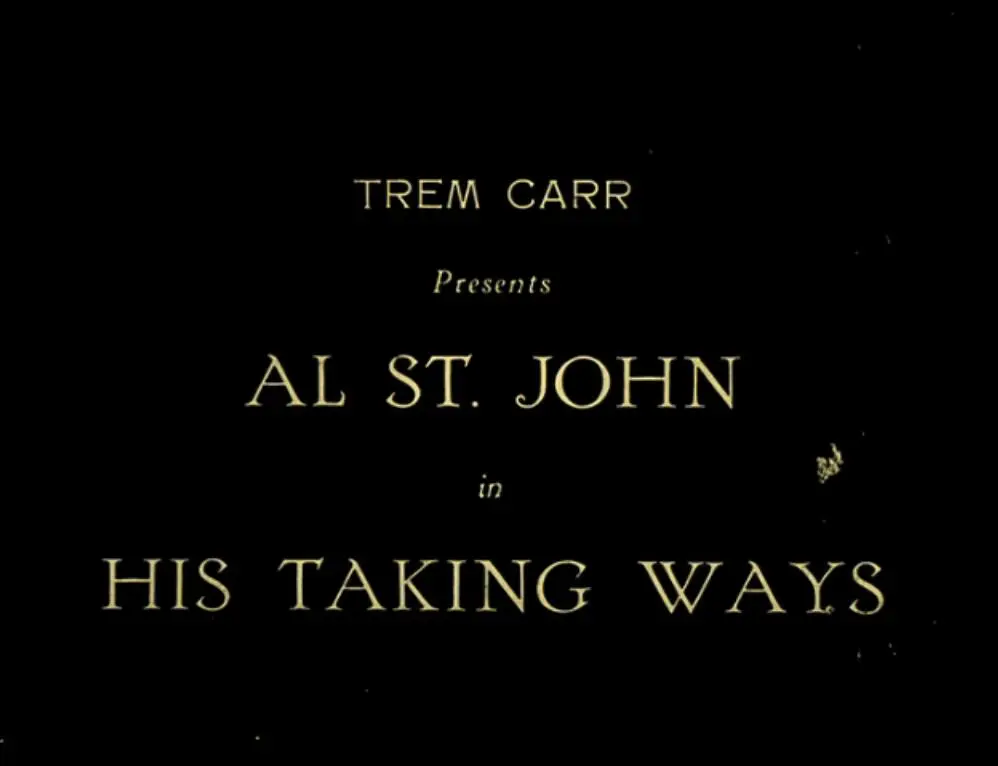
'His Taking Ways' is a film that understands its genre and its limitations, making directorial choices that maximize its comedic impact within a short runtime. The pacing is relentless, a hallmark of early slapstick, ensuring that the audience is constantly engaged in the unfolding chaos.
The film opens with a brisk introduction to the Kings' domestic anxiety, quickly establishing the stakes before the burglar's arrival. There’s no wasted motion; every scene serves to either set up a gag or advance the chase. This efficiency is crucial for a short film, preventing any moments of lag that could derail the comedic momentum. The director, whose identity is often lost to the annals of early cinema, clearly understood the power of a quick cut and a well-timed physical stunt.
One particularly effective directorial choice is the gradual escalation of the chase. It begins within the confines of the King residence, a relatively controlled environment, before spilling out onto the open streets of Culver City. This expansion of the setting not only allows for more varied gags but also amplifies the absurdity of King’s pajama-clad pursuit. The transition from the intimate setting to the bustling public spaces creates a sense of escalating stakes and wider comedic potential.
The use of location shooting, showcasing the early landscape of Culver City, adds a layer of authenticity and visual interest. It grounds the fantastical chase in a real-world setting, making the characters' predicament all the more relatable, despite its inherent silliness. The director leverages the urban environment, incorporating street corners, obstacles, and even other pedestrians into the chase sequences, turning the city itself into a participant in the comedy.
However, this relentless pacing, while a strength, can also be perceived as a weakness by modern viewers. There’s little room for quiet moments, for character reflection, or for a breather between gags. It’s a full-throttle sprint from start to finish. While this was common for the era, and indeed part of the appeal for audiences then, it can feel exhausting or even monotonous if one is not attuned to the specific rhythm of silent slapstick. The film doesn't pause to let the humor sink in; it simply moves on to the next visual punchline.
This approach contrasts sharply with the more nuanced comedic timing found in some later silent features, such as those by Charlie Chaplin in The Fable of the Traveling Salesman or Buster Keaton. 'His Taking Ways' is more akin to the raw energy of early Mack Sennett shorts, prioritizing immediate laughter over lasting emotional resonance. It works. But it’s flawed.
The cinematography of 'His Taking Ways,' while rudimentary by today’s standards, effectively serves the film's comedic purpose. Shot on black and white film, the visual language is clear, functional, and focused on capturing the physical action. There are no elaborate tracking shots or complex camera movements; instead, the camera is largely static, allowing the performers to fill the frame with their movements and expressions.
Lighting is straightforward, often natural, which lends a certain documentary-like quality to the outdoor chase scenes. This understated approach to cinematography paradoxically enhances the comedy, as the absurdity of the situation plays out against a relatively unembellished backdrop. The focus remains squarely on Al St. John's nimble evasions and Charles King's frantic pursuit, with the camera acting as a neutral observer.
One notable aspect is the effective use of depth within the frame during the chase sequences. The director often stages scenes to show characters moving towards or away from the camera, or across the frame, creating a dynamic sense of movement even with a stationary camera. This helps to convey the speed and desperation of the chase without relying on modern editing techniques or complex camera work.
The film's visual aesthetic is a window into early 20th-century urban life. The streets of Culver City, with its period architecture and vehicles, are not just a setting but almost a character in themselves. The visual information conveyed through these external shots is fascinating for anyone interested in historical preservation or the evolution of urban landscapes. It’s a stark contrast to the more controlled studio environments often used for domestic scenes, creating a visual distinction between the private and public spheres of the film.
While 'His Taking Ways' won't be lauded for its groundbreaking cinematography, its visual clarity and straightforward approach are perfectly suited to its genre. It provides a clean canvas for the physical comedy to unfold, ensuring that every pratfall, every dash, and every exasperated glance is captured with sufficient detail for the audience to follow the rapid-fire gags. It's a reminder that sometimes, the most effective cinematic choices are those that simply serve the story without drawing undue attention to themselves.
Yes, for specific audiences. This film is a valuable piece of silent comedy history. It showcases early slapstick and physical performances effectively. It's short, making it easy to fit into a busy schedule. It offers genuine laughs for those open to its style.
However, if you prefer modern pacing, complex narratives, or nuanced humor, it might not resonate. Its plot is simple. The gags can feel repetitive. It lacks the emotional depth of later silent classics. Consider it a historical experience rather than a contemporary blockbuster.
'His Taking Ways' is an interesting, albeit minor, entry in the vast tapestry of silent cinema. It’s a film that perfectly encapsulates the spirit of early slapstick: simple premise, frantic energy, and a reliance on physical comedy to generate laughs. While it won't be remembered alongside the masterpieces of the era, it holds its own as a spirited and often genuinely funny short.
Al St. John delivers a performance that deserves more recognition, showcasing a talent for comedic agility that rivals some of his more celebrated contemporaries. Charles King provides an excellent, relatable anchor to the escalating absurdity. The film’s pacing is a double-edged sword: it keeps the energy high but leaves little room for anything beyond the immediate gag.
Ultimately, 'His Taking Ways' is a testament to the enduring appeal of a well-executed chase sequence and the timeless humor found in human folly. It’s a delightful historical artifact that still offers genuine amusement, provided you approach it with an appreciation for its context and genre. It’s not a film to dissect for profound meaning, but rather one to simply enjoy for its kinetic, unpretentious humor. Give it a watch if you’re curious about the roots of cinematic comedy; you might find yourself surprisingly charmed by its taking ways.
IMDb 5.8
1925
Community
Log in to comment.