Is 'Sin Cargo' worth watching today? Short answer: yes, but with significant caveats that demand a specific kind of viewer. This film is an intriguing artifact for silent cinema enthusiasts, film historians, and those curious about the melodramatic storytelling conventions of the 1920s, offering a window into a bygone era of cinematic morality plays. However, it is decidedly not for audiences seeking fast-paced action, complex character studies, or a nuanced narrative that transcends its period's limitations.
This film works because: Its central theme of self-sacrifice for love remains potent, even through the lens of early cinema, driven by a clear, albeit simplistic, emotional core.
This film fails because: Its narrative relies heavily on common silent era tropes, making it feel dated and predictable, with character motivations that often lack modern psychological depth.
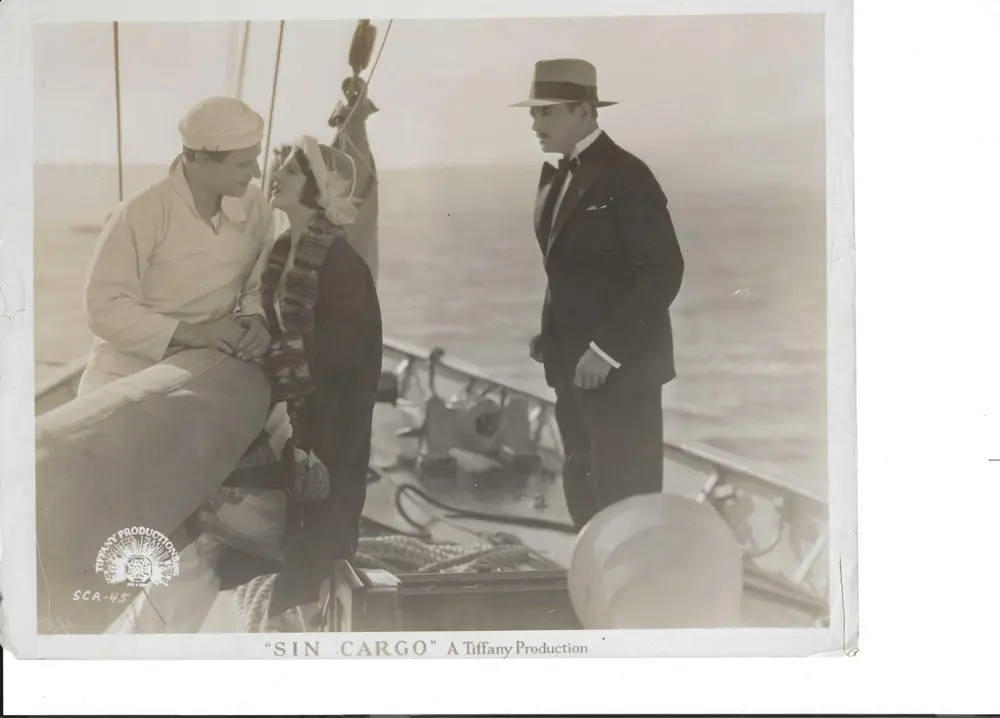
Scene from Sin Cargo
Cinematic perspective: Exploring the visual vocabulary of Sin Cargo (1926) through its definitive frames.
You should watch it if: You appreciate the historical context of silent films, enjoy classic melodramas, and are interested in the evolution of cinematic storytelling, particularly how moral dilemmas were portrayed without dialogue.
A Voyage into Silent Era Melodrama
The year 1926 delivered Sin Cargo, a silent drama that, at its heart, is a straightforward tale of virtue confronting villainy, all wrapped in a package of romantic sacrifice. Directed by a hand that understood the mechanics of early cinematic tension, the film casts Robert Frazer as Captain Mark Russell, a character conceived as the epitome of a noble, seafaring man.
His ship, sailing from the exotic yet often unseen South Seas, becomes the unwitting vessel for Harry Gibson's (Earl Metcalfe) nefarious pearl-smuggling operation. The setup is classic: an innocent hero, a conniving villain, and a damsel in distress – or rather, a damsel whose reputation hangs in the balance.
Scene from Sin Cargo
Cinematic perspective: Exploring the visual vocabulary of Sin Cargo (1926) through its definitive frames.
The plot, penned by Jack Natteford and Leete Renick Brown, wastes no time in establishing its central conflict. Russell’s love for Gibson’s sister, Eve (Shirley Mason), is the fulcrum upon which the entire drama balances. It’s this love, pure and unwavering, that dictates his actions when customs inspectors inevitably uncover the illicit pearls.
This isn't a complex mystery; the audience is privy to Gibson’s guilt from the outset. The tension derives not from who committed the crime, but from the moral quandary Russell faces and the extreme lengths he will go to protect the woman he loves. It’s a testament to the era’s storytelling preferences, where emotional impact often trumped intricate plotting.
Performances: Stoicism, Innocence, and Villainy
Robert Frazer's Burden
Robert Frazer, as Captain Mark Russell, carries the film's emotional weight with a performance that is, at turns, commendable and somewhat limited by the conventions of the time. Frazer’s stoicism is palpable, particularly in the pivotal customs inspection scene. His face, captured in close-up, registers a silent battle of conscience as the pearls are revealed.
Scene from Sin Cargo
Cinematic perspective: Exploring the visual vocabulary of Sin Cargo (1926) through its definitive frames.
He doesn't need intertitles to convey his shock, followed by the dawning realization of the implications for Eve. This moment, where he silently accepts the blame, is the film's emotional anchor. Yet, one might argue that his portrayal, while earnest, often feels more dutiful than truly inspired, leaving the audience to infer his internal turmoil rather than truly feel its raw intensity.
There's a fine line between silent suffering and emotional flatness, and Frazer occasionally treads it. His performance, while embodying the noble sacrifice, could have benefited from more nuanced expressions of inner conflict beyond a furrowed brow or a resigned gaze. It works. But it’s flawed.
Shirley Mason's Eve
Shirley Mason, as Eve Gibson, embodies the archetypal innocent woman of the silent screen. Her character exists primarily as the object of Russell’s affection and the catalyst for his sacrifice. Mason plays Eve with a delicate vulnerability that makes Russell’s desire to protect her entirely understandable.
Her reactions to the unfolding drama, particularly her distress when Russell is implicated, are genuinely affecting. She is the fragile flower needing protection, a common trope of the era, and Mason fulfills this role adequately, if without much opportunity for deeper character exploration. One wishes her character had a bit more agency, a moment to transcend the 'damsel' role, but the script offers little.
Earl Metcalfe's Deceit
Earl Metcalfe, as the villainous Harry Gibson, is perhaps the most straightforwardly effective performer. He embraces his role as the unrepentant smuggler with a relish that borders on caricature, yet it serves the film's melodramatic tone perfectly. His furtive glances, the way he subtly tries to deflect suspicion, and his ultimate willingness to let an innocent man take the fall are all conveyed with clear, unambiguous gestures.