DbcultAccessing Vault...
6/10
Senior Film Conservator
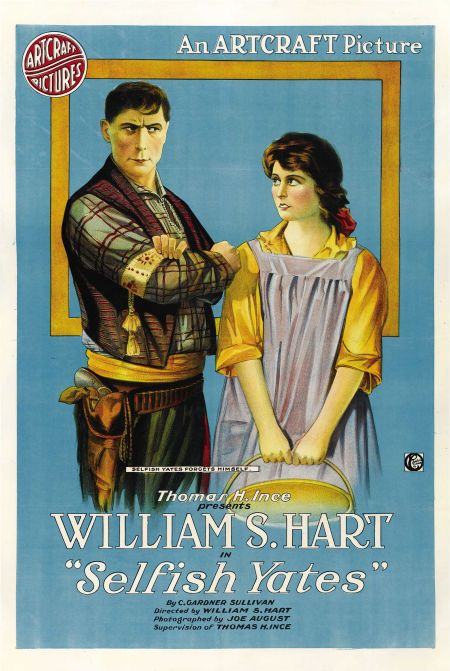
A definitive 6/10 rating for a film that redefined the boundaries of cult cinema. Selfish Yates remains a cornerstone of transgressive art.
The first time we see William S. Hart’s face in Selfish Yates, it is half-eclipsed by lamplight, a chiaroscuro skull wearing the faintest smirk of ownership over chaos. That image—equal memento mori and frontier gargoyle—announces a film that refuses to flatter its audience. There are no white-hat heroics, no dimpled sidekicks, no rousing cavalry trumpet. Instead we get a morality play marinated in alkali and regret, a western that predates the genre’s ossified clichés and instead feels like something unearthed from a mesa tomb: brittle, venomous, weirdly alive.
Director Clifford Smith and scenarist C. Gardner Sullivan understand that redemption is not a thunderclap but erosion. Their protagonist’s surname alone—Yates—sounds like a gate that will not close properly, a hinge forever creaking open to possibility. Over the course of seventy-one minutes we watch that hinge budge, degree by degree, until the final shot in which the man literally disappears into a horizon of his own debts and hopes. It is the most quietly devastating fade-out in silent-era westerns, rivaled only by Hart’s own farewell in Tumbleweeds six years later.
The Brass Rail is not merely a set; it is a rotting cathedral whose altar is a mahogany bar gouged by spurs and scarred by cigar stumps. Every fixture hum with antagonism: the roulette ball clicks like a rattlesnake’s tail, the player-piano hammers out a hymn that has forgotten its own salvation. Cinematographer J. D. Jennings keeps his camera low so that the ceiling beams oppress like verdicts. In this cruciform space, Mary Adams—incarnated by Jane Novak with a stoic luminosity that rivals Lillian Gish—becomes a reluctant missionary. Notice how Novak enters the frame: chin tucked, arms forming a defensive parentheses around her ribcage, eyes scanning for exits even as her feet stay planted. It is the body language of someone who has already buried her future and now merely tends the grave.
The film’s visual grammar repeatedly isolates Mary in doorways: between kitchen and bar, between desert and town, between despair and a fragile covenant. Each threshold deepens the chiaroscuro until the moment she finally crosses the bar’s sacred rail—a transgression that costs her apron but gains her soul. That transition is marked by a dissolve rather than a cut, suggesting continuity rather than rupture, as if decency were a virus transmitted by prolonged exposure.
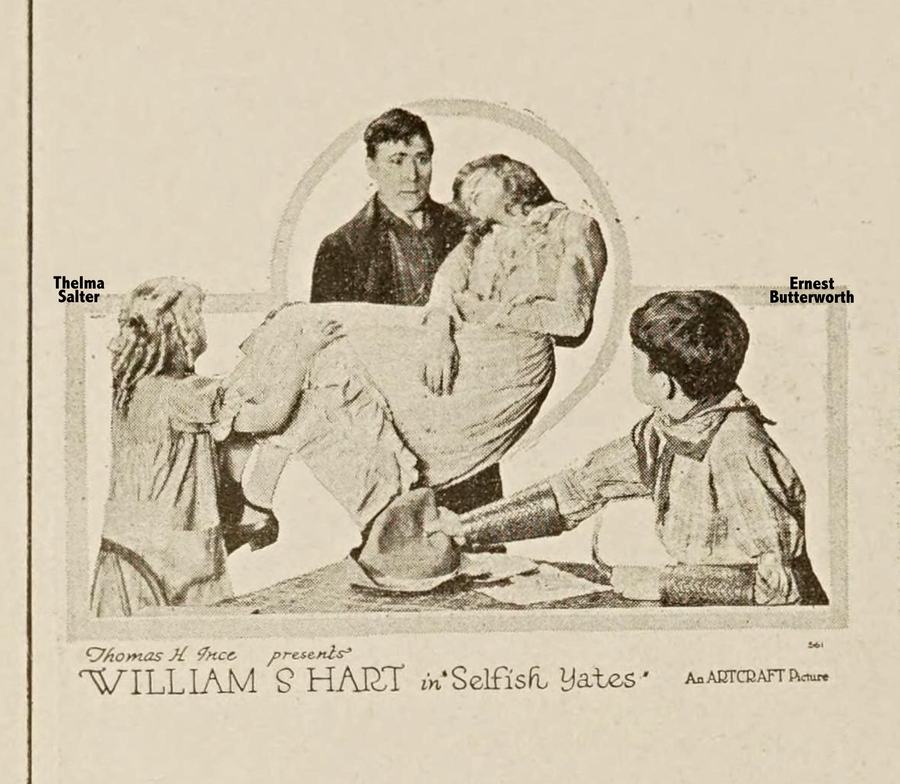
At thirty-seven, Hart was already weathered into a topography of angles: cheekbones like buttes, brows like storm clouds, a mouth that seems to have forgotten how to pronounce the word tomorrow. He moves through Selfish Yates with the predatory languor of a wolf that has learned capitalism. Watch how he counts money: fingers fluttering like a card-sharp’s, lips soundlessly ciphering interest on human misery. Yet Hart allows micro-tremors of conscience to leak through—an averted gaze when Mary scrubs the blood from his spittoon, a hesitation before short-changing a prospector who reminds him of his own long-dead father. Those fissures are the silent equivalent of soliloquies; we witness a man eavesdropping on his better self and flinching at the conversation.
Compare this to Hart’s earlier outing in Sunlight’s Last Raid, where his character’s virtue is pre-ordained. Here virtue is an acquired taste, like the desert’s own acrid water. The performance is calibrated to the millimeter: when Yates finally offers his coat to the shivering Betty, Hart performs the gesture with the bruised awkwardness of someone translating a foreign phrase he has only read about.
Silent-era heroines too often oscillate between porcelain saint and fainting decoration. Novak’s Mary is something earthier: a pilgrim who believes in the gospel of labor. Her hands—raw, knuckles swollen—become the film’s alternate scripture. Notice the mid-close-up when she kneads dough while Yates tallies his nightly haul: flour dust hangs in the air like benediction, back-lighting her profile so that she appears carved from ivory and sweat. The moment is wordless yet sermonizes better than any intertitle: dignity extracted from drudgery, grace ground between millstones.
Novak’s greatest triumph is restraint. When Yates finally mutters a cracked apology, her response is a barely perceptible nod—no tearful embrace, no orchestral swell. The nod says: acknowledgment received, ledger balanced, let the desert keep its accounts.
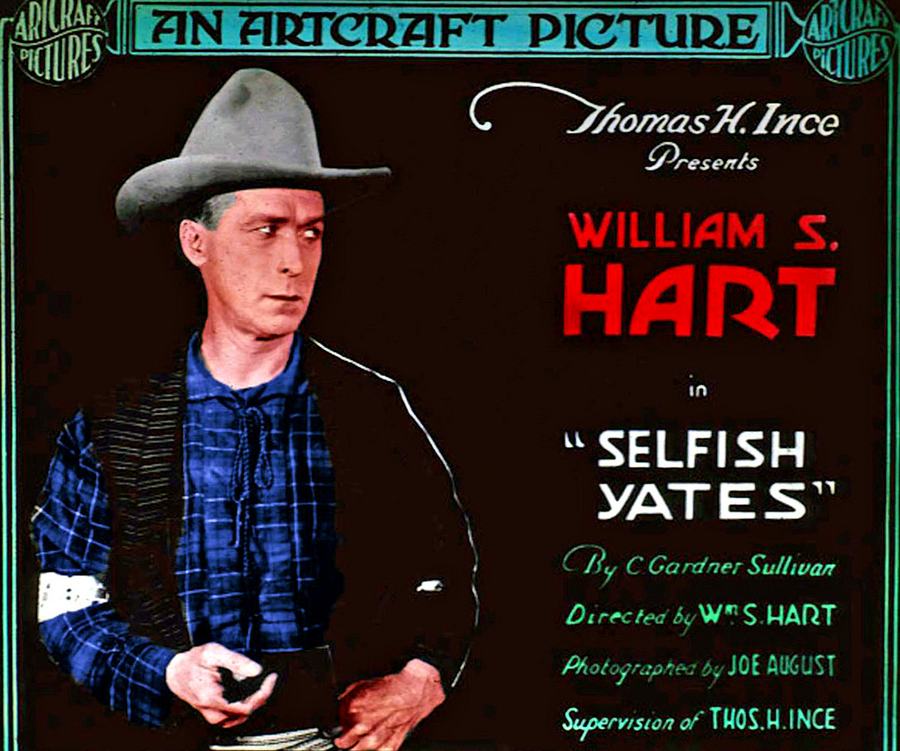
C. Gardner Sullivan, who also scripted Hart’s The Son of His Father, traffics in moral algebra: every act of rapacity accrues compound interest, every kindness pays down the principal of sin. Yet the scenario never calcifies into allegory; it stays limber with frontier vernacular. One intertitle describes Yates as “a man who could sell a mirage and charge freight on the shadows.” That lyricism flavors the film, making its austerity sing.
The narrative architecture is deceptively linear. A first viewing suggests simple cause-and-effect: orphan girls arrive, provoke latent decency, crisis reveals reformed man. But repeat viewings expose contrapuntal design: every scene of exploitation is rhymed with an off-screen act of generosity we never witness—Yates paying the undertaker for an unmarked grave, slipping a silver dollar into the cook’s arthritic palm. We learn of these actions only through marginalia, a glance at a ledger, a half-overheard remark. The film trusts the audience to stitch its own moral quilt, a demand almost unthinkable in contemporary mainstream cinema.
The third act erupts when a drunken cowboy accuses Yates of running a crooked wheel. The camera adopts the gambler’s POO: the wheel spins, the ball clatters, the frame judders as if reality itself were rigged. When accusations fly, Yates’s first instinct is to protect the house; he reaches for the concealed gun beneath the cash drawer. It is Mary, entering with a tray of sarsaparilla for the children, who intercepts the bullet meant for Yates. The violence is abrupt, almost matter-of-fact—no swelling strings, no slow-motion balletics. The bullet’s impact is conveyed by a single cut: Mary’s body silhouetted against the saloon’s swinging doors, then collapsing like a sack of barley. In that instant Hart’s face registers a tectonic shift: something ancient and glacier-calved breaks loose behind his eyes.
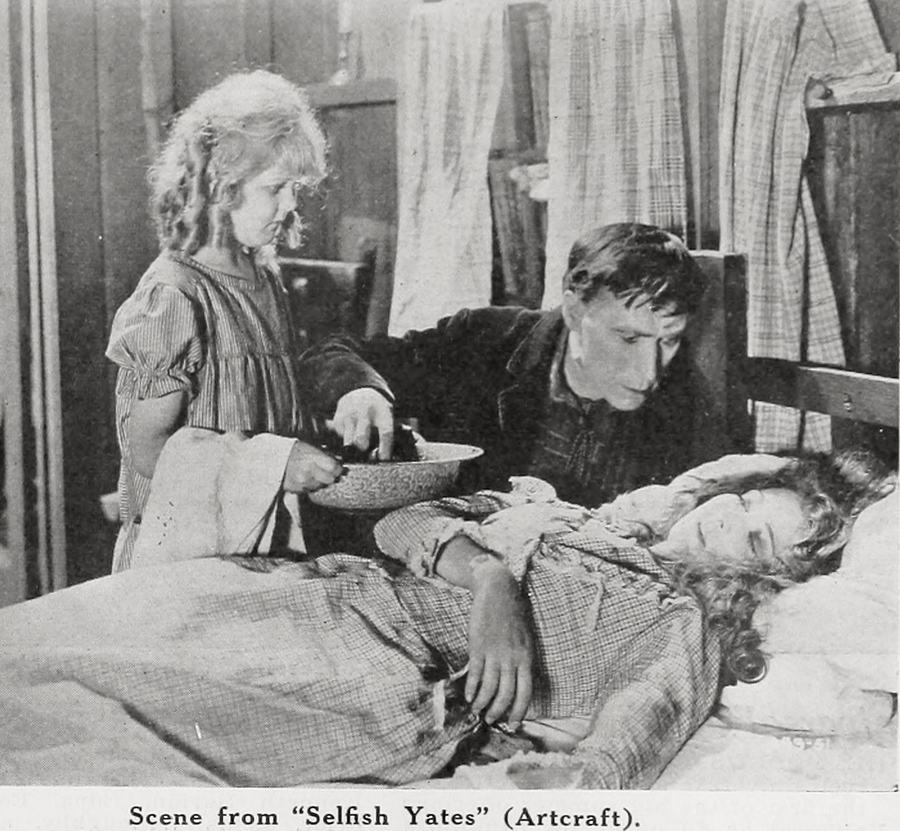
What follows is the film’s most radical gesture: Yates does not ride off in vengeful pursuit. Instead he kneels, gathers Mary’s blood in his cupped hands as if measuring the volume of his own guilt, then carries her to the town’s makeshift infirmary. The posse forms without him. The retribution happens off-camera, rendering Yates’s internal reckoning the true axis of suspense.
Most restorations slap on a jaunty honky-tonk piano or Copland-esque strings, but the 4K restoration by Eye Filmmuseum opts for strategic silence during key sequences. The absence of score during Mary’s shooting amplifies the creak of floorboards, the hiss of a lantern wick, the wet thud of flesh meeting floorboard. Silence becomes a character—an aural wilderness as unforgiving as the desert itself.
When music returns, it emerges diegetically: the player-piano, now repaired by Yates, plunks out a halting lullaby that dissolves into the film’s closing vignette. The moment is so understated that many viewers miss it, yet it marks the first time Yates has invested labor without expectation of profit.
Shot on location in the Mojave, the film captures a terrain that is less landscape than ledger. The cacti stand like tally marks, the buttes like unpaid debts. Yates’s saloon is a microcosm of manifest destiny: resources extracted, labor exploited, profit funneled eastward. The sisters’ arrival destabilizes this ecology by introducing an economy of gift. Note the scene where Mary shares her meager wages with a Paiute woman selling beadwork; the exchange is framed in long-shot so that the transaction appears minuscule against the vast, indifferent plain. Yet that beadwork later reappears as a rosary-like token held by Betty during her fever, suggesting that alternative economies—feminine, indigenous, reciprocal—can infiltrate and corrode the dominant machinery.
Place Selfish Yates beside Darkest Russia and you see two contrasting moral anatomies: the latter’s revolutionaries seek systemic overhaul, whereas Yates pursues micro-redemption. Pair it with The Last Days of Pompeii and note how both films use catastrophe as moral X-ray, though Pompeii’s volcanic wrath is external whereas Yates’s eruption is interior. The closest kin might be Le Torrent, where a rural outsider confronts the cost of his own appetites, yet Hart’s film is drier, more Calvinist, its salvation harder-won.
Long before Tony Soprano sought therapy or Walter White justified his empire, Hart’s Yates sketched the prototype: the malign protagonist whose incremental self-knowledge feels both miraculous and inevitable. The difference is budgetary and philosophical: Hart’s redemption is not market-tested, not season-renewable. It is a one-off miracle, sealed by the actor’s real-life farewell to westerns two years later. The performance hangs in the cultural memory like a lone saddle in an abandoned barn, its leather cracked but still bearing the shape of the man who rode it.
Verdict: A western that antecedents the anti-hero craze by a century, Selfish Yates is required viewing for anyone who thinks redemption must arrive bathed in trumpet flourishes. Sometimes it comes limping, smelling of desert sage and its own blood, carrying a child it never meant to save.
IMDb 6.7
1933
Community
Log in to comment.