DbcultAccessing Vault...
Cult Review
Senior Film Conservator
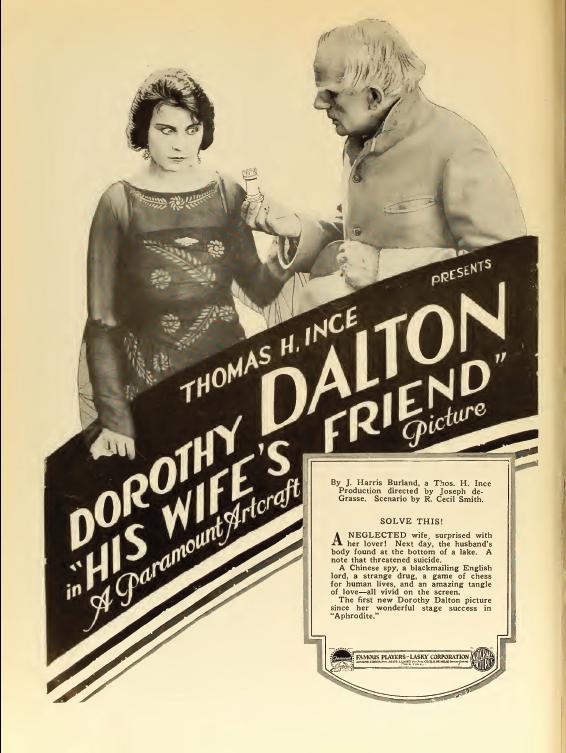
In the pantheon of silent-era domestic dramas, few films capture the suffocating weight of an antediluvian marriage with the same gravitas as His Wife's Friend. The film opens not with a flourish of romance, but with the rhythmic, almost mechanical click of chess pieces—a soundless metronome marking the death of Lady Marion’s youth. Sir Robert Grimwood, portrayed with a chillingly detached austerity, is a man whose emotional lexicon has been entirely replaced by the strategic maneuvers of the checkered board. This opening serves as a profound metaphor for the social constraints of the era, where women were often relegated to the status of stationary pawns in a game played by men whose passions had long since calcified.
The arrival of John Heritage is the catalyst that disrupts this equilibrium. Unlike the protagonists in The Test, who often grapple with overt moral dilemmas, Heritage represents a more subtle, psychological threat to the status quo. His presence is a reminder of a life unlived, a vibrant contrast to the monochromatic existence Marion endures. Dorothy Dalton delivers a performance of remarkable nuance, using the limited visual language of the 1919 screen to convey a spectrum of yearning and terror that transcends the lack of spoken dialogue.
The discovery of Sir Robert’s body floating in the lake is a sequence that rivals the atmospheric dread of contemporary German Expressionism. The water is not merely a setting for death; it is a mirror reflecting the murky ethics of the surrounding aristocracy. The lake acts as a liminal space where the rigid structures of the Grimwood estate dissolve into the fluidity of chaos. This thematic use of the environment is far more sophisticated than the literalist approaches seen in Limousine Life, where the setting often remains secondary to the social posturing.
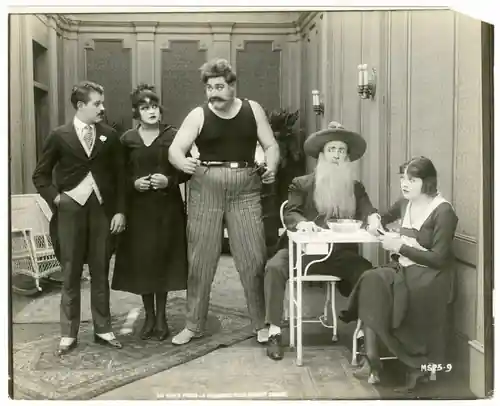
The subsequent introduction of the suicide note is a masterstroke of narrative tension. It transforms the film from a study of marital ennui into a high-stakes thriller. The note, charging Marion with the responsibility for Robert’s death through her affection for Heritage, acts as a physical manifestation of the period's crushing morality. It is a document of shame, a tether that keeps Marion bound to her deceased husband even as she seeks liberation.
Lord Waverly represents the darker undercurrents of the landed gentry. His opportunistic seizure of the letter, facilitated by the enigmatic Ling Foo, highlights a predatory masculinity that was a recurring theme in films like The Men She Married. Waverly’s blackmail is not merely financial; it is an attempt to exert total dominion over Marion’s body and reputation. The scene at the appointed rendezvous is filmed with a palpable sense of claustrophobia, despite its outdoor setting. The looming cliffside serves as an omen, a precipice of social and physical ruin.
The confrontation between Heritage and Waverly is a visceral climax. The dazed fall of Waverly over the cliff is a poetic resolution to his hubris. In the cinematic language of the early 20th century, the fall often symbolized a moral descent made literal, a trope also explored with varying degrees of success in Flare-Up Sal. Here, however, the death is not just an ending, but a gateway to the film’s true revelation.
The revelation that Ling Foo is the architect of the tragedy adds a layer of complexity that was rare for its time. While the "Yellow Peril" trope was unfortunately prevalent in early cinema—see the problematic portrayals in The Aryan or The Squaw Man—Ling Foo’s motivations in His Wife's Friend are grounded in a profound, if tragic, sense of justice. His revenge for the death of his son at the hands of Sir Robert recontextualizes the entire film. It shifts the blame from the "transgressive" lovers back onto the patriarch whose past sins have finally come to roost.
This subversion of the antagonist role is fascinating. Ling Foo is not a mindless villain but a grieving father operating within a system that offered him no legal recourse. His use of the chessboard logic—manipulating the pieces to ensure the king’s fall—is a brilliant narrative symmetry. He beats Sir Robert at his own game, using the very tools of the aristocracy to dismantle it from within. This depth of characterization is a significant leap forward from the caricatures found in The Mixed Ladies Chorus.
The final act, where Marion burns the incriminating letter, is one of the most potent images of female agency in silent film. The fire does not just consume paper; it incinerates the patriarchal control that the letter represented. By destroying the evidence of her supposed 'sin,' Marion reclaims her narrative. It is a moment of pure catharsis that stands in stark contrast to the tragic resolutions of Out of the Wreck.
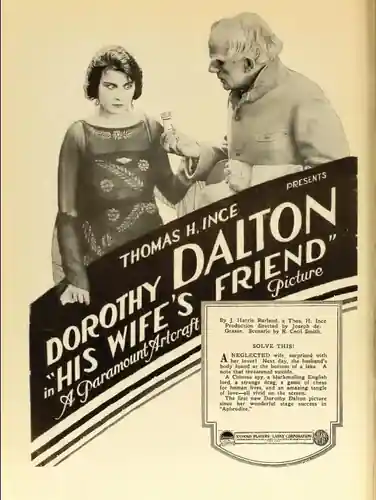
Heritage’s role in this conclusion is notable for its restraint. He does not 'save' Marion in the traditional sense; rather, he provides the truth that allows her to save herself. Their union at the end is not a prize won, but a partnership forged in the crucible of shared trauma. The film avoids the whimsicality of A Florida Enchantment or the lightheartedness of Puppchen, opting instead for a somber, earned peace.
When viewed alongside the documentary realism of Dr. Mawson in the Antarctic or the nationalistic fervor of Guarding Old Glory and Australia Calls, His Wife's Friend emerges as a sophisticated psychological study. It pushes the boundaries of the melodrama genre, incorporating elements of the detective story and the gothic thriller. The directorial choices—the use of shadow, the pacing of the revelations, and the focus on internal emotional states—point toward the future of cinema as a medium for deep character exploration.
In conclusion, the film remains a vital piece of cinematic history. It captures a moment when the industry was transitioning from simple moral tales to complex narratives that questioned the very foundations of social order. Dorothy Dalton’s Marion is a proto-feminist icon, navigating a world of predatory men and ancient vendettas with a quiet, steely resolve. Much like the avian symbolism in Birds of a Feather, Marion eventually finds her wings, but only after the cage has been thoroughly dismantled. This is a film that demands to be revisited, not just as a relic of the past, but as a masterclass in atmospheric storytelling and psychological depth.
IMDb —
1921
Community
Log in to comment.