DbcultAccessing Vault...
Cult Review
Senior Film Conservator
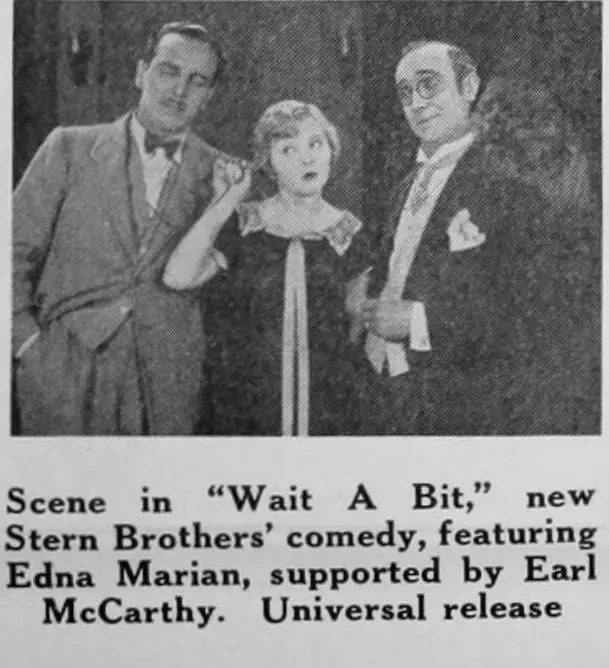
Is this film worth watching today? Short answer: yes, but only if you have a high tolerance for the hyper-kinetic, sometimes exhausting rhythms of 1920s slapstick. This is a film for the silent cinema completionist and those who find joy in the mechanical precision of a well-timed double-take. It is absolutely not for viewers who demand psychological realism or a plot that doesn't rely entirely on the protagonist making the worst possible decision at every turn.
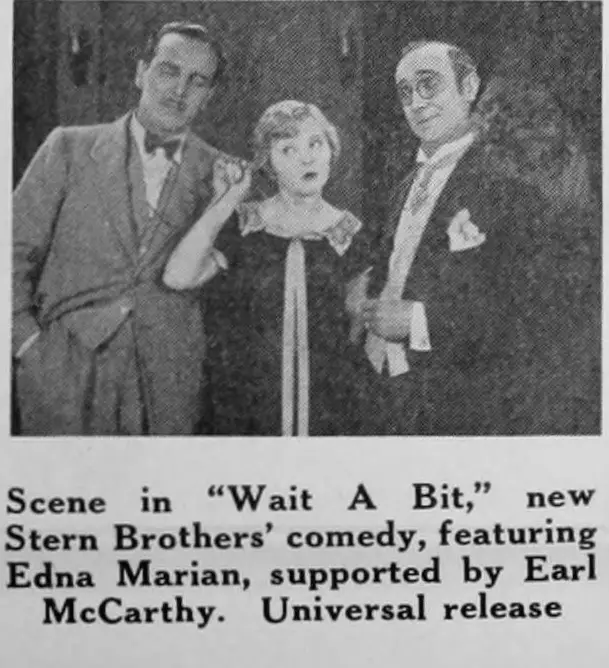
This film works because the physical chemistry between Earl McCarthy and Edna Marion creates a genuine sense of stakes in what could have been a disposable short. This film fails because the third-act resolution feels rushed, even by the standards of a two-reel comedy, leaving several logic gaps unaddressed. You should watch it if you enjoyed the identity-based chaos of Mighty Like a Moose or the youthful energy found in A Youthful Affair.
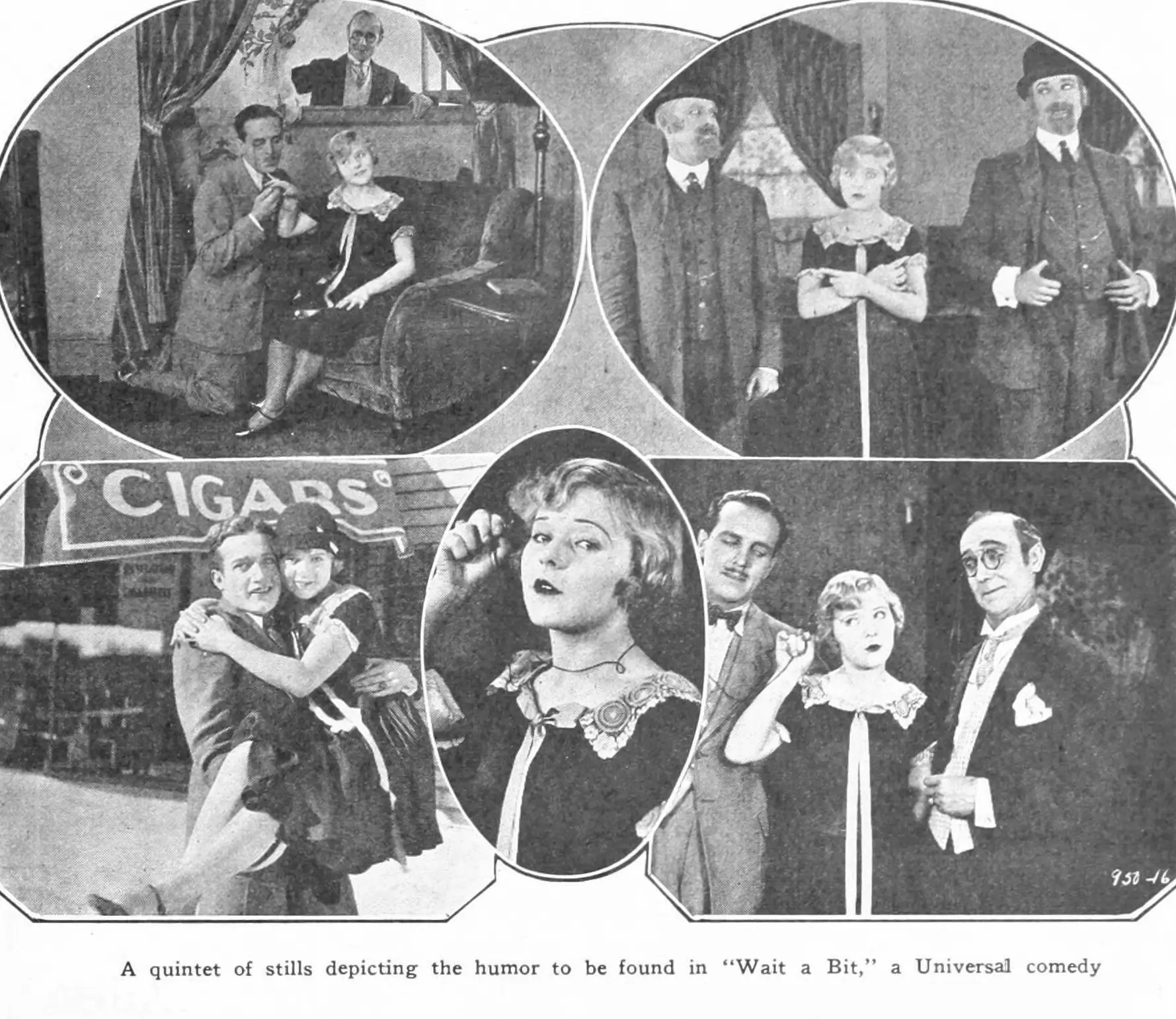
At its core, Wait a Bit is a study in desperation. Earl McCarthy plays the lead not as a suave hero, but as a man constantly on the verge of a nervous breakdown. This is a vital distinction. Unlike the cool detachment of Buster Keaton, McCarthy’s Earl is a sweating, frantic mess. When he decides to put on the whiskers and the oversized coat of the long-lost brother, the humor doesn't come from the quality of the disguise—it's quite terrible—but from the sheer audacity of his hope that it might work.
The scene where Earl first enters the parlor as the 'brother' is a masterclass in blocking. He has to navigate a room filled with people who know him, using only a fake limp and a distorted voice to mask his identity. Directorially, the film uses the static camera of the era to its advantage. By keeping the frame wide, we see the father’s growing suspicion in the background while Earl tries to woo Edna in the foreground without breaking character. It’s a visual polyrhythm that works surprisingly well.
One cannot discuss this film without acknowledging the social satire at play. The father’s obsession with a 'Duke' reflects the post-WWI American insecurity regarding old-world nobility. It’s a theme we see in other films of the period like Shoe Palace Pinkus, where the desire for status leads to total blindness. The father is so blinded by the prospect of a royal connection that he is willing to accept a total stranger as his brother, provided that stranger helps his social standing.
Wait a Bit is worth watching if you want to understand the DNA of modern situational comedy. It provides a clear blueprint for the 'liar revealed' trope that has dominated sitcoms for decades. While it lacks the high-budget spectacle of The Star of Bethlehem, it succeeds on a much more intimate, human level. The stakes are small—a marriage license and a father's approval—but the film treats them with the intensity of a grand opera.
Edna Marion is often relegated to the 'love interest' role in silent history, but here she shows a sharp comedic timing that rivals her male costars. There is a specific moment when she realizes the 'uncle' is actually Earl. Instead of a dramatic reveal, she plays it with a subtle, mischievous glint in her eye. She decides to play along, essentially becoming the co-conspirator in the fraud. This elevates her character beyond a mere trophy to be won.
Her performance reminds me of the nuanced work in My Girl Suzanne. Marion understands that in a world of broad gestures, the smallest wink can be the loudest laugh. The way she handles the arrival of the real brother—simultaneously trying to hide Earl while greeting the newcomer—is a dizzying display of physical coordination. She is the anchor that keeps the film from drifting into pure, nonsensical noise.
The cinematography in Wait a Bit is functional rather than poetic. Unlike the moody, atmospheric shots in The Mystery of No. 47, the lighting here is flat and bright. This was a standard choice for comedies of the time, intended to ensure that every facial expression and gag was clearly visible to the audience in the back of the theater. However, the flat lighting does make the set look remarkably like a set, which occasionally pulls you out of the story.
The pacing, however, is where the film shines. Ted Ross’s script doesn't waste a single frame. From the moment the 'Duke' is mentioned to the final chase, the narrative momentum is a constant upward curve. It lacks the slower, more experimental beats found in Frou Frou, but it makes up for it with a relentless commitment to its own premise. It works. But it’s flawed. The transition between the discovery of the real brother and the resolution feels like a reel might have been edited too aggressively.
Pros:
Cons:
Most critics point to the humor, but I find the film’s depiction of the father’s house to be its most fascinating element. It is cluttered with 'new money' artifacts. It feels claustrophobic, reflecting the father’s own narrow-mindedness. It’s a stark contrast to the open-air freedom seen in Westerns like The Border Legion. In Wait a Bit, the house is a prison of social expectation, and Earl’s disguise is his only way to pick the lock.
There is a brutal simplicity to the film's climax. When the real brother appears, the film doesn't lean into a heavy emotional confrontation. Instead, it doubles down on the absurdity. It’s a bold choice. It suggests that in the world of Wait a Bit, the truth is far less important than the performance of the truth. This cynical edge is what keeps the film from being a mere historical curiosity.
Wait a Bit is a loud, sweaty, and ultimately charming piece of silent history. It doesn't have the grand ambitions of The House of Toys or the moral weight of The Miracle of Life, but it doesn't need them. It is a film designed to make a 1926 audience laugh for twenty minutes, and surprisingly, it still manages to squeeze a few chuckles out of a modern viewer. It is a testament to the fact that while technology changes, the hilarity of a man in a bad wig will always be a cinematic constant. If you have any interest in the roots of the American sitcom, this is required viewing. It’s a minor work, but a vibrant one.
IMDb 6.4
1932
Community
Log in to comment.