DbcultAccessing Vault...
Cult Review
Senior Film Conservator
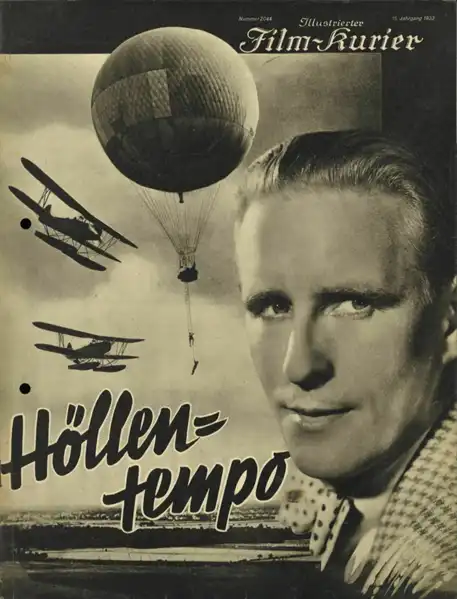
Alright, so Höllentempo (that’s “Hell’s Pace” for us English speakers) is absolutely one for the silent film enthusiasts. If you’re a regular moviegoer looking for modern thrills, you’ll probably find this one a bit of a slog. But for those who appreciate the craft of early cinema, or just want to see how they tried to pull off high-octane racing way back in 1929, it’s a fascinating, if sometimes quaint, experience. 🏎️
The movie gets going pretty quick, like, right into the race stuff. It tries its darnedest to convey speed, mostly through a lot of quick cuts and some clever camera work for the era. You see those old open-wheel racers, and the dust they kick up is surprisingly effective, even without the roar of an engine.
Hermann Stetza plays our main driver. He’s got that intense, focused gaze that just screams “I’m here to win.” His face does a lot of the heavy lifting. There’s a scene where he’s fixing something on his car, and the way the sweat drips, it’s almost too much. You can almost feel the movie trying to convince you this moment matters. And it does, in a quiet, very specific way.
Theo Lingen shows up in a smaller role, and he’s always a treat. Even without dialogue, his expressions just pop. A quick smirk, a little eye roll. He just *gets* silent comedy, even when it’s not the main point. It’s a nice little break from the dramatic tension.
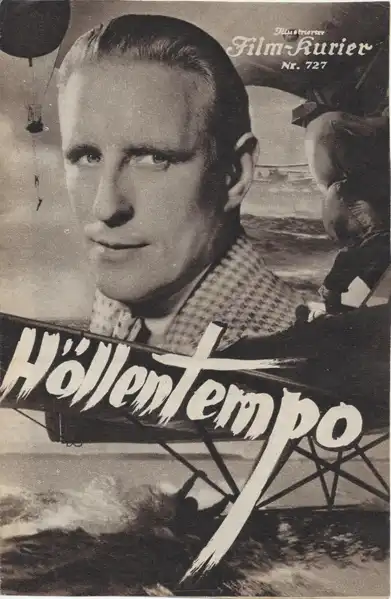
The story itself? It’s pretty straightforward. Hero racer, maybe a rival trying to sabotage him, a love interest. Nothing too wild or unexpected for the time. It’s more about the spectacle of the race than any profound plot twists.
One particular moment sticks with me: a close-up on the gear shift as it grinds into place. It lingers for what feels like an eternity. I get it, they want to show the mechanics, the *effort* of racing, but it goes on about 20 seconds too long, and the silence starts to feel awkward rather than emotional. 😂
The crowd scenes are interesting. You can see so many different faces, all dressed in their Sunday best. It’s not just a blur of extras; you can pick out individual reactions. Makes it feel a bit more real, somehow, like you’re actually there at the track watching these old cars whiz by.
The director, Georg C. Klaren, clearly wanted to show the *drama* of speed. There’s a segment where the car almost veers off course, and the camera really shakes with it. It’s a simple trick, but for 1929, it probably had people on the edge of their seats. Today, it’s just a cool historical example.
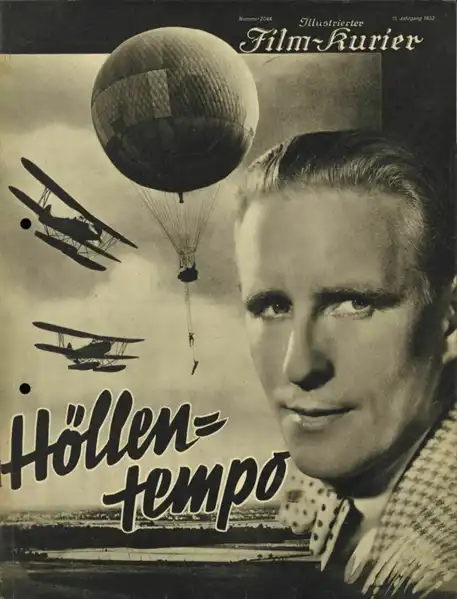
The pacing, for us modern viewers, is *definitely* different. Some scenes just hold. Like, really hold. It’s a stark contrast to how fast-cut everything is now. You have to adjust your brain to it, otherwise, you’ll just be checking your watch. ⌚
Compared to a more experimental film of the era, like The Life and Death of 9413, a Hollywood Extra, Höllentempo feels much more traditional. It’s aiming for pure entertainment, not art house statements. And it mostly hits that mark for what it is.
The film gets noticeably better once it stops taking itself so seriously and just focuses on the actual racing. The final stretch of the big race is pretty engaging, all things considered. Lots of dramatic angles, quick cuts between the cars, and the stakes feel genuinely high.
So, is it a masterpiece? Nah, probably not. But is it a neat little time capsule? Absolutely. It’s a testament to the ingenuity of early filmmakers trying to capture the thrill of speed with limited tools. If you’re a silent film buff, give it a shot. Otherwise, maybe just watch a modern F1 race instead. 😉
IMDb 6
1928
Community
Log in to comment.