DbcultAccessing Vault...
Cult Review
Senior Film Conservator
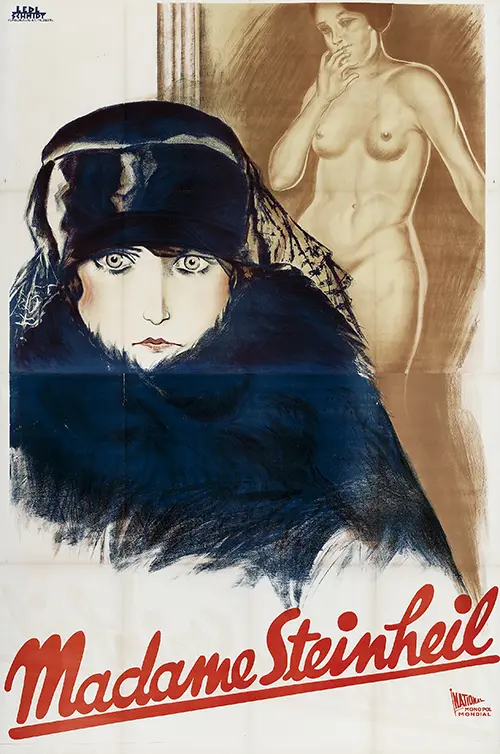
Is Die Geliebte des Gouverneurs worth watching today? Short answer: yes, but only if you have the patience for the deliberate, heavy-handed pacing of late-silent-era political dramas. It is a film for those who appreciate the psychological weight of a performance over the frantic cutting of modern thrillers. It is certainly not for viewers seeking light entertainment or a fast-moving plot.
This film works because it treats political power as a physical burden that drains the life out of its characters, rather than a glamorous prize. This film fails because its secondary characters often feel like archetypes meant to serve the message rather than fully realized human beings. You should watch it if you want to see Fritz Kortner at the height of his powers, delivering a performance that feels modern in its quiet intensity.
Director Friedrich Feher creates a world that feels both expansive and suffocating. The sets are grand, filled with the high ceilings and ornate decorations of a dying regime, yet the camera often stays uncomfortably close to the actors. This creates a sense of entrapment. You feel the walls closing in on the Governor and his mistress as their social standing becomes their prison. Unlike the more whimsical tone of Der müde Theodor, this film offers no comedic relief from its atmospheric dread.
One specific scene that highlights this is the long, silent dinner sequence early in the film. There is very little movement. The clinking of silverware (implied, given the era) and the heavy gazes across the table tell you everything you need to know about the state of their relationship. The Governor isn't just eating; he is consuming his surroundings. It is a masterclass in using space to dictate mood. The film doesn't need dialogue to explain that these people are miserable; it shows it in the way they occupy the frame.
Fritz Kortner is the gravitational center of the film. His performance is a sharp departure from the exaggerated gestures common in early silent cinema. He uses his eyes and his stillness to convey a man who is constantly calculating the cost of his next breath. It’s a performance that rivals the intensity found in Tseka komissar Mirostsenko, where the weight of the state is felt in every frame. Kortner doesn’t just act; he looms. He makes the Governor a tragic figure, even as he represents an oppressive system.
Magda Sonja, playing the titular mistress, has the harder task. She must represent the human cost of the Governor's policies. Her character is often used as a mirror for the audience's growing unease. While she is technically the 'beloved,' she is treated more like a valuable piece of furniture or a strategic asset. Her performance is subtle, marked by a growing sense of awareness that her beauty and position will not protect her from the coming storm. It’s a far cry from the more straightforward romantic leads in films like A Son of Erin.
The cinematography in Die Geliebte des Gouverneurs is a bridge between Expressionism and the 'New Objectivity' that was taking over German cinema at the time. There are still sharp shadows and dramatic angles, but they are grounded in a more realistic world. The use of light in the Governor’s office is particularly striking. The light always seems to come from below or from the side, casting long, distorted shadows that suggest the moral decay of the administration. It is a visual style that demands your attention.
Take the scene where the revolutionaries are gathered in a basement. The contrast between the bright, sterile palace and the dark, smoky underground is a classic trope, but Feher handles it with a grit that feels ahead of its time. The camera moves through the crowd with a sense of urgency that is missing from the palace scenes, highlighting the difference between the stagnant old world and the chaotic new one. It’s a visual representation of the film’s central conflict: the immovable object meeting the unstoppable force.
Die Geliebte des Gouverneurs is a rewarding experience for those interested in the history of political cinema and the evolution of acting styles. It offers a sophisticated look at how personal relationships are warped by political power. While it can be slow, the payoff is a deep, psychological understanding of its characters. If you appreciate films that prioritize atmosphere and character study over action, this is a must-watch from the Weimar era.
The pacing is where the film will lose most modern audiences. It is slow. Painfully slow at times. Every transition is given room to breathe, and every emotional beat is held for several seconds longer than we are used to today. But this slowness is intentional. It reflects the bureaucratic slog of the Governor’s life. Everything is a process. Everything requires a signature or a formal nod. The film forces you to sit in that stagnation until you are as desperate for change as the revolutionaries in the streets.
However, there are moments where the deliberate pace feels more like a lack of focus. Some subplots involving the Governor’s staff feel redundant, adding length without adding depth. When compared to the tight narrative of Le mauvais garçon, Die Geliebte des Gouverneurs feels like it could have benefited from a more aggressive edit. It’s a film that demands your full focus, but it doesn’t always reward that focus with a clear narrative progression. It works. But it’s flawed.
Pros:
Cons:
Die Geliebte des Gouverneurs is a heavy, brooding piece of cinema that serves as a fascinating time capsule. It is a film about the end of an era, and it feels like it was made while the world it depicts was actually crumbling. While it lacks the kinetic energy of some of its contemporaries, it makes up for it with a deep, haunting atmosphere and a central performance by Fritz Kortner that is impossible to look away from. It is a cynical, beautifully shot exploration of why some systems are destined to fail from the inside out. It isn't a masterpiece, but it is an essential piece of the Weimar puzzle. It’s a film that lingers in the mind long after the final title card fades.
IMDb —
1926
Community
Log in to comment.