DbcultAccessing Vault...
6.9/10
Senior Film Conservator
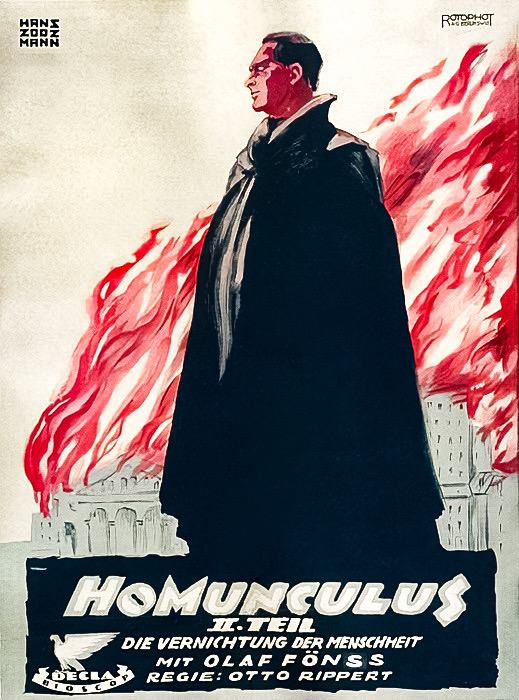
A definitive 6.9/10 rating for a film that redefined the boundaries of cult cinema. Homunculus, 2. Teil - Das geheimnisvolle Buch remains a cornerstone of transgressive art.
In the shimmering, often unsettling, landscape of early cinematic science fiction, Robert Reinert's Homunculus, 2. Teil - Das geheimnisvolle Buch emerges not merely as a sequel, but as a profound deepening of its predecessor's philosophical anxieties. This installment, part of a six-part serial, meticulously dissects the tormented existence of the titular artificial being, pushing the boundaries of what a silent film could convey in terms of complex psychological drama and societal commentary. It is a work that, even a century later, resonates with a chilling prescience regarding humanity's fraught relationship with creation and control, a stark mirror reflecting our enduring fascination with the 'other.' The narrative, as it unfurls, is less a conventional plot progression and more a relentless exploration of existential dread, framed within the thrilling contours of a chase for an enigmatic artifact.
The very premise of Homunculus—a being forged in a laboratory, devoid of a soul yet possessing a formidable intellect and an unquenchable thirst for understanding—is fertile ground for cinematic exploration. In this second chapter, the saga veers sharply into the mystical, introducing the titular 'Mysterious Book' as the potential key to either salvation or ultimate destruction for our anti-hero. This narrative pivot elevates the stakes considerably, transforming the Homunculus's personal quest into a race against time, not just for his own fate but for the very fabric of societal order that he so effortlessly destabilizes. It’s a bold stroke of storytelling, injecting an element of arcane lore into what was already a pioneering work of scientific fantasy. The genius of Reinert's writing, even without spoken dialogue, lies in its ability to communicate the profound internal turmoil of its characters, particularly the Homunculus himself, through stark imagery and the compelling performances of the ensemble cast.
Robert Reinert, as the sole writer, crafts a narrative that is both expansive and intensely focused. His vision for Homunculus transcends mere spectacle; it delves into the ethical quandaries of scientific advancement and the inherent dangers of playing God. The concept of a being created without love, yet yearning for it, is a powerful one, and Reinert masterfully weaves this tragedy through every frame. The 'Mysterious Book' serves as a brilliant MacGuffin, a tangible representation of the intangible answers Homunculus seeks. It’s a testament to Reinert's narrative prowess that he can imbue an object with such profound significance, driving the plot forward while simultaneously deepening the thematic resonance. His fingerprints are all over the psychological depth and philosophical weight that distinguish this serial from many of its contemporaries. One might even draw a parallel to the narrative ambition seen in films like Vera, the Medium, where a central enigmatic figure drives the plot through supernatural or unexplained abilities, though Reinert's approach is rooted more firmly in a proto-science fiction ethos.
The performances in Homunculus, 2. Teil are, in typical silent film fashion, often grand and expressive, yet within this theatricality lies a surprising degree of nuance. Olaf Fønss, in the titular role, delivers a performance that is nothing short of iconic. His Homunculus is a creature of immense power and profound sorrow, conveyed through a masterful command of body language and facial expression. Fønss manages to evoke both terror and a strange, unsettling sympathy for his character, a difficult tightrope to walk. He is not merely a monster; he is a tragic figure, cursed by his own existence. The sheer physicality of his portrayal is captivating, allowing the audience to glimpse the internal struggles of a being grappling with the very definition of humanity.
The supporting cast provides crucial anchors to Homunculus's chaotic world. Adolf Paul and Nelly Lagarst, whose roles likely involve navigating the societal fallout of Homunculus's actions or perhaps even directly interacting with him, contribute significantly to the film's emotional landscape. Their reactions—be it fear, awe, or a misguided attempt at understanding—serve to highlight the Homunculus's alienation. Aud Egede-Nissen, a prominent figure in early German cinema, brings a compelling presence, her characters often embodying a certain strength or vulnerability essential for grounding the more fantastical elements of the plot. Similarly, Margarete Ferida and Mechthildis Thein, along with Friedrich Kühne, Ernst Benzinger, Lore Rückert, Theodor Loos, and Einar Bruun, each fill their respective roles with the dramatic intensity characteristic of the era, contributing to the rich tapestry of human reactions to the unnatural. The collective effort of this ensemble ensures that the emotional stakes, though conveyed without dialogue, are undeniably palpable. The nuanced fear and fascination expressed by characters like those played by Aud Egede-Nissen or Nelly Lagarst, for instance, are reminiscent of the dramatic tension found in films like Trilby, where psychological manipulation and societal judgment play a significant role.
The cinematography of Homunculus, 2. Teil is a masterclass in silent film aesthetics. The use of dramatic lighting, stark contrasts, and meticulously composed frames creates an atmosphere of unease and grandeur. The search for the 'Mysterious Book' itself provides ample opportunity for visually striking sequences, perhaps exploring ancient libraries, hidden chambers, or perilous landscapes. The visual language is key to conveying the film's complex themes: the arrogance of creation, the burden of existence, and the elusive nature of a soul. The film's aesthetic often leans into the expressionistic, a style that would later define much of German cinema, creating a world that mirrors the Homunculus’s internal disquiet. This visual ambition can be seen as a precursor to the more overtly expressionistic works that would follow, much like the visual storytelling in La spirale della morte, which also relied heavily on evocative imagery to convey its thrilling narrative.
Thematically, the film grapples with questions that remain pertinent today. What defines humanity? Can a being created artificially ever truly belong? Is knowledge a blessing or a curse when it reveals uncomfortable truths about our origins? The 'Mysterious Book' becomes a powerful symbol for forbidden knowledge, for the answers that lie just beyond our grasp, and for the potential consequences of seeking them. It’s a journey into the heart of scientific and philosophical inquiry, wrapped in the thrilling guise of a silent film serial. The Homunculus's struggle to understand his own nature, and his increasing resentment towards humanity for his plight, offers a compelling exploration of alienation and rebellion. This theme of a protagonist struggling against societal norms or their own unique nature, often leading to tragic consequences, echoes in films like The Soul of a Magdalen, albeit in a vastly different genre context.
While often overshadowed by later, more famous German Expressionist films, the Homunculus serial, and particularly this second installment, laid crucial groundwork. It demonstrated the power of cinema to explore complex ideas, to provoke thought, and to create enduring myths. Its influence can be traced through the lineage of artificial intelligence narratives, mad scientist tropes, and the very concept of the 'unnatural' in film. The film, in its ambitious scope and profound character study, anticipates the existential angst that would permeate much of 20th-century art and philosophy. It asks us to confront our fears of the unknown, our responsibility as creators, and the fragile boundaries of what we deem 'human.' The blend of scientific speculation and mythological quest places it firmly as a foundational text in cinematic sci-fi, a genre that was still very much in its infancy.
The search for the 'Mysterious Book' not only provides narrative impetus but also serves as a potent metaphor for humanity's eternal quest for meaning and control. The book itself, much like the Homunculus, is an object of both fascination and dread, a repository of power that could uplift or destroy. This dual nature is expertly handled, maintaining a consistent tension throughout the film. The subtle interplay between the written word and the visual spectacle is a testament to the ingenuity of silent filmmaking, where intertitles and imagery work in concert to build a rich narrative tapestry. The film's ability to maintain a sense of urgency and mystery over multiple parts, much like the serialized adventures found in The Secret of the Submarine, speaks to its innovative storytelling structure.
The core of Homunculus, 2. Teil - Das geheimnisvolle Buch lies in its profound exploration of identity. The Homunculus is a being in perpetual crisis, constantly seeking to define himself against a world that has already defined him as an aberration. His journey for the book is, in essence, a journey for self-discovery, a desperate attempt to find an origin story or a purpose that might validate his existence. This struggle, universal in its appeal, transcends the fantastical elements of the plot, making the Homunculus a surprisingly relatable figure despite his monstrous exterior. The film challenges viewers to consider what truly constitutes a 'soul' or 'humanity,' pushing past superficial definitions to delve into the very essence of being. This deep dive into a character's internal world and their struggle for acceptance or understanding is a thematic thread that can be seen in various forms across cinema, from the melodramatic struggles in Bella Donna to the societal challenges faced by characters in Public Opinion, albeit with Homunculus taking it to a grander, more philosophical scale.
The film's pacing, characteristic of silent serials, maintains a relentless drive, ensuring that each revelation, each new obstacle in the Homunculus's path, feels impactful. The dramatic flair is never gratuitous; it serves to heighten the emotional and philosophical stakes. The visual metaphor of the 'Mysterious Book' itself—an ancient, possibly forbidden text—adds layers of gothic romance and intellectual intrigue to the scientific horror, creating a unique genre blend that predates many of the more recognized hybrid films. It's a testament to the creative freedom and daring experimentation of the early German film industry, where filmmakers were unafraid to tackle complex themes with a bold visual style and ambitious narrative structures. The enduring power of Homunculus, 2. Teil lies in its ability to captivate with its spectacle while simultaneously provoking deep contemplation about what it means to be alive, to be created, and to search for one's place in an indifferent universe. It stands as a vital, if sometimes overlooked, cornerstone of cinematic history, inviting repeated viewings to truly appreciate its intricate layers and enduring questions.
Reinert's vision, brought to life by a formidable cast led by Olaf Fønss, transcends mere entertainment, offering a potent, timeless commentary on creation, identity, and the relentless human (or artificial) quest for belonging.
Community
Log in to comment.