DbcultAccessing Vault...
Cult Review
Senior Film Conservator
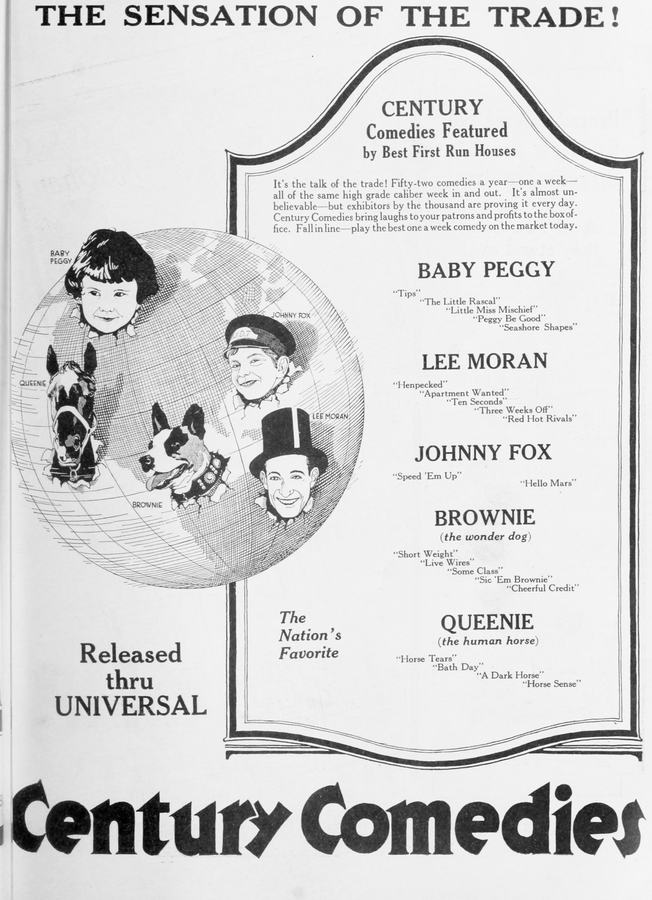
In the vibrant tapestry of early 20th-century cinema, where physical comedy reigned supreme and the flicker of celluloid brought stories to life without spoken word, Fred Hibbard’s 1921 short, Horse Sense, gallops forth as a delightful exemplar of the era’s comedic genius. This film, starring the effervescent Harry Sweet, Margaret Cloud, and the remarkably charismatic Queenie the Horse, is more than just a series of gags; it’s a masterclass in silent-era storytelling, a testament to the power of visual humor and the undeniable chemistry between its human and animal performers. From its unconventional opening to its climactic high-seas chase, Horse Sense offers a unique blend of absurdity, charm, and meticulously crafted slapstick that continues to resonate with audiences a century later.
The film immediately distinguishes itself with an audacious premise: a horse, Queenie, acting as the primary instigator of the plot. She doesn't just nudge; she propels Harry Cornell’s character (known primarily as Harry, though he insists on calling himself 'Doug') from his bed, an act of sheer, unadulterated comedic aggression. This isn't merely a quaint scene-setter; it's a bold declaration of the film's irreverent spirit, signaling to the viewer that conventional logic has been left at the stable door. Queenie isn't a mere prop; she's a character, a mischievous force of nature whose 'horse sense' seems to involve a profound understanding of how to disrupt human tranquility for maximum comedic effect. Her performance is a marvel, a testament to animal training and direction that allows her to feel like an active participant in the unfolding farce, rather than a passive bystander.
Harry Sweet, a name synonymous with early silent comedy, shines brightly in this role. His portrayal of Harry/Doug is a nuanced blend of stubbornness, naivete, and an almost childlike determination. The insistence on the names 'Doug' and 'Mary' for himself and his girl (Margaret Cloud) adds a layer of whimsical delusion, a playful subversion of reality that is a hallmark of great comedic writing. This particular quirk is not just a throwaway gag; it establishes Harry’s character as one who lives slightly outside the bounds of convention, creating his own reality, however impractical. Sweet’s physical comedy is impeccable, from his protracted, almost comically inept attempts to mount Queenie to his subsequent, surprisingly agile stunts. He embodies the spirit of the early 20th-century everyman, thrust into extraordinary circumstances, reacting with a blend of exasperation and boundless energy.
Margaret Cloud, as Harry’s spirited companion, complements Sweet’s performance beautifully. Her character is not merely a damsel in distress or a passive love interest; she is an active participant in the shenanigans, mirroring Harry’s adventurous spirit and engaging in the same playful stunts. Their chemistry is palpable, a silent dialogue of shared mischief and affection that elevates the romantic subplot beyond mere contrivance. The scene where they perform stunts in imitation of 'Mary and Doug' is a delightful showcase of their synchronized comedic timing and physical prowess, a miniature spectacle within the larger narrative that highlights their bond and shared playful rebellion against the mundane.
The narrative structure of Horse Sense is notably bifurcated, a common technique in shorts of the era to maximize comedic potential across different settings. The transition from the domestic, rural setting to the grand, bustling environment of a large steamer for the second half is a stroke of genius. It allows for a fresh array of comedic opportunities, shifting from equestrian antics to maritime mayhem. The girl's father, played with a delightful exasperation by Bud Jamison, becomes the primary antagonist, his paternal protectiveness clashing hilariously with Harry’s relentless pursuit. Jamison, a veteran of countless silent comedies, brings a robust, physical presence to the role, his frustration escalating with each thwarted attempt to separate the young lovers. His performance is a masterclass in conveying escalating rage and futility without uttering a single word.
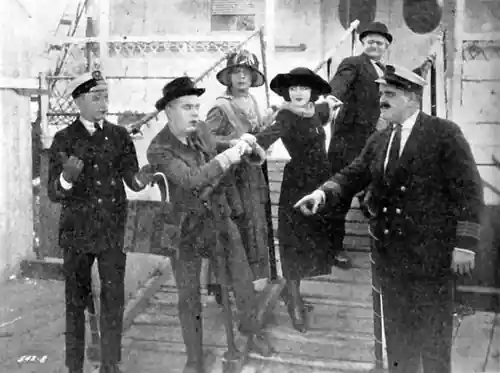
The steamer setting introduces a whole new cast of characters who inadvertently become entangled in the comedic imbroglio. The captain, a figure of authority whose dignity is constantly undermined, and the first mate, equally flustered by Harry’s persistence, contribute significantly to the escalating chaos. Their collective efforts to prevent Harry from embarking, and later to contain his antics aboard the vessel, are a series of increasingly elaborate and futile endeavors, each one designed to provoke laughter. This escalating pattern of thwarted authority figures is a classic comedic trope, but here it is executed with precision and an infectious energy, reminiscent of the intricate comedic setups found in films like Sunshine Dad, where narrative propulsion often relied on a string of escalating, interconnected mishaps. The humor derives not just from the individual gags, but from the cumulative effect of these well-meaning individuals being systematically outmaneuvered by Harry’s sheer, unyielding will.
Fred Hibbard’s direction is a study in efficient comedic filmmaking. He understands the rhythm of slapstick, knowing precisely when to accelerate the pace for a chase sequence and when to allow a gag to breathe, letting the audience savor the absurdity. The camera work, while typical of the era, is always functional, framing the action effectively to highlight the physical comedy and character reactions. There's a certain unpretentious charm to the cinematography, focusing on clarity and dynamism rather than elaborate artistry, which perfectly suits the film's lighthearted tone. The use of practical effects for the stunts, particularly those involving Queenie and the steamer, adds an authentic, tactile quality that modern CGI-heavy comedies often lack. The film’s commitment to physical comedy is unwavering, a testament to the belief that genuine laughter stems from well-executed visual humor.
One cannot discuss Horse Sense without acknowledging its place within the broader context of silent film comedy. It exists in an era dominated by titans like Chaplin, Keaton, and Lloyd, yet it carves out its own niche with its unique blend of animal-driven humor and Harry Sweet’s distinctive persona. While perhaps not as philosophically profound as a Chaplin short or as architecturally ambitious as a Keaton feature, Horse Sense excels in its specific aims: to entertain, to surprise, and to elicit genuine mirth. It’s a film that understands the simple joy of a well-timed pratfall, the absurdity of a persistent suitor, and the unexpected comedic potential of a horse with a mind of its own. In many ways, it shares a spirit with other comedies of the period, like Brewster's Millions (1921), which also relied on a series of escalating, often farcical, situations to drive its narrative and generate humor, albeit with a different central premise.
The film's title itself, Horse Sense, is a clever play on words. While Queenie the Horse certainly exhibits a peculiar form of 'sense' in her actions, the human characters, particularly Harry, seem to operate with anything but conventional wisdom. His stubborn insistence on calling himself 'Doug' and his relentless pursuit of his love interest, despite all obstacles, speaks to a different kind of 'sense' – one driven by passion and an almost irrational exuberance. This ironic title underscores the film's playful tone, inviting the audience to embrace the illogical and find humor in the unconventional. It’s a subtle nod to the film’s underlying intelligence, even amidst its overt silliness.
The lasting appeal of Horse Sense lies in its timeless humor. The gags, though simple by modern standards, are executed with such clarity and conviction that they remain effective. The expressions of frustration on Bud Jamison’s face, the bewildered attempts of the captain, and Harry Sweet’s indefatigable energy transcend the decades, speaking a universal language of comedy. It’s a reminder of a bygone era of filmmaking, where creativity often stemmed from limitations, and the ingenuity of performers and directors had to compensate for the absence of sound and elaborate special effects. The film’s brevity is also a strength; it doesn’t overstay its welcome, delivering its comedic payload with precision and leaving the audience wanting more.
In conclusion, Horse Sense is a charming, often uproarious, silent comedy that deserves its place in the annals of early cinema. It’s a testament to the comedic prowess of Harry Sweet, the delightful performance of Queenie the Horse, and the astute direction of Fred Hibbard. For those seeking an authentic taste of 1920s slapstick, a film that combines domestic absurdity with maritime adventure, and a story driven by pure, unadulterated comedic energy, Horse Sense is an absolute must-watch. It’s a film that, much like Harry’s unwavering pursuit, leaves a lasting impression, proving that sometimes, the best sense is no sense at all, especially when it comes to eliciting a hearty laugh.
IMDb 5.8
1935
Community
Log in to comment.