DbcultAccessing Vault...
6.5/10
Senior Film Conservator
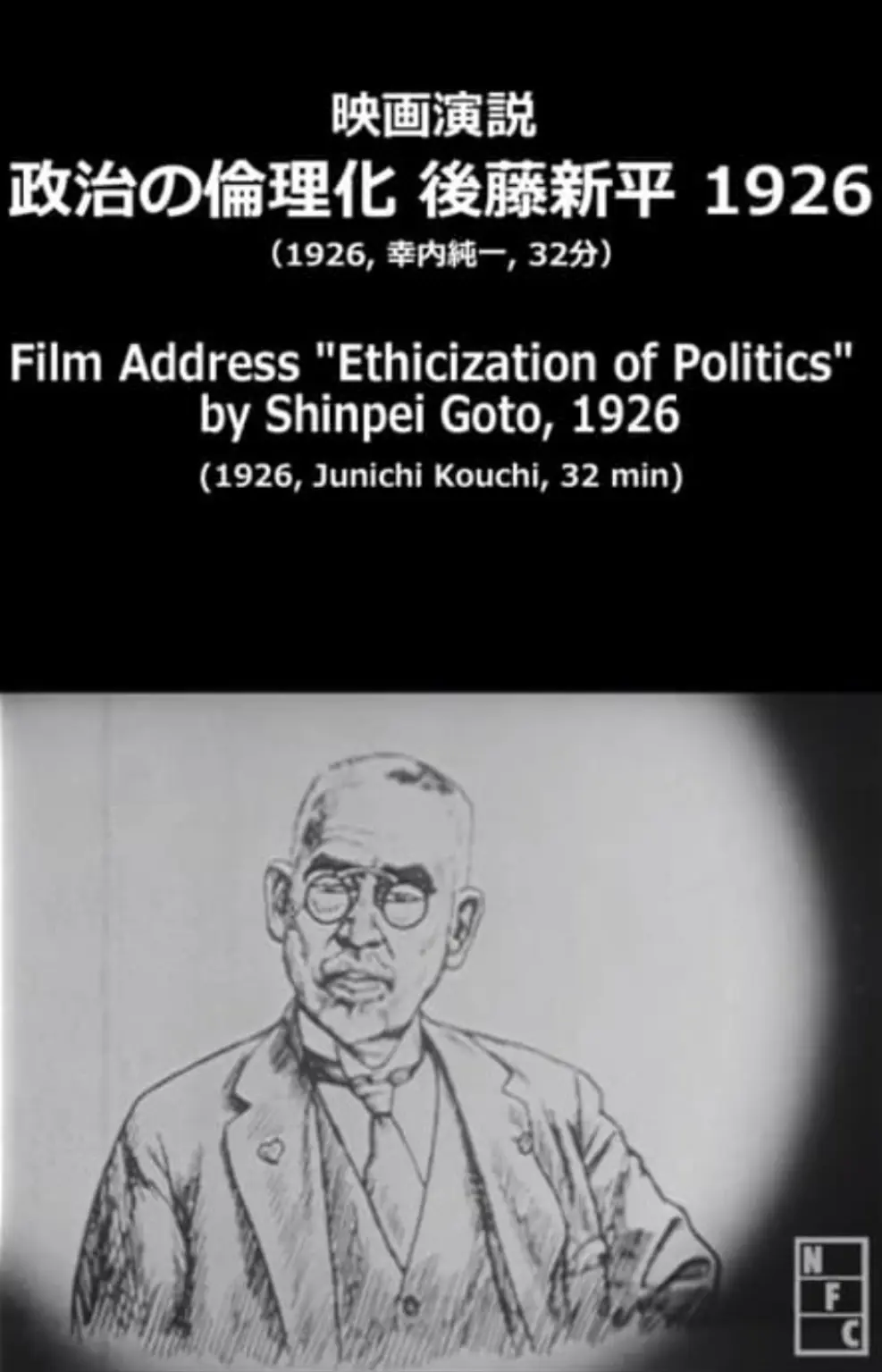
A definitive 6.5/10 rating for a film that redefined the boundaries of cult cinema. Eiga enzetsu: Seiji no rinrika remains a cornerstone of transgressive art.
Does a century-old political lecture have any business being on your watchlist today? Short answer: no, unless you are a dedicated archaeologist of the moving image. This film is a rigid, didactic experience designed for a specific historical moment that has long since passed. It is strictly for students of early Japanese animation and political historians; it is absolutely not for anyone seeking narrative satisfaction or traditional cinematic entertainment.
The film exists at a strange crossroads. On one hand, you have the stoic, almost monolithic presence of Shimpei Goto, a man whose influence on post-earthquake Tokyo cannot be overstated. On the other, you have the whimsical, fluid lines of Junichi Kôuchi, one of the 'fathers' of anime. The collision of these two worlds—the heavy weight of political ethics and the light touch of hand-drawn ink—creates a viewing experience that is as jarring as it is fascinating. It is a dry film, but it is a significant one.
1) This film works because it utilizes the surreal flexibility of animation to explain the rigid, often invisible concepts of civic duty and political corruption. When Goto speaks of the 'rot' in the system, Kôuchi visualizes it with a directness that live-action of the time simply couldn't muster.
2) This film fails because it lacks a narrative pulse. There is no protagonist here other than 'The Idea,' and without a human story to anchor the ethics, the film feels more like a mandatory classroom slideshow than a piece of cinema.
3) You should watch it if you want to see the exact moment political propaganda and animation first shook hands in Japan, creating a blueprint for how information would be disseminated for the next century.
The most striking element of Eiga enzetsu: Seiji no rinrika is the way it treats the screen as a chalkboard. In 1924, cinema was still largely viewed as a novelty or a theatrical surrogate, as seen in films like The Warrens of Virginia. However, Goto and Kôuchi saw it as a pedagogical tool. The film doesn't just record a speech; it deconstructs it. When Goto discusses the balance of power, the screen shifts to Kôuchi’s animation, which uses simple but effective shapes to illustrate the weight of the individual against the state.
Kôuchi’s animation style here is primitive but purposeful. Unlike the more decorative or comedic work found in other early silents, every line here is subservient to Goto’s message. There is a specific moment where a personification of 'The State' is shown, not as a glorious monument, but as a living organism that requires constant ethical nourishment. This kind of visual metaphor was revolutionary. It predates the sophisticated propaganda of the 1930s but contains all the same DNA.
Watching Shimpei Goto on screen is a lesson in Taisho-era gravitas. He doesn't perform for the camera in the way an actor in The Light in the Dark might. He occupies the frame with a stillness that borders on the intimidating. His presence is the anchor for the entire film. If the animation is the subconscious of the piece, Goto is the ego—the rational, firm voice demanding order in a chaotic world.
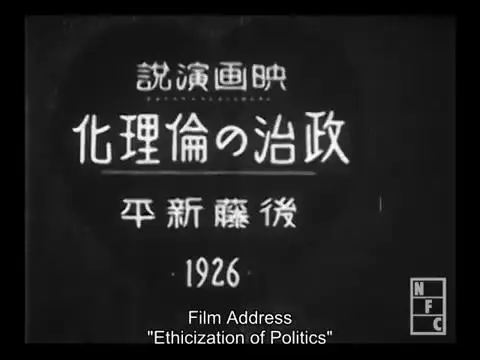
There is a brutal simplicity to the way he is filmed. The cinematography doesn't attempt the expressionistic flourishes seen in German imports like Die Jagd nach dem Tode. Instead, it is functional. The camera stays fixed, forcing the viewer to contend with Goto’s gaze. It is a confrontational style of filmmaking. It says, 'Listen, or the nation fails.' It’s effective, but it’s exhausting.
If you are looking for a story, no. If you are looking for the roots of modern media, yes. This is a film that demands to be studied rather than enjoyed. It is a technical relic that shows how early filmmakers struggled to combine text, image, and ideology into a single cohesive unit. It’s flawed. It’s dry. But it is essential for understanding the evolution of the Japanese documentary and animation industries.
Pros:
Cons:
When compared to international contemporaries like High Life or the social dramas of The Dangerous Age, Eiga enzetsu: Seiji no rinrika feels like it belongs to a different medium entirely. While the West was perfecting the language of the close-up and the cross-cut, Japan was experimenting with the language of the 'illustrated lecture.' This film doesn't care about the 'kuleshov effect' or the glamour of Hollywood; it cares about the transmission of an idea.
This focus on utility over beauty is what makes it so fascinating. There is a scene where the animation depicts the 'wheels of government' grinding to a halt due to corruption. It’s a literal representation that would be considered heavy-handed today, but in 1924, it was a breakthrough in visual literacy. It taught audiences how to 'read' animation not just as a gag, but as a serious form of communication. This is a far cry from the lighthearted nature of Patsy's Jim.
Eiga enzetsu: Seiji no rinrika is a cold, calculated piece of media. It lacks the warmth of a film like The Beautiful Adventure and the raw drama of The Woman Gives. However, its importance is undeniable. It is the missing link between the traditional woodblock prints of the past and the digital propaganda of the future. It is a difficult watch, but for those willing to put in the work, it offers a window into a world where cinema was still deciding what it wanted to be. It is a lecture caught on celluloid, and while the speaker has long been silent, the visual language he helped pioneer continues to scream.
"A fascinating, if exhausting, look at the moment animation stopped being a toy and started being a weapon of the state."

IMDb 6.2
1936
Community
Log in to comment.