DbcultAccessing Vault...
Cult Review
Senior Film Conservator
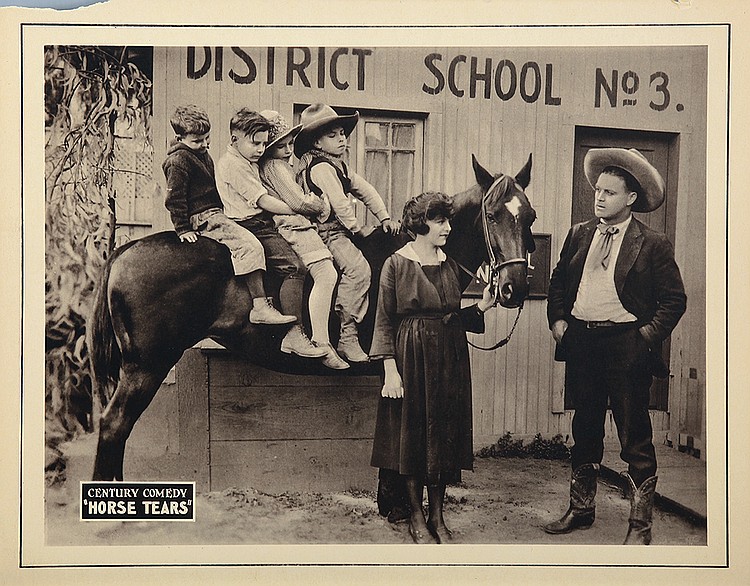
In the vast, verdant fields of early 20th-century cinema, where narratives often hinged on grand gestures and melodramatic declarations, a film like Fred Hibbard's "Horse Tears" emerges as a quiet, yet profoundly moving, testament to the power of unadulterated loyalty. This isn't merely a story about humans and their emotional entanglements; it's a profound exploration of the bond between species, elevating an equine protagonist to a position of pivotal agency and heartfelt heroism. "Horse Tears" captures a particular zeitgeist of the silent era, one that celebrated simple virtues, the purity of nature, and the triumph of good intentions over superficial charm. It's a cinematic experience that, even a century later, manages to tug at the heartstrings with its earnest portrayal of devotion and the subtle complexities of human desire.
At the heart of this touching narrative is Queenie, a horse whose expressive eyes and intelligent demeanor convey more emotion than many human actors of the period could muster. Queenie isn't just a prop or a plot device; she is the emotional anchor, the catalyst, and ultimately, the savior of the human protagonists. Her initial role as the cherished companion to young Jackie and the unofficial, four-legged guardian of the village schoolchildren immediately endears her to the audience. This portrayal establishes her as a creature of immense empathy and responsibility, far beyond what one might expect from an animal character. Her owner, a kind-hearted but somewhat naive village policeman, relies on her not just for transport, but for companionship and perhaps, a silent understanding. This relationship forms the bedrock upon which the entire dramatic structure is built. The film masterfully demonstrates Queenie's active participation in the community, not as a beast of burden, but as an integral, beloved member, setting the stage for her later heroic deeds. It's a portrayal that transcends mere animal training, suggesting a genuine connection and intelligence that elevates Queenie to a truly iconic status within the annals of early cinema.
While Queenie provides the film's unique soul, the human drama unfolds with classic silent film earnestness. The village policeman, a figure of quiet integrity and unwavering devotion, finds himself ensnared by the cruel irony of unrequited love. His heart belongs to the local schoolteacher, a woman whose beauty and grace have, regrettably, blinded her to the sincere affections of her humble admirer. Instead, her gaze is captivated by the alluring, yet ultimately hollow, charm of a city slicker. This character, a quintessential antagonist of the era, embodies the perceived dangers and moral ambiguities of urban life, a stark contrast to the rustic simplicity and honesty of the countryside. The policeman's yearning is palpable, a silent agony that resonates deeply. His decision to pursue the teacher to the city, driven by a desperate hope that a change of scenery and perhaps a more 'worldly' persona might win her over, is born of both love and profound insecurity. This desperate gamble leads to the film's central, heartbreaking sacrifice: the sale of Queenie. It's a moment pregnant with emotional weight, as the audience understands the depth of the policeman's love must be immense to part with such a loyal companion. This romantic triangle, while conventional, is imbued with a raw emotional honesty that was a hallmark of the best silent dramas. The teacher's initial attraction to the slicker highlights a common theme of the era: the allure of the unknown, the sophisticated, and the potentially dangerous, often at the expense of genuine, steadfast affection.
IMDb —
1919
Community
Log in to comment.