DbcultAccessing Vault...
6.1/10
Senior Film Conservator
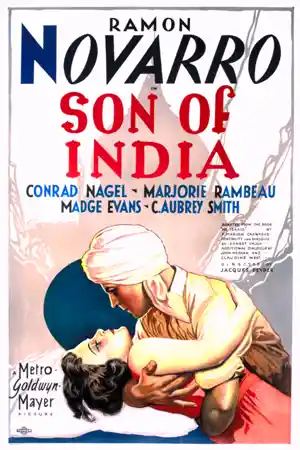
A definitive 6.1/10 rating for a film that redefined the boundaries of cult cinema. Son of India remains a cornerstone of transgressive art.
Alright, so if you’re looking for something fast-paced and slick from the early days of talkies, Son of India probably isn’t your pick. It’s definitely one for the patient crowd, or maybe film history buffs curious about how cultures clashed on screen back then. Anyone expecting modern subtlety or explosive drama might find themselves checking their watch, but for those who enjoy a peek into old Hollywood’s way of doing things, there’s a certain, albeit peculiar, charm.
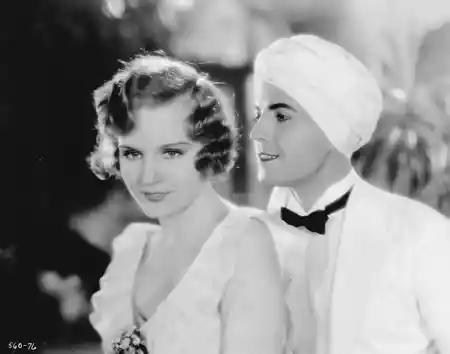
The whole setup is pretty straightforward: Ramon Novarro plays Karim, this really wealthy Indian guy, who falls head over heels for an American woman, Janice (Madge Evans). And, naturally, her family, especially the dad, played by C. Aubrey Smith, is just not having it. Their resistance is, well, a lot. Like, surprisingly intense for a movie of this sort. It’s less about character depth and more about them being a solid wall.
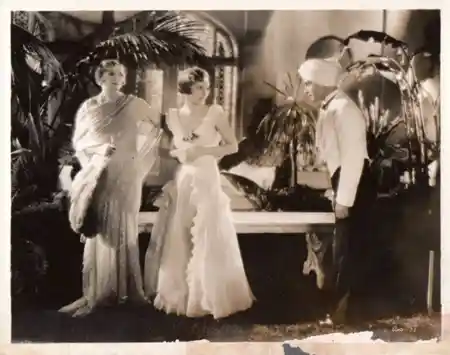
The pacing here is something else. Some scenes just… linger. There’s one bit where Karim and Janice are just looking at each other for what feels like an eternity. You can almost hear the director yelling, "Feel the emotion!" 🤔 But it mostly just feels like a very long pause. It's not necessarily bad, just very *of its time*.
Marjorie Rambeau shows up as Mrs. Evans, Janice’s mom, and honestly, she’s one of the more interesting characters. She’s trying to keep the peace, but you can tell she’s got her own ideas about things, even if she can’t always voice them. There’s a scene where she gives this look to her husband that just says everything without a single word. It’s a nice touch amidst some pretty grand gestures elsewhere.
Conrad Nagel plays Dr. Allen, who’s also sweet on Janice. This whole love triangle feels a bit tacked on, almost like they needed extra conflict that wasn't just the family saying no. He doesn't really have much to do other than look concerned and occasionally make a plea. His character feels like he’s just there to make Karim look more determined.
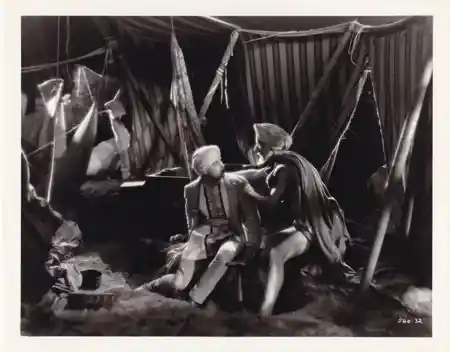
The film’s portrayal of India and its customs is… well, it’s dated, for sure. Very much seen through a Western lens of the era. Karim is depicted as this noble, almost saintly figure, but sometimes his reactions, or what the film *wants* us to see as noble, come off a little stiff. There's a certain exoticism at play that feels a little uncomfortable today, but it’s interesting to see how these stories were told way back when.
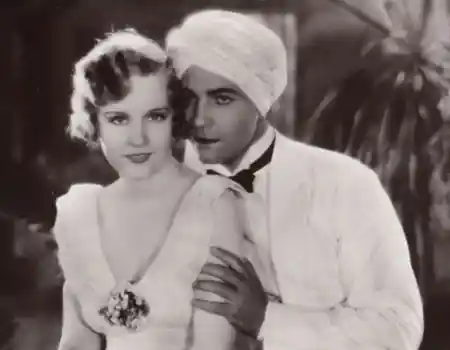
One moment that really stuck with me: there's this scene where Karim is trying to explain his background, and the way the other characters just dismiss it, or misunderstand it, is pretty stark. It highlights the main conflict in a really blunt way. Like, they’re not even trying to understand; they're just *shutting down*.
And the acting! Oh boy. Ramon Novarro is very earnest, sometimes to a fault. You can see him *trying* to convey deep emotion. Madge Evans, as Janice, is quite pretty and does a good job with what she’s given, which is mostly to look distressed or in love. C. Aubrey Smith, though, he’s just a rock. A very English, very unmoving rock. His disdain is palpable, almost comically so.
The whole resolution, when it finally arrives, feels a little too neat. After all that resistance, it feels like they just needed to tie things up quickly. You invest a lot of time watching the characters struggle, and then it’s like, “Oh, okay, guess that’s settled then.” It’s a bit of a whiplash.
If you're into the aesthetics of old films, the costumes and sets are pretty lavish. Karim's jewels are definitely sparkly. ✨ But don't expect a lot of dynamic camera work. It's mostly pretty static, letting the actors do their thing in front of the camera.
Overall, Son of India is a curiosity. It’s not going to blow your mind, and it’s certainly not a hidden gem in terms of progressive storytelling. But if you have an hour or so and want to see how early Hollywood tackled cross-cultural romance, it’s worth a watch, just to see how much things have changed… and in some ways, haven't.
IMDb —
1927
Community
Log in to comment.