DbcultAccessing Vault...
Cult Review
Senior Film Conservator
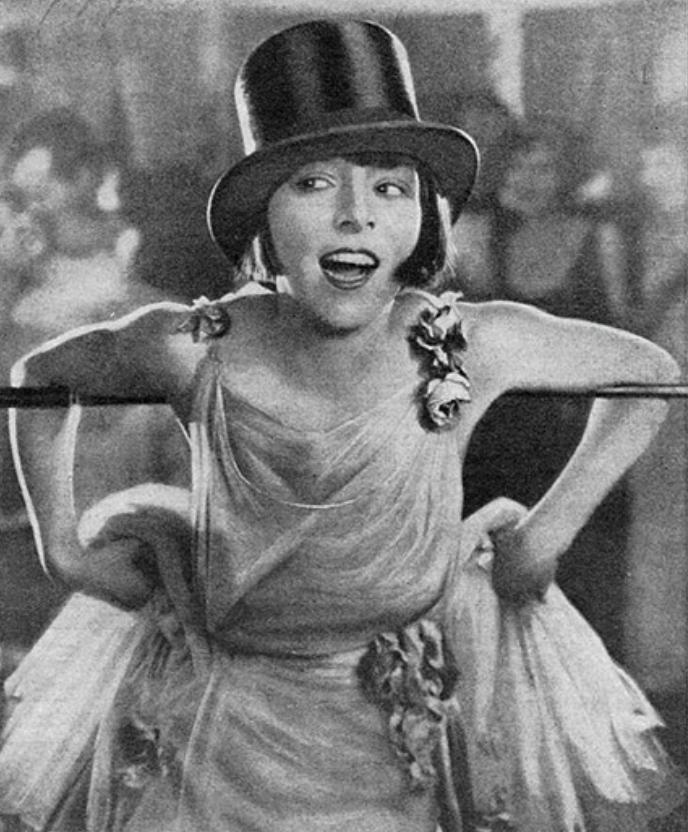
Berlin, 1927. Outside, the pavement glistens with November rain; inside, the neon vomits sodium lemon onto cracked velvet seats. Tingeltangel doesn’t walk onstage—it slithers, cigarette clamped between its teeth, winks, and promises you the kind of thrill that leaves bite-marks on morality. What Sieburg and Lüthge have stitched together is less a narrative than a fever dream pinned to a corkboard: a collage of thighs, top-hats, and suicide notes written on the backs of unpaid bar-tabs.
Charlotte Hagenbruch, all clavicles and yearning, embodies the provincial lamb who thinks the wolf will spare her if she sings on key. Her first close-up—an iris shot that dilates until the whites resemble porcelain fracture lines—announces the film’s creed: beauty is currency, and the exchange rate is hemorrhaging. When she steps into the revue’s rehearsal loft, cinematographer Carl Geppert’s camera glides past rows of dancers powdering their knees with flour, the dust clouding the air like cheap angel wings. The scene is lit the color of absinthe nausea; you can almost taste the anise and rust.
Tzatschewa, draped in a sequined dress that behaves like liquid mercury, owns every frame she poisons. She delivers a torch number whose lyrics are nonsense syllables—“la-bim-ba-loo”—but the timbre is pure sex and foreclosure notices. Watch how director whoever-was-in-charge cuts on the hard consonants: every “ba” lands on a montage of breadlines, every “loo” on a bourgeois couple signing divorce papers. The film’s sonic environment—jazz brushed onto the optical track like wet lacquer—bleeds through the images until you can’t separate syncopation from sobs.
Karl Bernhard’s impresario is a study in lacquered rot: pencil moustache, gloves whiter than cocaine, and a smile that arrives five seconds before his face does. In one bravura sequence he rehearses a new revue number titled “Frisson of the Guillotine,” brandishing a papier-mâché blade that turns real the moment the spotlight hits it. The chorus line tap-dances on a floor rigged with steel sheets; every heel-click sends sparks cascading like Edison’s electric ejaculations. The metaphor is blunt yet electric: the Republic tap-dances on a scaffold of its own making.
Side characters orbit like moths with singed wings. Wilhelm Bendow’s stagehand keeps a pet rat named Anschluss; Magda Madeleine’s dresser trades stock tips inside feather boas; Hans Heinrich von Twardowski’s morphine-addicted playwright types his masterpiece on toilet paper, then eats the pages to conceal the evidence. Each micro-story is a shard of mirror reflecting the macro-catastrophe outside the theater doors. The script, co-written by journalist Sieburg (whose Weimar reportage dripped venom) and pulp maestro Lüthge, refuses psychology; instead it opts for a mosaic of symptoms.
Compare the structure to The Seven Swans’ folkloric linearity or Le sept de trèfle’s surreal card-game fatalism, and you’ll appreciate Tingeltangel’s radical discontinuity. Acts don’t transition; they detonate. One moment we’re inside a dressing-room farce involving two mistaken identities and a misplaced merkin; the next we’re in a expressionist nightmare where Karl’s silhouette inflates to twenty-foot height, projected onto a bedsheet that billows like a Zeppelin. The tonal whiplash is intentional: happiness here is merely the anesthetic before the amputation.
The film’s visual grammar anticipates later backstage poison-pen letters such as Lights of New York or Too Much Johnson, yet predates them by a half-decade. Notice the handheld shots weaving through stomping chorines—camera operator hugging a 250-pound Debrie like a drunk lover—predating the manic stagings of Power by nearly ten years. The celluloid itself seems sweat-stained; scratches flicker like cellulite across the frame, a reminder that film is flesh, and flesh is fragile.
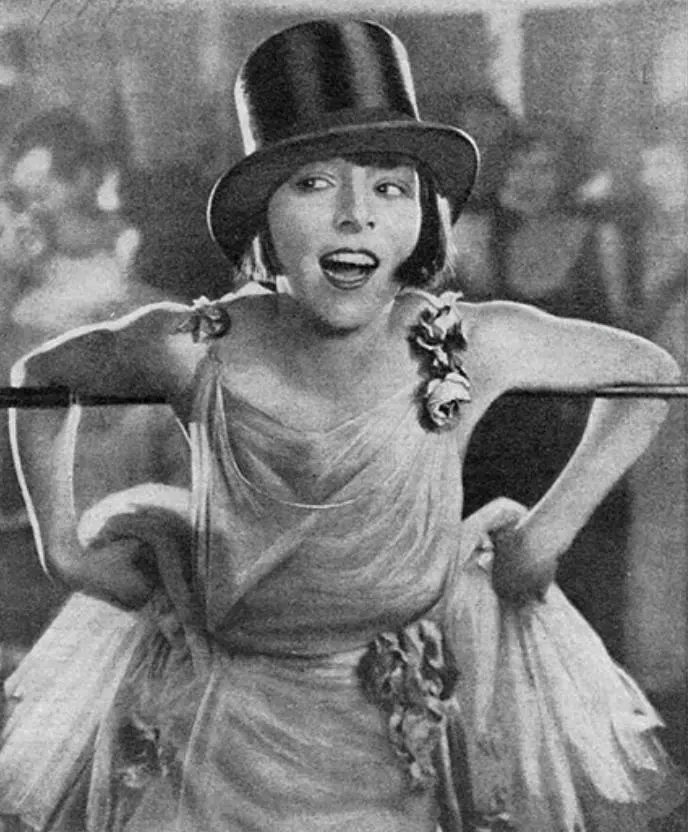
Restoration-wise, the 2022 Munich nitrate salvage is a revelation. The tinting—amber for interiors, cyan for exteriors, sea-foam for morphine hallucinations—follows German taste of the late ’20s, but the contrast is cranked until the brights scald. In the new 4K scan you can read the frayed hems of Charlotte’s slip, the razor burn on Bernhard’s neck. The original orchestral score, reconstructed by Aljoscha Zimmermann, interpolates “Es geht die Post von hier” into a foxtrot that collapses into twelve-tone dissonance whenever someone onscreen sells a piece of their soul.
Sexual politics? The film is a minefield. Women barter bodies for billing and billing for bodies in an endless M.C. Escher loop. Yet the camera lingers on their exertion, the sweat-slick clavicles, the bruised knees, with something approaching reverence. When Tzatschewa finally belts the closing reprise, the lyrics translate roughly to: “I am the wound and the knife / the laugh and the scar.” The line lands like a feminist gauntlet, albeit one embroidered in rhinestones. Compare that to the puritanical moralism of A Mormon Maid or the orientalist hokum of The Spanish Jade, and Tingeltangel feels startlingly progressive, even if its empathy is wrapped in sable cynicism.
Performance hierarchies crackle with electricity. Hagenbruch’s ingenue begins as milquetoast, but midway through she executes a drunken shimmy that transmogrifies her doe eyes into floodlights of desperation. It’s the kind of metamorphosis that makes you understand why Berlin critics compared her to a “Dietrich in chrysalis.” Bernhard, meanwhile, chews not merely the scenery but the proscenium arch; he swaggers like a man who’s read Nietzsche in the original but uses it to pick up chorus girls. When he finally confesses—via a grotesque puppet-show within the film—that he’s bankrupt, his voice cracks into falsetto, revealing the scared child beneath the predator.
The final ten-minute crescendo is a master-class in montage. Cutting between the onstage can-can and police batons cracking skulls outside, the editors splice footage of the real 1927 May Day riots (licensed clandestinely, because Ufa feared censorship). A kick, a truncheon, a flash of thigh, a blood spurt—rhythm becomes politics. The film ends with a freeze-frame of Charlotte’s face, mouth agape in a high-note that we never hear because the optical track burns white. The last intertitle reads: “Applaud, ye citizens—tomorrow the hangman takes his bow.” Then darkness, no end card, no “The End.” The projectionist simply closes the drapes, and you sit there tasting copper, realizing the film has been biting your tongue the whole time.
Legacy? Tingeltangel sank on release, trampled by Metropolis’s heels, buried under the stock-market rubble of ’29. Prints vanished; rumors swirled that Goebbels ordered the negative torched for its “decadent pessimism.” Only one dupe survived in Tokyo, mislabeled as Humanidad, discovered in 1987 by a grad student hunting South-American melodramas. Now that it’s restored, critics invoke it as the missing link between Caligari’s madness and Blue Angel’s erotic fatalism. It makes The Island of Intrigue look quaint, The Great Radium Mystery downright wholesome.
Should you watch it? If your idea of escapism is a velvet-lined casket, absolutely. The film offers no catharsis, only the vertigo of staring down a century-old abyss that keeps winking back. It’s a séance where the ghosts demand drink tickets. But for anyone tracing the DNA of modern anti-musicals—Cabaret, All That Jazz, even Pennies from Heaven—Tingeltangel is the primordial strand, the virus that learned to sing before it killed the host. Stream it on Kanopy’s German Expressionism channel, or catch the DCP at your nearest cinematheque when the curator feels like scorching eyeballs. Bring no date, only witnesses.
Verdict: a corrosive masterpiece, half-remembered like a hangover you secretly treasure. It deserves a place on the shelf beside Passion of Joan of Arc and Battleship Potemkin, not because it moralizes or uplifts, but because it chronicles the moment when the twentieth century learned to laugh while chewing glass. The joke, Tingeltangel insists, is us—still tap-dancing on the trapdoor, still applauding as the rope tightens.
IMDb —
1920
Community
Log in to comment.