DbcultAccessing Vault...
Cult Review
Senior Film Conservator
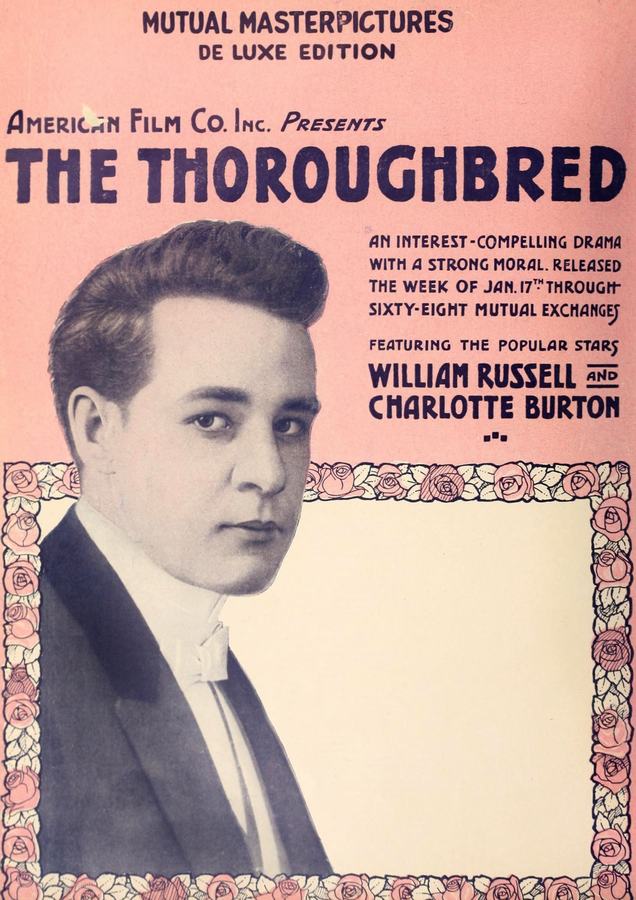
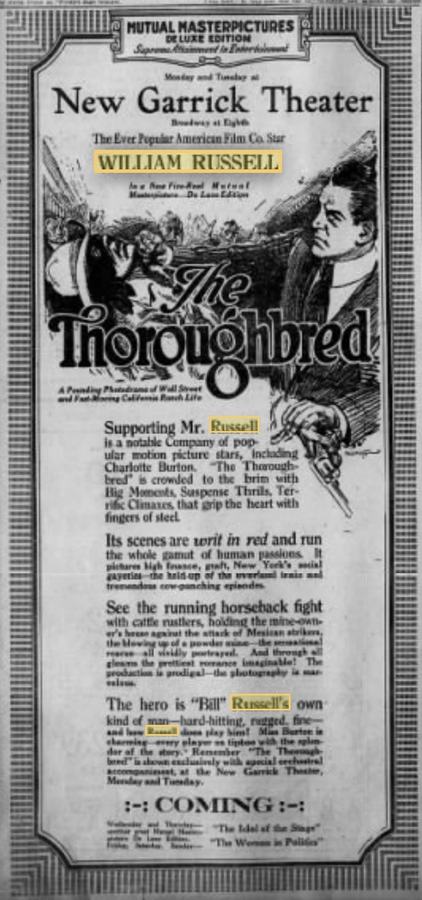
The silent era of cinema often grappled with the dichotomy of the urban machine versus the regenerative power of the frontier. In The Thoroughbred (1916), we are treated to a narrative tapestry that weaves together the frantic anxiety of the stock exchange with the visceral, dust-choked reality of the Western ranch. It is a film that demands we examine the definition of nobility—not as a birthright, but as a quality forged in the crucible of adversity. Unlike the darker explorations found in The Rogues of London, this film leans into the quintessentially American myth of the self-made man who must lose everything to find his soul.
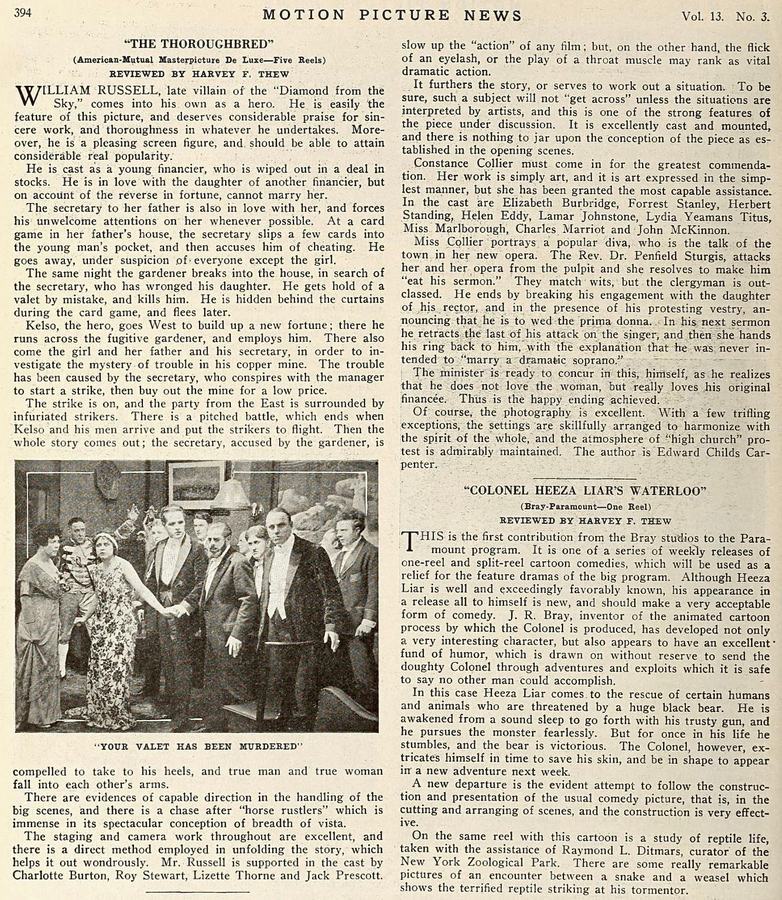
The film opens with a sequence that remains hauntingly relevant: the feverish observation of the ticker tape. Kelso Hamilton, portrayed with a frantic, wide-eyed intensity by the lead, is not merely a gambler; he is a man attempting to buy his way into a domestic paradise. His reliance on Union Consolidated is his Achilles' heel. When the 'bear raid' begins, the cinematic tension is palpable. The numbers on the board are not just digits; they are the bars of a cage closing in. When the stock hits 42, the collapse is total. This financial ruin is the narrative engine that drives Hamilton out of the drawing rooms of the elite and into the unforgiving sun of the West.
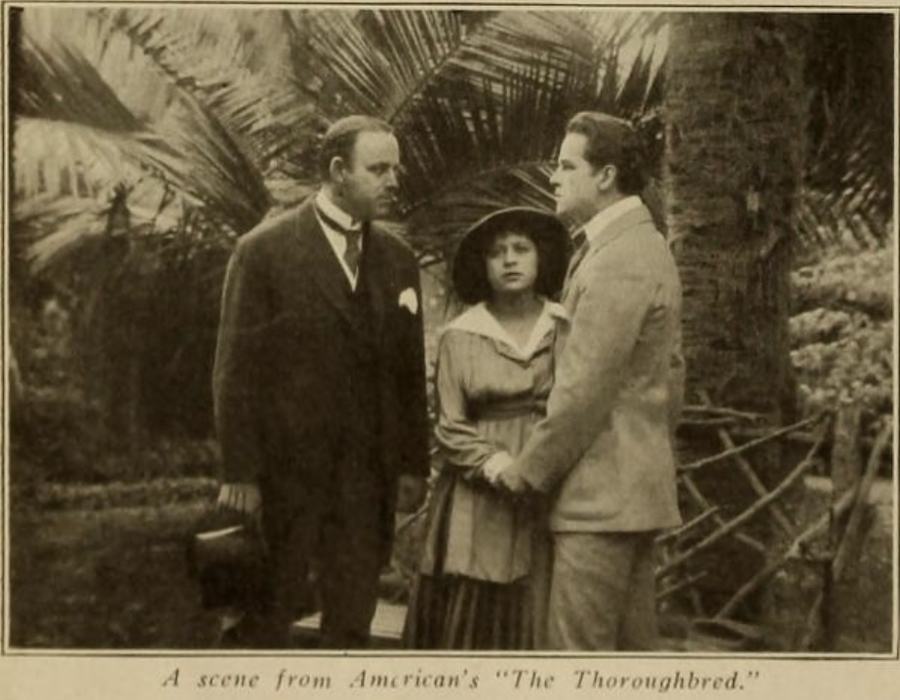
Enter George Carewe, a villain of Shakespearean proportions. While Othello deals with jealousy, Carewe is driven by a more modern vice: cold, calculated avarice. His manipulation of Jessie Cook and his subsequent framing of Hamilton during a card game is a masterclass in social assassination. By planting cards in Hamilton's smoking jacket, Carewe doesn't just steal his money; he steals his 'thoroughbred' status—his reputation. The Earle family, representing the gullible upper class, falls for the ruse, proving that even the most refined circles are susceptible to the crudest deceptions.
Hamilton’s transition to the West is not a retreat, but a pilgrimage. The film utilizes the vastness of the landscape to mirror the internal expansion of the protagonist’s character. The sequence involving the Limited train and the subsequent bandit attack serves as a high-octane pivot point. It is here that we meet Tom Cook, a man fleeing his own shadows. The irony of a 'murderer' saving the life of a 'cheat' provides a rich layer of moral complexity. Their alliance is born of necessity but cemented in mutual desperation. As Hamilton builds his ranch, we see the 'thoroughbred' spirit manifest in labor rather than speculation.
"True character is not found in the winning of a hand, but in the endurance of the soul when the deck is stacked against it."
The cinematography during the ranch sequences offers a stark contrast to the claustrophobic office spaces of the first act. The use of natural light and wide shots emphasizes the freedom that Hamilton has found, even as he remains a fugitive from his own name. This thematic movement from the artificiality of the city to the authenticity of the wilderness is a trope well-worn in films like Whispering Smith, yet here it feels uniquely tied to the protagonist's specific fall from financial grace.
The third act of The Thoroughbred introduces a sophisticated plot involving mining property and the manipulation of the working class. Carewe’s villainy evolves from personal spite to corporate malfeasance. By stirring up the Mexican miners and depreciating stock values, he mirrors the very bear raid that ruined Hamilton in the beginning. This cyclical nature of greed suggests that the 'bears' of Wall Street and the 'rustlers' of the hills are merely different species of the same predator.
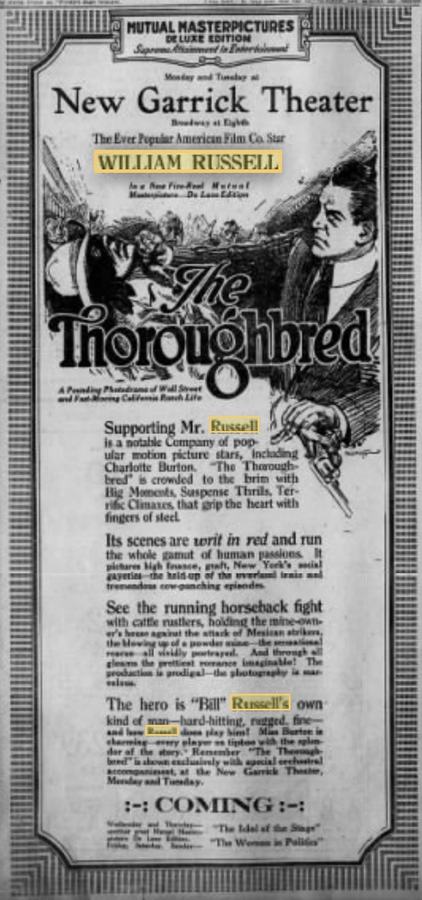
The escalation of tension at the mine is handled with surprising technical proficiency for 1916. The barricaded house, the encroaching mob, and the eventual explosion of the powder house create a visual spectacle that serves as the film’s emotional crescendo. The explosion illuminates more than just the mountainside; it illuminates the truth. When Hamilton rides to the rescue, he is no longer the man who watched the ticker tape in a cold sweat. He is a man of action, a man of the earth. The rescue of Angela is a poetic reversal of his earlier inability to 'save' her with his lost fortune.
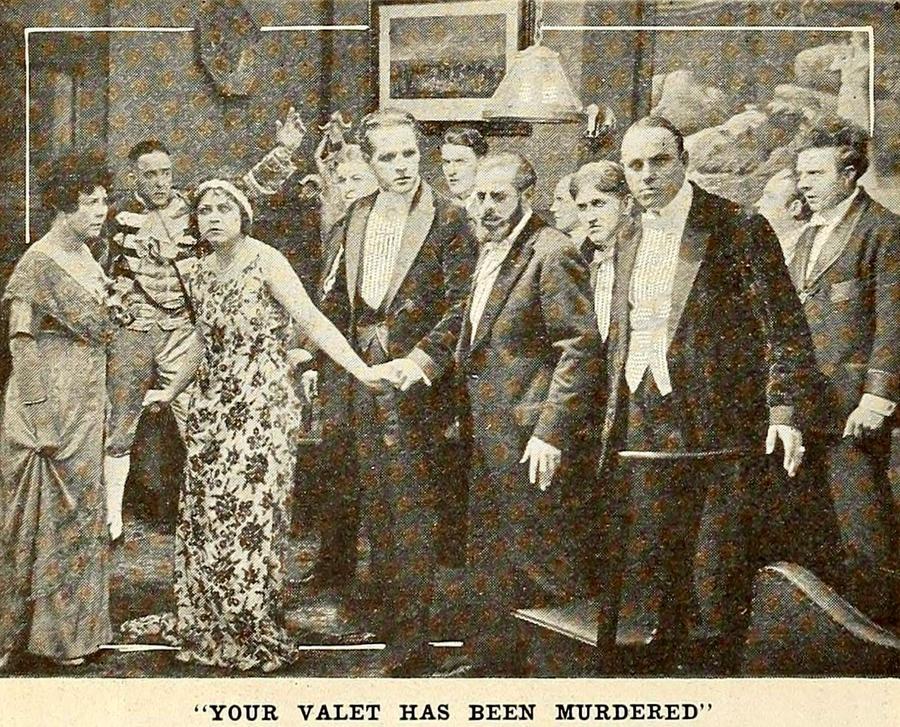
The resolution of the film is a whirlwind of revelations. The return of the valet—not dead, but merely stunned—is a classic melodramatic device that facilitates Tom Cook’s confession. It serves to remind the audience that in the world of The Thoroughbred, providence favors the honest. The demand that Carewe marry Jessie Cook is a poignant moment of social justice, though Jessie’s ultimate rejection of him in favor of the 'unselfish love' of the valet provides a more satisfying, modern conclusion. It suggests that love, like honor, cannot be coerced or bought.
The final reunion of Hamilton and Angela is earned. It is not the reunion of two socialites, but of two people who have witnessed the fragility of status and the resilience of the human spirit. Hamilton’s name is cleared, but one gets the sense that the clearance is secondary to the man he became while his name was tarnished. Much like the protagonists in Captain Alvarez or At the Cross Roads, the journey through the 'valley of the shadow' is what defines the eventual ascent.
Technically, the film benefits immensely from the performances of Charlotte Burton and William Russell. Russell, in particular, possesses a screen presence that bridges the gap between the theatricality of the stage and the burgeoning naturalism of the cinema. His physicality in the fight scenes and the ranching sequences lends the film a groundedness that prevents it from drifting too far into pure sentimentality. The writing, while adhering to the conventions of the time, displays a sophisticated understanding of how economic forces impact personal morality—a theme that would be explored with even more grit in later films like Her Atonement.
In conclusion, The Thoroughbred is a vital piece of silent cinema that deserves more than a cursory glance in the archives. It is a sprawling epic that manages to be both a critique of the speculative excesses of the Gilded Age and a celebration of the rugged individualism that defined the American identity. It asks us to consider what it means to be a 'thoroughbred' in a world full of 'curs.' Is it the clothes we wear, the stocks we hold, or the courage we show when the powder house is about to blow? The answer, as the film beautifully illustrates, lies in the latter. For any aficionado of early film, this is a must-watch, offering a narrative density and emotional resonance that rivals contemporary dramas like The Voice in the Fog.
Directed by: [Director Name Not Provided in Cast/Crew List]
Starring: Charlotte Burton, Roy Stewart, Lizette Thorne, Jack Prescott, William Russell
Genre: Melodrama / Western / Silent
IMDb 5.8
1933
Community
Log in to comment.