DbcultAccessing Vault...
6.6/10
Senior Film Conservator
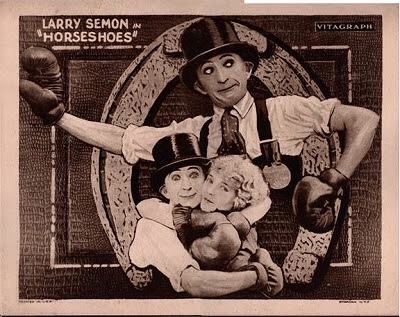
A definitive 6.6/10 rating for a film that redefined the boundaries of cult cinema. Horseshoes remains a cornerstone of transgressive art.
Stepping back into the raucous, anarchic world of early 20th-century cinema, Larry Semon's "Horseshoes" emerges as a quintessential artifact of its time, a whirlwind of physical gags and escalating chaos that remains surprisingly resonant. Co-written by Semon himself alongside James D. Davis, this short feature, despite its seemingly simple premise, masterfully orchestrates a symphony of comedic mishaps, cementing its place within the vibrant tapestry of silent-era slapstick. It's a film that doesn't just tell a story; it erupts with a kinetic energy, demanding the viewer's full, unblinking attention as one improbable event tumbles into the next. The very fabric of its existence is woven from the threads of pure, unadulterated pandemonium, a testament to the ingenuity and often brutal physicality that defined the genre.
At its core, "Horseshoes" revolves around a boastful boxer, a titan of the ring who, in a display of supreme confidence, issues an audacious challenge: fifty dollars to anyone who can simply withstand his blows for a mere minute. This premise, a familiar trope in the annals of comedic storytelling, quickly devolves into a spectacular series of unfortunate events for our protagonist, Larry. Larry Semon, a master of the elaborate stunt and the bewildered expression, finds himself inadvertently embroiled in this pugilistic drama. His initial involvement, a seemingly innocuous act of spectating, takes a dramatic turn when a rogue tomato, perhaps a symbol of the audience's volatile engagement with the spectacle, finds its way onto the boxer's face. This single, ludicrous incident serves as the catalyst, propelling Larry into the very arena he sought to merely observe, setting in motion a chain reaction of comedic escalation that is both relentless and uproarious.
The film's narrative brilliance lies in its commitment to the absurd. Larry, a character perpetually teetering on the brink of disaster, doesn't intentionally seek glory. Instead, he stumbles into it, a reluctant hero buffeted by the winds of pure chance. The pivotal moment, of course, is the use of strategically placed horseshoes. This isn't a display of boxing prowess; it's a testament to the chaotic, almost magical realism that silent comedies often embraced. The boxer's subsequent knockout isn't a victory earned through skill but rather a triumph of serendipity, a hilarious subversion of expectations. This moment, delivered with Semon's characteristic blend of wide-eyed innocence and frantic energy, is a comedic crescendo, an explosion of unexpected success against overwhelming odds. The audience is invited to revel in the sheer audacity of it all, cheering for the underdog whose victory is less about his own capabilities and more about the universe's peculiar sense of humor.
Of course, such an undeserved victory cannot go unpunished, at least not in the world of silent comedy. The boxer, upon regaining consciousness and comprehending the humiliating circumstances of his defeat, transforms into an engine of vengeance. His pursuit of Larry forms the film's exhilarating second act, a relentless chase sequence that showcases the genre's enduring appeal. This isn't merely a series of running gags; it's a meticulously choreographed ballet of near misses, narrow escapes, and escalating physical comedy. The landscape becomes a playground for peril, every corner a potential trap, every obstacle an opportunity for another laugh. It's in these moments that the sheer athleticism and commitment of the performers, particularly Semon, truly shine. The film's energy is infectious, drawing the viewer into a world where logic is suspended and laughter is the only currency.
The ensemble cast of "Horseshoes" is a veritable who's who of early comedic talent, each contributing their unique flavor to the chaotic mix. Larry Semon, as the central figure, is a whirlwind of flailing limbs and expressive facial contortions. His comedic style, often characterized by intricate, Rube Goldberg-esque contraptions and elaborate stunt work, is on full display here. Semon's ability to transition from wide-eyed bewilderment to frantic desperation is remarkable, anchoring the film's frenetic energy. He's the eye of the storm, often causing it, but always caught within its swirling vortex. His distinctive brand of physical comedy, which can also be observed in films like In Wrong or The New Teacher, demonstrates a consistent approach to character and gag construction, often placing his character in situations of escalating, self-inflicted peril.
And then there's Oliver Hardy. Even in these early, pre-Laurel and Hardy days, his presence is unmistakable. While not yet the fully formed 'Babe' we would come to adore, his foundational comedic persona—the exasperated authority figure, the slightly pompous, often put-upon character—is already taking shape. His reactions, even in supporting roles, possess a certain gravitas, a slow-burn exasperation that contrasts beautifully with Semon's manic energy. Hardy's ability to convey a world of frustration with a mere glance or a subtle shift in posture is a testament to his burgeoning genius. His appearances, however fleeting, add a layer of sophisticated comedic timing that elevates the surrounding chaos. The interplay, even when brief, hints at the comedic gold that would later define his career, a masterclass in understated reaction amidst overt pandemonium.
"Horseshoes," like many films of its vintage, is more than just a series of gags; it's a window into the evolution of cinematic storytelling. The reliance on visual humor, exaggerated expressions, and meticulously choreographed stunts speaks to an era where dialogue was absent, and physical prowess was paramount. The film's pacing, a relentless forward momentum, is characteristic of Semon's directorial style. He understood the power of escalation, of building a joke layer by layer until it exploded into a riot of laughter. The structure, moving from a simple challenge to an accidental victory and then a furious chase, is a masterclass in comedic construction, a blueprint that many subsequent comedies would consciously or unconsciously follow. The film's charm lies in its unapologetic commitment to its own outlandish logic, inviting the audience to suspend disbelief and simply enjoy the ride.
Comparing "Horseshoes" to other contemporary works, one can see both its unique qualities and its adherence to established tropes. While Semon’s films often feature more elaborate mechanical gags and a faster pace than some of his peers, the core elements of the underdog, the chase, and the chaotic resolution are universal. One might draw parallels to the frantic energy found in some sequences of His Meal Ticket, another Semon vehicle, or even the grander, more ambitious set pieces seen in Buster Keaton’s work, albeit with a different comedic sensibility. Semon's world is often messier, more overtly silly, and less reliant on the stoic genius of a Keaton, yet equally effective in generating laughs. The sheer volume of gags per minute in "Horseshoes" is astounding, a testament to the creative energy of the era and the meticulous planning that went into these ostensibly spontaneous acts of comedy.
The film also subtly touches upon themes of class and social standing, even if inadvertently. The boxer represents a form of brute power, a challenge to the common man, while Larry, the hapless everyman, embodies the accidental triumph of the underdog. The fifty-dollar prize, a significant sum in that era, underscores the desperation and allure of such a challenge. It's a comedic take on the American dream, where even the most unlikely individual can achieve a moment of glory, however fleeting or ill-gotten. This underlying current adds a layer of social commentary, making the laughs resonate a little deeper, even as we marvel at the sheer inventiveness of the physical gags. The film’s ability to weave these subtle threads into its boisterous fabric is a hallmark of truly engaging silent cinema.
Ultimately, "Horseshoes" stands as a vibrant testament to the enduring power of silent comedy. It’s a film that, despite its age, continues to elicit genuine laughter, a clear indicator of the timeless nature of well-executed physical humor. The performances, particularly Semon’s frantic energy and Hardy’s nascent comedic gravitas, are captivating. The writing, by James D. Davis and Larry Semon, demonstrates a keen understanding of comedic timing and narrative escalation. It’s a film that eschews complex psychological drama for the sheer joy of spectacle, a celebration of the ridiculous and the unexpected. Its impact on the evolution of comedy, particularly the slapstick genre, is undeniable, providing a blueprint for future generations of filmmakers and comedians. The film doesn't just entertain; it reminds us of the raw, unadulterated pleasure of cinema in its purest, most kinetic form.
For enthusiasts of early cinema, "Horseshoes" is an indispensable viewing experience. It offers a glimpse into the boundless creativity of an era that relied on visual storytelling to communicate universal emotions and situations. The film's legacy is perhaps not as widely discussed as some of its more famous contemporaries, but its contribution to the comedic lexicon is significant. It’s a riotous, unforgettable romp, a delightful reminder that sometimes, the most profound laughter comes from the most improbable circumstances. Its rewatchability factor is remarkably high, as each viewing reveals new subtleties in the choreography of chaos, new nuances in the performers' expressions, and new reasons to simply grin at the sheer audacity of it all. This film is a vibrant, living piece of cinematic history, pulsing with an energy that transcends the decades.
IMDb 6.1
1930
Community
Log in to comment.