DbcultAccessing Vault...
Cult Review
Senior Film Conservator
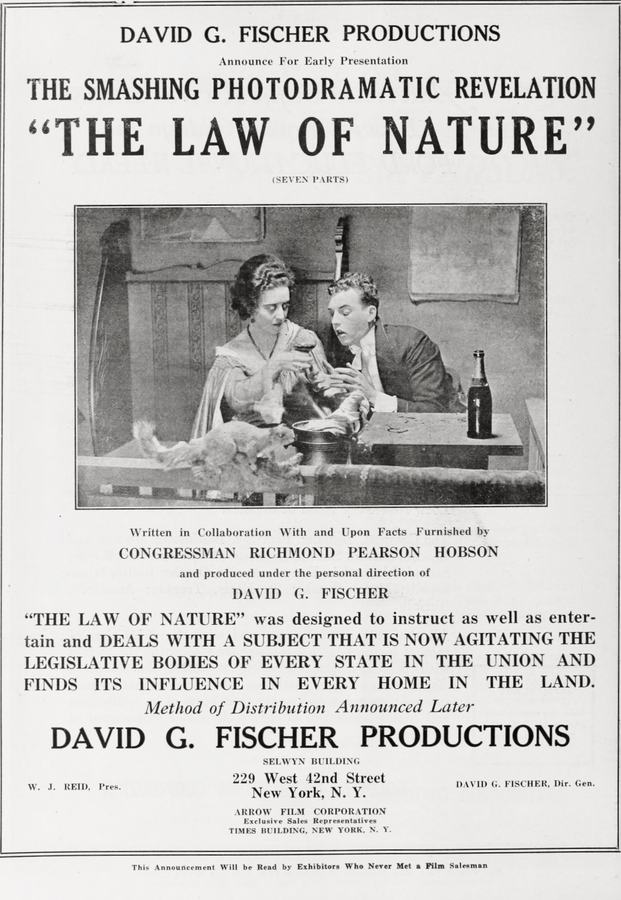
Stepping back into the silent era often feels like entering a different dimension of storytelling, a realm where grand gestures and stark visual metaphors carried the weight of narrative. Among the myriad cinematic offerings of 1919, a year brimming with post-war introspection and burgeoning social commentary, The Law of Nature emerges as a particularly poignant artifact. This film, co-written by Richard Pearson Hobson and David G. Fischer, isn't just a period piece; it's a stark, unblinking mirror held up to the destructive power of intemperance, a theme that resonates with unsettling clarity even a century later. It’s a compelling, if at times overtly moralistic, journey into the heart of human frailty and the arduous path to redemption.
The narrative unfurls around Guy Bolton, portrayed with a compelling blend of youthful exuberance and tragic weakness by Hal Salter. Bolton is a man seemingly on the precipice of a fulfilling life, engaged to the respectable Aileen Allison, brought to life with understated grace by Frances DeNoyer. Their world, however, is irrevocably altered by Bolton’s fateful encounter with the bottle. A single night of drunken abandon leads him astray, culminating in an ill-advised dalliance with Gene Moore, a model played by the captivating Ashton Newton. This transgression, a betrayal of trust and commitment, shatters his engagement to Allison, casting a long shadow over his once-promising future. The film doesn't shy away from the immediate, devastating consequences of his actions, presenting them with a dramatic flourish typical of the era, yet imbued with genuine emotional weight.
What distinguishes The Law of Nature from a mere cautionary tale is its expansive scope. While Allison, with a magnanimity that feels both a product of her time and a testament to her character, eventually offers Bolton forgiveness, the film posits that the damage wrought by alcohol is not easily contained. It’s a societal contagion, infecting not just the individual but also their entire social fabric. We witness this insidious spread through the experiences of Bolton's friends and acquaintances, each touched by the pervasive influence of drink. Vincent Coleman and Dixie Lee, among others in the supporting cast, deliver performances that underscore the widespread despair and moral decay that addiction fosters. Their struggles are not mere subplots; they are integral threads in the larger tapestry of the film’s argument, illustrating that the 'law of nature' here isn’t just about personal responsibility, but about the collective imperative for temperance and mutual support.
David G. Fischer, not only a writer but also an actor in the film, alongside Virginia Thorne, contributes to a collective effort that feels deeply invested in its message. The direction, though uncredited in some historical records, orchestrates a series of evocative scenes that rely heavily on the actors' nuanced expressions and body language to convey complex emotions without the benefit of spoken dialogue. This is where silent cinema truly shines, demanding a heightened sense of visual literacy from its audience. The camera lingers on faces, capturing the subtle shifts from joy to despair, from defiance to resignation. The film’s pacing, while deliberate, allows these emotional beats to land with considerable force, ensuring that the audience feels the gravity of each character’s plight.
The thematic core of The Law of Nature is, unequivocally, the devastating impact of alcohol and the journey towards sobriety. In an era predating the formalized understanding of addiction as a disease, films like this served a crucial public service, framing excessive drinking not just as a moral failing but as a societal blight. It’s a message echoed in other films of the period, though perhaps less overtly than in this particular production. For instance, one might draw parallels to the stark social realism found in films like The Regeneration (1915), which also delves into the lives of those on society's fringes seeking a better path, or even the intense dramatic conflicts seen in Slander (1916). While the specific catalysts for personal downfall differ, the underlying current of moral struggle and the quest for a more virtuous existence are strikingly similar, highlighting a prevalent concern in early 20th-century cinema.
The performances, particularly from Frances DeNoyer and Hal Salter, anchor the film’s emotional landscape. DeNoyer’s portrayal of Aileen Allison is a masterclass in silent film acting, conveying a depth of sorrow and an enduring capacity for forgiveness that transcends the often melodramatic conventions of the time. Her eyes, in particular, speak volumes, communicating heartbreak, hope, and quiet resilience without a single intertitle. Salter, as Bolton, convincingly portrays the descent into dependency, his early charm gradually eroding under the influence of drink, only to be replaced by a haunted desperation that is genuinely affecting. The supporting cast, including Ashton Newton and the aforementioned Vincent Coleman and Dixie Lee, contribute significantly to the film’s rich ensemble, each character serving as a testament to the pervasive nature of the film’s central conflict.
From a technical perspective, the cinematography, while perhaps not groundbreaking for its time, effectively utilizes available light and framing to enhance the dramatic tension. There are moments of striking visual composition that betray a keen understanding of how to convey narrative and emotion purely through imagery. The use of close-ups to emphasize character reactions, particularly during moments of crisis or introspection, is particularly effective. This careful attention to visual storytelling ensures that even without spoken dialogue, the audience remains deeply invested in the characters' fates. It’s a testament to the directorial choices that the film maintains its grip, demonstrating how much can be communicated through a well-placed gaze or a subtle shift in posture.
The film’s resolution, though perhaps predictable by modern standards, offers a message of hope and collective reformation. The idea that individuals, through shared experience and mutual support, can overcome the vice that has plagued them, is presented with a sincerity that feels both earnest and, for its time, progressive. It's a powerful affirmation of human agency, even in the face of overwhelming odds. This communal awakening to the 'law of nature' – a natural order that rewards temperance and punishes excess – provides a satisfying, if somewhat simplistic, conclusion to the narrative arc. It’s a resolution that aligns with the moral zeitgeist of the period, yet one that still carries a universal appeal in its advocacy for self-improvement and community welfare.
When considering The Law of Nature within the broader context of 1919 cinema, it stands as a strong example of dramatic filmmaking focused on social issues. While not perhaps as overtly experimental as some European contemporaries, or as grand in scale as certain American epics, it excels in its focused, character-driven exploration of a pressing societal concern. It reminds us that cinema, even in its nascent stages, was already capable of profound social commentary, using its unique visual language to advocate for change and inspire introspection. One might compare its earnest moralizing to films like The Primrose Path (1915), which also explored the perils of societal pitfalls, or even the more adventurous serials like I topi grigi (1918), though their thematic concerns diverge significantly. The common thread remains the power of film to engage and influence its audience.
The contributions of writers Richard Pearson Hobson and David G. Fischer are evident in the film’s tightly structured narrative and its clear, unwavering moral compass. Their script, conveyed through intertitles and the actors' expressions, avoids unnecessary convolution, focusing instead on the emotional arc of its characters and the unfolding consequences of their choices. This clarity of purpose ensures that the film’s message is never lost, even amidst the dramatic flourishes. It’s a testament to their collaborative vision that The Law of Nature maintains a coherent and impactful narrative from beginning to end, a feat not always achieved in the early days of feature filmmaking.
For contemporary audiences, The Law of Nature offers a fascinating glimpse into the social anxieties and moral frameworks of a bygone era. It serves as a historical document, revealing how society grappled with issues of personal responsibility, temptation, and the path to rehabilitation. While its dramatic conventions might seem quaint to eyes accustomed to modern filmmaking, the raw emotion conveyed by the performers and the universal nature of its themes ensure its continued relevance. The struggle against self-destructive habits, the pain of betrayal, and the enduring power of forgiveness are all elements that transcend time and cinematic style.
In conclusion, The Law of Nature is more than just a silent film; it is a resonant piece of social commentary, a compelling drama, and a testament to the enduring power of cinema to explore the human condition. The performances, particularly from DeNoyer and Salter, are captivating, drawing the viewer into a world where moral choices carry immense weight. The film’s unwavering focus on the destructive force of alcohol and the eventual triumph over it, however idealized, provides a powerful message that continues to echo today. It’s a film that demands to be seen, not just for its historical significance, but for its timeless portrayal of struggle, redemption, and the unbreakable spirit of humanity. It reaffirms that even in the absence of spoken words, the most profound stories can be told with astonishing clarity and emotional depth. A true gem from the nascent days of cinema, reminding us that some 'laws of nature' are indeed eternal.

IMDb —
1922
Community
Log in to comment.