DbcultAccessing Vault...
4.8/10
Senior Film Conservator
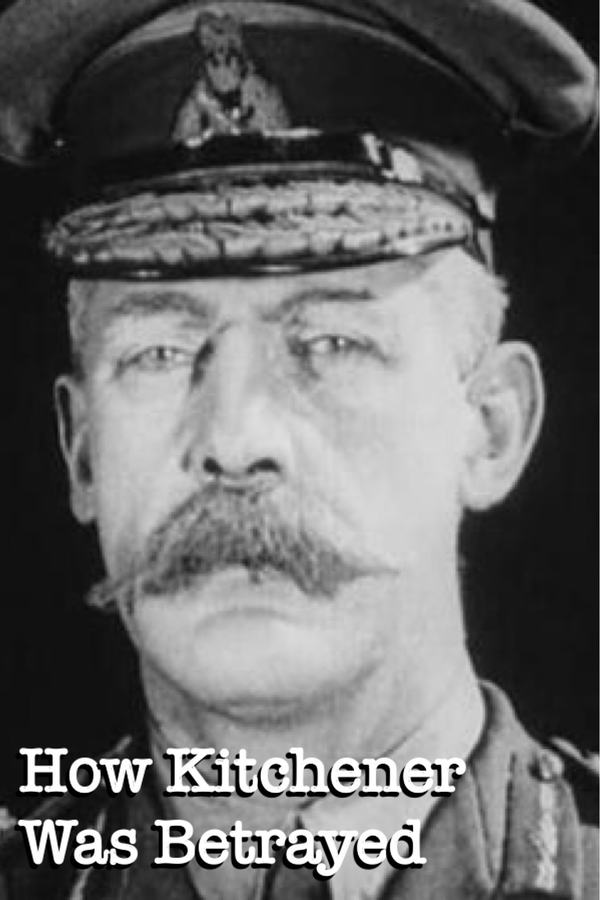
A definitive 4.8/10 rating for a film that redefined the boundaries of cult cinema. How Kitchener Was Betrayed remains a cornerstone of transgressive art.
Norman Ramsey’s *How Kitchener Was Betrayed* unfolds like a shadowy parable of trust and treachery, its narrative anchored by the magnetic tension between duty and desire. The film’s central conceit—a deceased officer’s German widow orchestrating the downfall of a British naval expedition—invites immediate scrutiny of national identity, a theme Ramsey explores with stark, almost clinical precision. Unlike the more overtly melodramatic entries in the silent film espionage genre, such as *Het geheim van het slot arco*, Ramsey’s work eschews bombastic revelations for a quieter, more insidious form of suspense. The widow’s betrayal is not a grand gesture but a series of calculated omissions, her role as a cipher in the泄露 of ‘Hampshire’s’ route rendered all the more chilling by its subtlety.
Wallace Bosco’s performance as the beleaguered commander of ‘Hampshire’ is a study in stoic desperation, his rigid posture and furrowed brow conveying a man whose faith in institutions is eroding under the weight of suspicion. Opposite him, Peggy Hathaway’s widow is a revelation, her measured demeanor masking a storm of internal conflict. Hathaway’s chemistry with Ian Swinley’s pragmatic intelligence officer—a dynamic evocative of similar pairings in *Qristine*—adds layers of ambiguity to their interactions, blurring the line between professional inquiry and personal entanglement. The film’s dialogue, sparse yet loaded with subtext, is delivered with a precision that compensates for the absence of synchronized sound, a technique that would later be refined in *The Man Who Lost Himself*.
Ramsey’s direction leans heavily on visual metaphors to underscore the film’s moral ambiguity. A recurring motif of fractured mirrors—a technique also employed in *The Woman Beneath*—reflects the splintering of the widow’s identity, her reflection often appearing distorted in key scenes. These visual cues are complemented by the film’s stark cinematography, with shadowed interiors and stark daylight exteriors creating a chiaroscuro effect that mirrors the characters’ internal struggles. The score, though uncredited, employs a haunting, minimalist arrangement of strings and piano that lingers like a ghost over the film’s most tense moments.
The film’s narrative structure, while linear, is punctuated by narrative detours that echo the fragmented nature of wartime intelligence. A subplot involving Fred Paul’s opportunistic informant—a character reminiscent of the morally flexible figures in *A Woman’s Man*—serves as a counterpoint to the widow’s calculated duplicity, highlighting the spectrum of human behavior under pressure. These subplots, though occasionally meandering, enrich the film’s exploration of complicity, suggesting that betrayal is not a singular act but a continuum of choices.
*How Kitchener Was Betrayed* also excels in its period-specific attention to detail. The naval uniforms, the brass-bound ledgers, and the clattering typewriters all serve as tactile reminders of the film’s 1920s origins. Yet Ramsey’s focus on the mundane—the widow’s meticulous letter-writing, the commander’s obsessive map-studying—elevates these elements from mere set dressing to narrative anchors. The film’s climax, set against the backdrop of a storm-lashed quay, is a masterstroke of visual storytelling. The crashing waves and blinding rain obscure the characters’ faces, their identities literally and metaphorically washed away in the chaos of revelation.
While the film’s silent format imposes constraints on its emotional range, Ramsey compensates with a visual lexicon that is both inventive and evocative. Close-ups of Hathaway’s hands—clutching a letter, adjusting a necklace—become silent acts of betrayal, their significance heightened by the absence of verbal explanation. This reliance on visual storytelling places the film in dialogue with later works like *Vagabond Luck*, which similarly uses nonverbal cues to convey complex emotional states.
The film’s ending, a quiet but devastating denouement, lingers in the mind long after the credits roll. Unlike the more conclusive resolutions of *Beach Birds* or *Captain Kidd’s Kids*, Ramsey leaves the audience with a lingering unease, a sense that the widow’s story is far from over. This narrative ambiguity, coupled with the film’s taut pacing and rich characterizations, positions *How Kitchener Was Betrayed* as a seminal work in the espionage genre, its influence discernible in the psychological depth of later thrillers like *The Man Who Took a Chance*.
In an era when silent films often prioritized spectacle over substance, *How Kitchener Was Betrayed* stands out for its intellectual rigor and emotional nuance. The film’s exploration of identity and loyalty, rendered through Hathaway’s compelling performance and Ramsey’s meticulous direction, offers a timeless meditation on the costs of war. For cinephiles seeking a deeper understanding of early 20th-century espionage cinema, this film is an essential viewing, its themes resonating with uncanny relevance in our current age of global uncertainty.
IMDb 5.4
1933
Community
Log in to comment.