DbcultAccessing Vault...
Cult Review
Senior Film Conservator
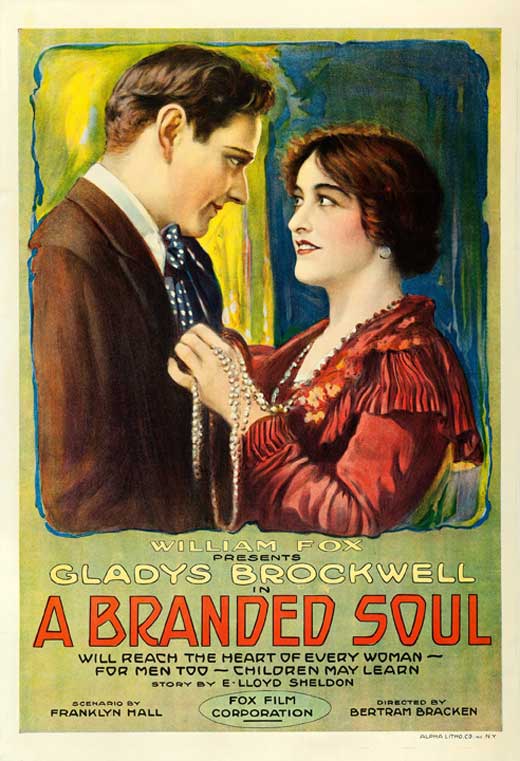
Stepping back into the nascent years of cinema, the 1917 production A Branded Soul emerges not merely as a historical artifact, but as a potent and surprisingly nuanced narrative, echoing with themes that resonate with profound relevance even today. It's a film that masterfully weaves together spiritual allegory, social commentary, and deeply personal drama, all underscored by a powerful, if at times melodramatic, silent film sensibility. At its heart lies a testament to the transformative power of genuine sacrifice and the unexpected paths to redemption, driven by a performance from Gladys Brockwell that is nothing short of captivating. This isn't just a movie; it's a moral fable rendered with striking visual poetry, a cinematic exploration of the human spirit's capacity for both profound depravity and transcendent grace.
The film opens not in the dusty landscapes of the American Southwest, but in the hallowed, ancient stones of Rome, a bold artistic choice that immediately elevates the narrative beyond a simple melodrama. Here, we witness the pagan Valerain, a figure of worldly power and debauchery, attempting to seize the saintly Cecilia for his unholy revels. Yet, her ethereal beauty, her spiritual purity, acts as an invisible force field, arresting his base intentions. He kneels, not in conquest, but in an involuntary act of reverence, a moment pregnant with symbolic weight. This prologue is more than just an introduction; it's a thematic overture, setting the stage for the spiritual battles and moral awakenings that will define the main story. It establishes a timeless struggle between the carnal and the divine, the profane and the sacred, suggesting that true power lies not in physical might or societal status, but in an unblemished soul. This ancient parallel imbues the subsequent contemporary narrative with a profound, almost mythic resonance, suggesting that the struggles of the human heart are eternal, transcending epochs and geographies.

Transitioning to the sun-baked village of San Miguelito, nestled precariously near the Rio Grande, we encounter Conchita Cordova, a woman whose inner light mirrors that of St. Cecilia. Her voice, a beacon of faith, elevates the cathedral choir, a stark contrast to the encroaching industrial blight. This setting is not merely a backdrop; it’s a living, breathing character in itself, a microcosm of societal flux. The burgeoning oil fields of millionaire John Rannie scar the landscape, displacing the very people whose lives are intrinsically tied to the land. This economic upheaval creates a fertile ground for resentment and unrest, a simmering cauldron of class struggle that provides a potent socio-political undercurrent to the personal drama. Rannie represents unchecked capitalism, a force that disregards tradition, community, and the spiritual well-being of the populace in its relentless pursuit of profit. This conflict between tradition and modernity, spirituality and materialism, forms the very bedrock of the film's thematic exploration, making it surprisingly prescient for its time. One might draw a parallel to the social consciousness evident in films like The Heart of Maryland, where societal pressures and class divides often dictate personal fates, though A Branded Soul adds a layer of spiritual allegory that sets it apart.
Conchita's idyllic existence is shattered when Rannie, his desires fueled by a potent blend of possessiveness and power, fixates on her. He discovers a crucial leverage point: her fiancé, Juan Mendoza, has fallen into the employ of Adolf Wylie, a shadowy German spy. In a sinister twist, Rannie threatens to expose Juan's involvement, thereby destroying his reputation and freedom, unless Conchita surrenders herself to him. This is the film's central moral dilemma, a truly agonizing choice forced upon a woman of profound virtue. Conchita, though utterly disillusioned by the malevolence of the world around her, makes the heart-wrenching decision to sacrifice her purity to save Juan. It’s a moment of immense dramatic tension, where the weight of her choice is palpable. Gladys Brockwell, in her portrayal of Conchita, conveys this internal torment with remarkable subtlety for the silent era, her expressions a window into a soul in agony. Her decision is not born of weakness, but of a fierce, protective love, a profound act of self-abnegation that echoes the sacrifices seen in other silent dramas centered on female protagonists, perhaps even more poignantly than in a film like The Curse of Eve, which explores different facets of a woman's plight. Here, the sacrifice is purely altruistic, for another's well-being.

The narrative takes an unexpected, redemptive turn as Conchita, with trembling hands, removes her sacred cross, preparing to fulfill her terrible vow. This small, symbolic act—the divestment of her spiritual shield—becomes a powerful catalyst. Rannie, witnessing the profound depth of her sacrifice, the sheer agony etched on her face, is suddenly confronted by the ugliness of his own desires. Her unwavering spirit, her willingness to endure such a profound desecration for love, pierces through his callous exterior. It's a moment of profound spiritual awakening, a transformation mirroring Valerain's ancient encounter with St. Cecilia. He is moved not by lust, but by a sudden, overwhelming sense of guilt and admiration, begging for her forgiveness. This pivotal scene is a testament to the film's exploration of innate human goodness, suggesting that even the most hardened hearts can be touched by genuine virtue. It’s a beautifully rendered instance of cinematic irony, where the intended victim becomes the inadvertent savior, not of body, but of soul. The film suggests that true moral conversion often arises from witnessing selfless acts, a theme that resonates deeply within religious and philosophical traditions.
While Rannie's soul undergoes its silent revolution, the world outside erupts in violent chaos. The villagers, their long-simmering resentment inflamed by the insidious machinations of the German spy Wylie, rise up in a furious rebellion, setting Rannie's despised oil fields ablaze. This widespread unrest serves as a dramatic backdrop to the personal tragedy unfolding. Meanwhile, Juan Mendoza, consumed by a corrosive jealousy and a devastating misunderstanding, believes Conchita has indeed succumbed to Rannie, betraying him. In a fit of misguided rage and patriarchal possessiveness, he commits an act of shocking cruelty: throwing her cross into the fireplace, heating it, and then pressing the searing symbol onto her breast, a literal brand of shame. This brutal act is not just physical; it's a symbolic assault on her spirit, a profound violation that he intends to mark her forever. Conchita, despite the immense pain and betrayal, confronts him with righteous indignation, rebuking his unfounded accusations and his monstrous act. This moment highlights the destructive power of misunderstanding and the fragility of trust, especially under duress. The 'branding' here is far more tragic than any physical mark; it's the branding of an innocent soul by a loved one's false judgment.

The film hurtles towards its climax as Conchita, her own heart wounded, demonstrates an extraordinary capacity for compassion. She bravely intervenes, saving Rannie from the enraged, torch-wielding villagers, an act that underscores her unwavering moral compass. This selfless rescue completes Rannie's transformation, solidifying his repentance and newfound humility. In the final, deeply symbolic scene, Rannie kneels beside Conchita in the quiet solemnity of the church, a mirror image of Valerain's genuflection before St. Cecilia in the prologue. This visual parallelism brings the narrative full circle, reinforcing the film's central message: true spiritual beauty and unwavering faith possess the power to humble even the most arrogant and redeem the most corrupt. It’s a powerful statement on the universality of spiritual awakening and the enduring resonance of selfless love. The final image is one of profound peace and mutual respect, a testament to the idea that redemption is always possible, even in the darkest of circumstances.
At the heart of A Branded Soul lies the incandescent performance of Gladys Brockwell as Conchita Cordova. In an era where cinematic acting was often characterized by broad gestures and exaggerated expressions, Brockwell brings a nuanced intensity to her role that is truly remarkable. Her eyes convey volumes of unspoken emotion—the initial innocence, the profound anguish of her dilemma, the steel resolve of her sacrifice, and the quiet dignity of her forgiveness. She manages to imbue Conchita with both vulnerability and immense inner strength, making her a figure of compelling moral authority. Her portrayal of a woman caught between devastating choices, yet emerging with her spirit intact, is a masterclass in silent film acting. It’s performances like Brockwell's that elevate films of this period beyond mere historical curiosities, cementing their place as legitimate artistic achievements. Her ability to communicate such complex emotions without dialogue is a testament to her skill and the expressive power of early cinema. One can see echoes of the strong, resilient female characters she would embody in later works, solidifying her reputation as a formidable presence on screen.
Beyond the immediate drama, A Branded Soul delves into several profound thematic territories. The clash between encroaching industrialization and traditional agrarian life is a powerful commentary on societal progress and its human cost. Rannie's oil fields are not just a symbol of wealth but of disruption and exploitation, a stark reminder of the environmental and social consequences of unchecked ambition. The presence of the German spy, Wylie, injects a layer of geopolitical intrigue, reflecting the anxieties of a world on the brink of, or embroiled in, global conflict. This subtly woven element adds a further dimension to the villainy, moving it beyond simple greed to a more sinister, nationalistic threat. The film's exploration of spiritual sacrifice and redemption, however, remains its most compelling aspect. It posits that true transformation comes not through coercion or external force, but through an internal reckoning, often sparked by witnessing profound goodness. It's a narrative that champions empathy, forgiveness, and the enduring power of faith in the face of overwhelming adversity. The film's message is clear: the branding of a soul can be a mark of shame, or, through grace, a sign of profound spiritual renewal.
While A Branded Soul might not be as widely recognized as some of its contemporaries, its artistic merits and thematic depth make it a film deserving of renewed attention. It stands as a testament to the sophisticated storytelling capabilities of early silent cinema, proving that complex narratives and profound moral explorations were well within the grasp of filmmakers even a century ago. The interplay of strong performances, compelling visual symbolism, and a narrative that grapples with universal human struggles ensures its enduring relevance. It reminds us that cinema, even in its infancy, was a powerful medium for moral inquiry and social critique. For those interested in the evolution of film and the rich tapestry of early American cinema, A Branded Soul offers a compelling and emotionally resonant experience. It's a film that speaks across the decades, its silent voice still echoing with lessons about sacrifice, forgiveness, and the indelible mark of the human spirit. Much like the moral fortitude explored in Joan the Woman, this film showcases a protagonist whose convictions shape her destiny and influence those around her, cementing its place as an important, albeit perhaps overlooked, piece of cinematic history. The film's construction, from its allegorical prologue to its resonant conclusion, demonstrates a mastery of storytelling that transcends the limitations of its era, making it a valuable subject for modern cinephiles and historians alike.
In conclusion, A Branded Soul is far more than a simple silent film melodrama. It is a carefully crafted narrative, rich with symbolism and moral complexity, brought to life by powerful performances and thoughtful direction. It challenges viewers to consider the true meaning of sacrifice, the potential for redemption in even the most hardened hearts, and the enduring strength of faith in a world often defined by greed and injustice. This film, with its intricate plot and deeply moving character arcs, serves as a poignant reminder of the timeless power of storytelling and the profound impact of human choices. It’s a cinematic gem that continues to resonate, inviting contemplation on the eternal struggles of good versus evil, and the transformative power of love and forgiveness.

IMDb —
1924
Community
Log in to comment.