DbcultAccessing Vault...
Cult Review
Senior Film Conservator
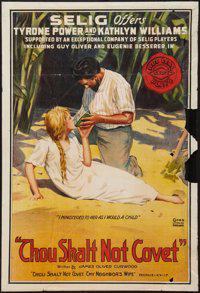
James Oliver Curwood’s screenplay detonates the polite maxim of its title, letting the shrapnel of desire scatter across a narrative that feels closer to Joseph Conrad’s humid fatalism than to the tidy Victorian parables of 1915. What could have been a cautionary postcard—marriage good, adultery bad—mutates into a chiaroscuro fever dream where morality is not preached but weathered like a monsoon.
The film opens in a Midwestern lab that reeks of carbolic and ambition. Dr. Meredith, played by Guy Oliver with the brittle rectitude of a man who has never risked anything that could not be centrifuged, is married to a woman whose ethical barometer spins like a roulette wheel. Their house is a museum of unlit candles: every object arranged for display, never for ignition. Next door, through a lattice of honeysuckle, the scientist spies Kathlyn Williams’s character—simply called Mrs. Ward in the intertitles, though the camera christens her something more numinous—tending roses while her husband’s laughter ricochets like a well-thrown boomerang. The first time we see Oliver’s pupils dilate, the iris shot itself seems to blush.
Curwood’s genius is to make envy almost aerobic; it jogs through Meredith’s bloodstream until even test tubes appear to sweat. A lesser film would rely on lurid close-ups of the wife’s ankles, but director Lois Weber (uncredited yet stylistically present) keeps the camera chastely outside windows, letting the glass smear of curtains stand in for repression. The result is voyeurism turned inward: we watch a man watching himself want.
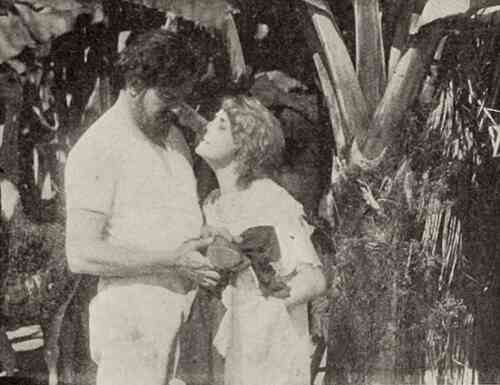
“I have measured the orbit of comets,” the intertitle reads, “yet cannot calculate the trajectory of my own gaze.”
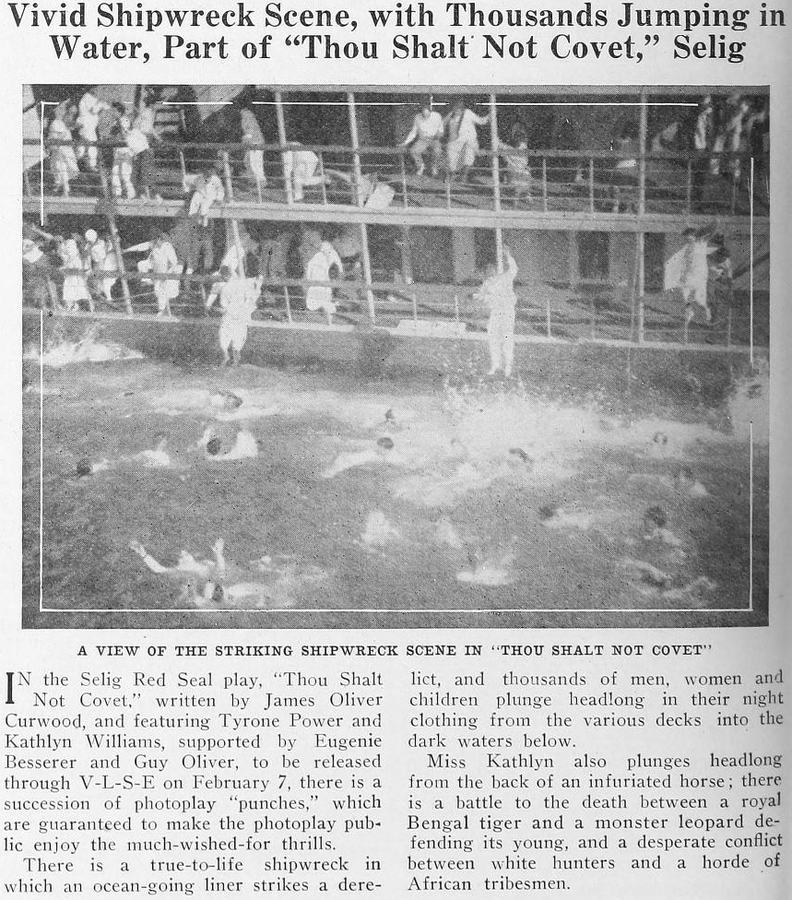
When Mr. Ward departs for a copper mine in Rhodesia, the scientist books passage on a different vessel, as though the Atlantic itself were a moral disinfectant. Fate, wearing the rubber mask of coincidence, books Mrs. Ward on the same Cairo-to-Durban steamer. The collision that follows is staged with miniatures that would make Méliès shrug, yet the emotional physics are precise: two lives suddenly compressed into the same pocket of spacetime, all constraints gone soggy with brine.
Once the survivors wash ashore, the film swaps its prior monochrome morality for a palette of phosphorescent greens and bruise purples, tinting each frame so that even the sand seems to respire. Williams, stripped of memory, performs a kind of innocence that is terrifying because it is unanchored. She calls Oliver “dear” with the same tonal lilt she once reserved for her real husband, and each endearment lands like a paper cut on the conscience. Oliver—eyes widening, nostrils flaring—becomes a laboratory of contradictory impulses: protector, predator, penitent.
The jungle, usually a silent villain in colonial adventures, here becomes a choral witness. Vines curl like interrogation marks; parrots scream questions at dusk. In one extraordinary tableau, the scientist builds a signal fire whose smoke coils into the shape of a woman’s face before dispersing—an accidental confession that even the air refuses to archive.
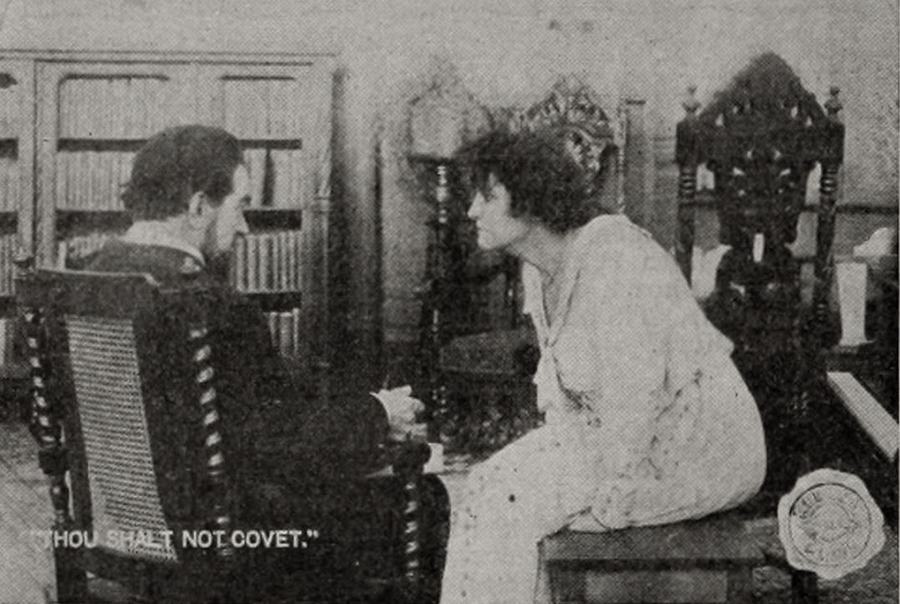
Weber’s blocking reaches its apotheosis in the near-suicide scene. Oliver climbs a basalt promontory, pistol trembling like a tuning fork. Below, Williams gathers orchids, humming a lullaby she half-remembers. The camera pirouettes 360 degrees, merging sky, sea, and conscience into one vertiginous swirl. Just as the hammer cocks, a fragment of her memory resurfaces—she calls her own husband’s name, not Oliver’s. The word ricochets off the cliff face, striking the scientist with the force of a bullet he will never fire. He collapses, not from melodramatic exhaustion, but from the gravitational tug of reclaimed morality.
Enter Tyrone Power Sr. as the actual Mr. Ward, machete in hand, pith helmet askew, looking like Moses in a linen suit. The family reunion is played with almost indecent restraint: no tearful violins, only the sound of surf applauding in the background. Power surveys the domestic diorama—his wife alive, the neighbor gaunt with self-denial—and seems to intuit the entire parable without exposition. He extends his hand; Oliver takes it, a handshake that feels like absolution issued by a notary.
The coda is a masterstroke of renunciation. While the Wards sail back to civilization, Meredith remains, cataloguing butterflies with the same meticulous sorrow he once reserved for bacteria. In long shot, he raises a tin cup toward the horizon where their ship shrinks to a chalk mark. The intertitle, lettered in Weber’s unmistakable cursive, reads:
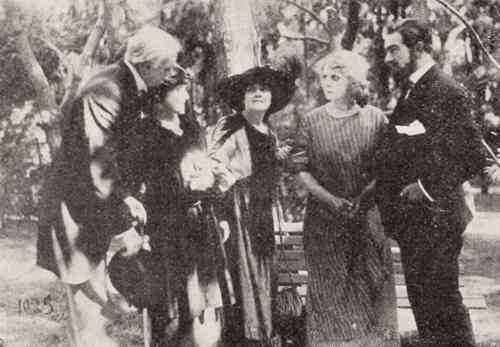
“To love without possession is the final hypothesis, and the only one that cannot be disproven.”
Viewed today, Thou Shalt Not Covet feels eerily contemporary in its refusal to punish female sexuality or to reward male restraint with a replacement bride. The scientist’s victory is not erotic conquest but ethical continence; the jungle does not deliver him to savagery, but to a monkish clarity. Compare this with the marital chaos of Pudd’nhead Wilson or the operatic betrayals in The Road o’ Strife, and you’ll see how Weber and Curwood anticipated the modern anti-hero: tormented, fallible, yet ultimately answerable to an inner tribunal more stringent than any Hays Office decree.
Performances are calibrated to the tremor, not the tremor. Oliver’s descent from smug rationality to hollow-eyed penitence is charted in micro-gestures: a blink held half a second too long, a fingertip drumming against a crucible as though counting sins. Williams, tasked with playing amnesia without hamminess, lets her shoulders speak; when memory re-enters, they square as if some invisible yoke has been reaffixed. Power, meanwhile, strides through the underbrush with the unforced authority of a man whose moral confidence needs no dialogue—a far cry from the scenery-chewing tyrants he would later portray in The Tyranny of the Mad Czar.
Technically, the film is a bridge between nineteenth-century theatrical staging and the coming grammar of montage. Shots average eight seconds—glacial by 1920s standards—yet each frame is densely layered: mosquito nets cast lattice shadows that rhyme with the geometric skylight of the opening lab, a visual leitmotif for the cage of conscience. The shipwreck, accomplished with rocking sets and buckets of brine hurled by stagehands, nonetheless conveys verisimilitude because Weber keeps the camera low, letting the horizon tilt like a soul losing equilibrium.
Some historians dismiss the picture as moral melodrama gussied up by location tinting, but that overlooks its subversive gender politics. The real fulcrum of action is female consent, even when that consent is compromised by amnesia. By refusing to let the scientist “get away” with a kiss, the narrative re-centers agency on the woman’s memory, not the man’s desire—a radical stance in an era when Peril of the Plains treated women as calico plot devices.
As for thematic echoes, the film reverberates with Feathertop’s interrogation of false identity, yet surpasses it by refusing the balm of comic resolution. It also anticipates the eroticized guilt that would bloom in post-war noirs, though here the femme fatale is not a spider woman but a blank slate upon which men scribble their own potential trespass. One could even read the final toast as an inverted Eucharist: the scientist drinks to the couple’s health, consuming his own unconsummated longing as sacramental wine.
Flaws? The African footage—actually a repurposed 1911 travelogue—jars with its pith-helmet colonial gaze, and a subplot involving cannibal tribes is mercifully truncated, surviving only in production stills. The amnesia recovery arrives with the convenience of a third-act letter in Victorian theater, though Williams sells the moment with such stunned luminosity that skepticism is hustled out a side door.
Yet these are quibbles against the film’s overarching bravery: it trusts that an audience will find catharsis not in consummation but in renunciation. In an age when streaming platforms equate love with algorithmic meet-cutes, Thou Shalt Not Covet proffers a darker, richer calculus—that the most exquisite proof of love might be the permanent ellipse of its denial.
So if you’re scrolling for a silent curiosity to offset the popcorn bombast of Checkers or the swashbuckling escapades of Lion of Venice, dock here. Let its tropic shadows crawl across your 4K screen; let Guy Oliver’s eyes become your own mirror. And when the final cup is raised, ask yourself: would you have pulled the trigger, or lowered it for a love that chooses silence over signature? The jungle keeps its counsel; the film, mercifully, lets you decide.

IMDb 6.8
1933
Community
Log in to comment.