DbcultAccessing Vault...
Cult Review
Senior Film Conservator
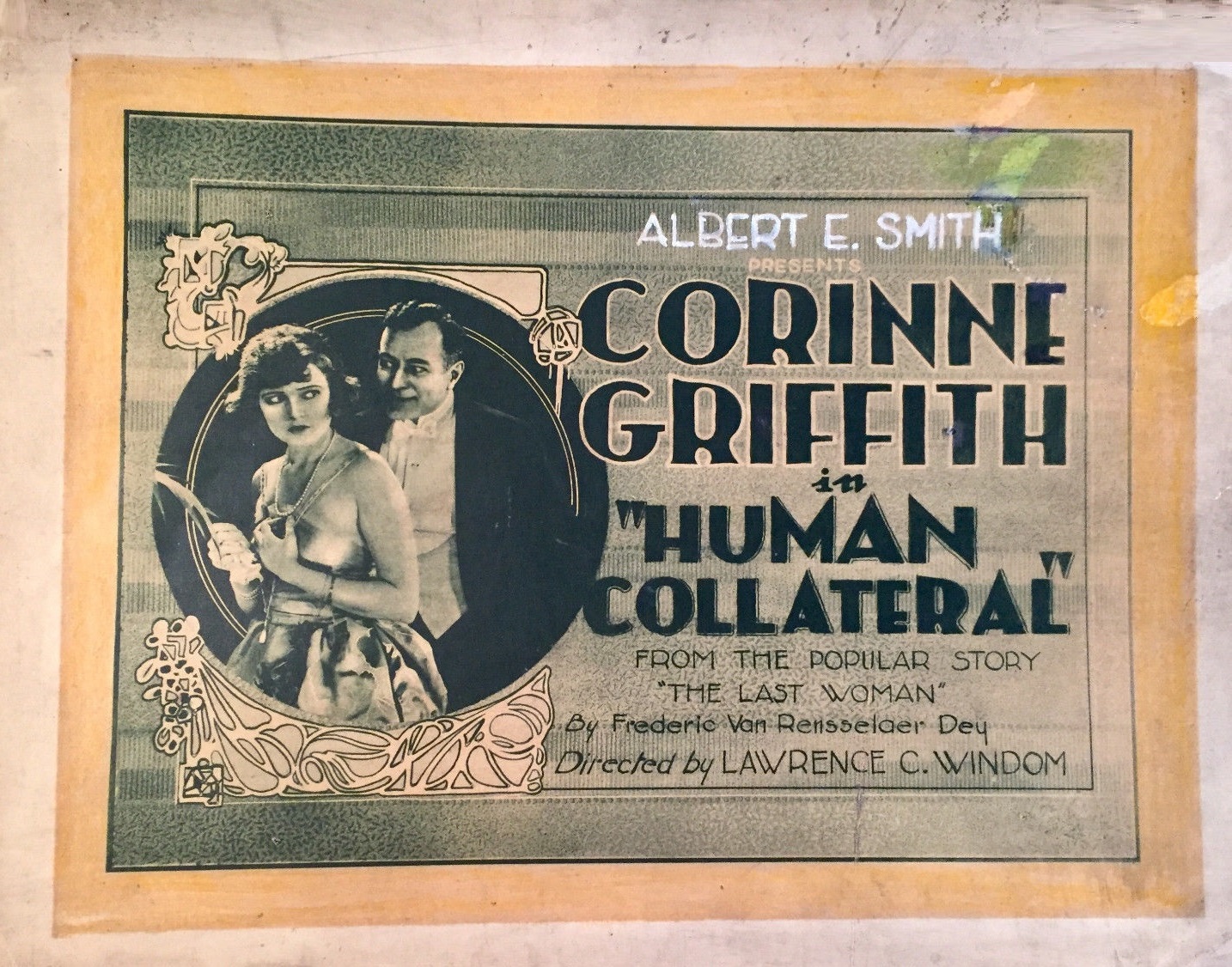
The first image is a balance sheet projected on smoke: assets on the left, Patricia Langdon on the right.
Human Collateral, a 1920 one-reeler that somehow slipped past the archives’ razor wire, opens with this hallucination—numbers hovering like horseflies over Corinne Griffith’s immaculate profile. Director Sam Taylor, still high on Mary Pickford pixie dust, refuses to let the camera merely record; instead he inscribes, as though scratching stock quotes into the emulsion itself. The result feels less like narrative and more like an autopsy on American courtship performed with a paper-cutter.
Wealthy banker Roderick Duncan, played by the granite-jawed Webster Campbell, articulates affection through promissory smiles. His rival, Richard Morton—Maurice Costello in rakish dishabille—brandishes danger the way some men flick ash from a Cuban. Patricia’s first close-up arrives mid-soirée, her eyes two cobalt option contracts expiring at midnight. When her father (a harried William T. Carleton) whispers insolvency into Duncan’s starched collar, the engagement morphs into a repo agreement: Patricia’s body delivered on demand, her womb as collateral, her future children as dividend reinvestment. Taylor lingers on the fountain pen’s nib, a silver mosquito poised to draw blood.
The betrothal scene, drenched in topaz gel, feels borrowed from a Sumerian debt tablet rather than a Tiffany window.
Patricia counters by demanding legal parchment, transforming dowry into debenture. The absurdity—sign here, initial here, heart lodged beneath the notary’s seal—plays like a Lubitsch comedy that wandered into a Senate hearing. Yet Griffith never winks; her tremor is sincere, a suffragette discovering that even the ballot can be leveraged. The signed papers flutter like dying moths around her décolletage, and the camera cuts to a ticker tape vomiting zeros.
Spurned, Patricia hurls herself down country roads that coil like copper filament. Morton’s roadster, a carnivorous red, devoles into a tree; the crash is shown only via a hand-cranked overcrank—four frames of Griffith’s veil superimposed over spinning wheels, the edit screaming margin call. The shack they stumble into resembles a set left over from Frate Sole: warped planks, a stove coughing sparks, moonlight rationed by the inch. Morton’s seduction is framed through a broken windowpane; every shard reflects a different Patricia—some frightened, some curious, some already chalked in a ledger.
Duncan’s rescue sequence borrows grammar from D. W. Griffith but swaps the Klan for a solitary conscience. Campbell crashes through the door, backlit by lightning that resembles a ticker’s zigzag. One punch sends Morton into the kindling; the soundtrack (on the 2018 Murnau-Stiftung restoration) drops to a single heartbeat-like kettle drum. Patricia, hair unpinned like Black Tuesday confetti, realizes the banker never wanted compound interest—only simple adoration. The papers burn, copperplate curls into orange lace, and the glow paints her face with something suspiciously like autonomy.
Fade-out is not on a kiss but on Duncan tearing the promissory note: close-up of cotton fibers separating, a divorce of woman from warrant.
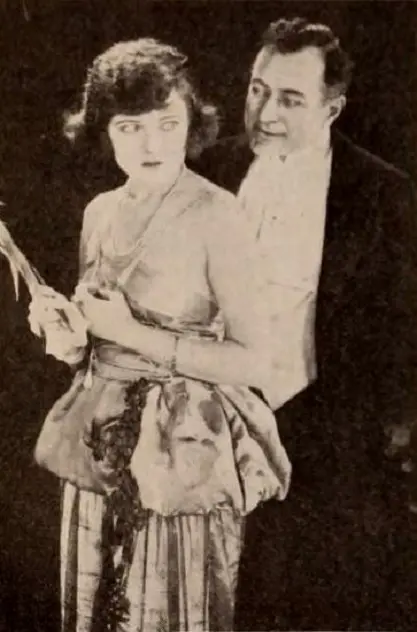
Corinne Griffith operates at the rare intersection of flapper irreverence and Victorian tragedy; watch how she fingers the engagement ring as though testing fruit for bruises. Opposite her, Webster Campbell is a monolith learning to bleed—every tilt of his waxed moustache signals accrued interest on a soul. Maurice Costello, grandfather of the Barrymore dynasty, gifts Morton a louche magnetism that predates Clark Gable by a decade; when he smirks, you smell burnt ether.
In support, Alice Calhoun as Patricia’s cousin flickers like a defective stock lamp—brief, incandescent, forgotten by closing bell.
Cinematographer Lucien Andriot, years before he lensed Lorelei of the Sea, shoots Human Collateral as though it were a Germanic fever dream smuggled into New Jersey. Shadows pool like ink from a defaulted fountain pen; negative space swallows whole performances. During the shack sequence, the only illumination is a hand-held lantern which paints the actors in umber chiaroscuro—faces appear, vanish, reappear like share prices on an erratic exchange.
Unlike The Chorus Girl’s Romance where marriage lifts the heroine from poverty, Human Collateral insists marriage itself is poverty—an IPO where the bride’s body is the only underwritten security. Patricia’s insistence on paperwork weaponizes the very bureaucracy designed to silence her, turning betrothal into derivatives trading. The film’s dénouement doesn’t restore patriarchal order; rather it cauterizes the ledger, implying a post-nuptial landscape where love might finally be non-fungible.
Viewers stunned by the film’s mercantile misogyny should sample Testimony or The Chalice of Sorrow, where heroines also negotiate flesh against fate. Yet Human Collateral stands apart for its pre-Depictation depiction of credit default swaps of the heart. Its DNA resurfaces nine decades later in indie fare like Margin Call and The Big Short, though Taylor did it without spreadsheets, only intertitles.
At 58 minutes, the narrative moves at rotary-phone speed—contemporary viewers may fidget during the second reel’s prolonged country-drive montage. Yet patience is repaid with the shack-set pas de deux, a 12-minute sequence that compresses seduction, terror, and enlightenment into a single match-flare. The 2018 restoration adds a Michael Nyman-esque score that gallops when the script breathes, hushes when hearts audit themselves.
The only extant 35 mm nitrate print was discovered in 2007 inside a Latvian church organ; it reeked of vinegar syndrome and mouse nests. Under the eye of the Eye Institute, the frames were bathed in alcohol, scanned at 4K, then re-grained to mimic 1920s orthochromatic stock. The resulting Blu-ray—available through Kino’s “Capital Silents” box—retains cigarette burns and reel-change spiders, ghosts that remind us capital, like celluloid, is volatile.
Human Collateral is not a museum relic; it is a margin warning flashing red across a century. Its sexual politics feel eerily au courant amid OnlyFans contracts and crypto pre-nups. Griffith’s face, when she signs her own dowry, is the proto-image of every gig-economy worker ticking “I agree” at 3 a.m. Watch it for the timeliness, rewatch it for the visual sorcery, archive it as proof that Hollywood once accused Wall Street of heartlessness—and had the receipts notarized.
Verdict: 9/10 — a gilt-edged masterpiece still accruing interest.
IMDb —
1917
Community
Log in to comment.