DbcultAccessing Vault...
Cult Review
Senior Film Conservator
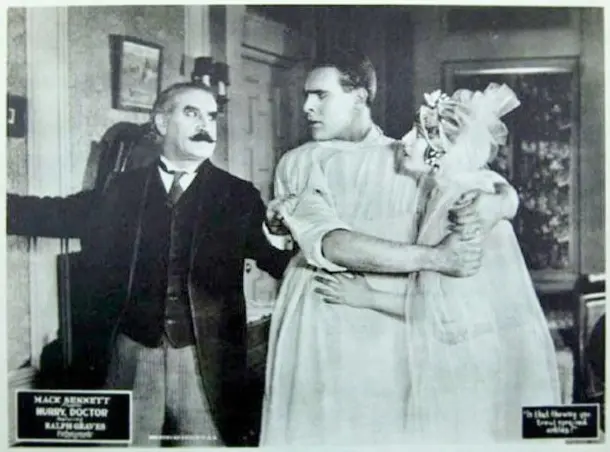
Is Hurry, Doctor! worth watching today? Short answer: absolutely, but with a significant caveat. This early cinematic sprint is a delightful, if occasionally clunky, window into the comedic sensibilities of the 1920s, making it essential viewing for silent film enthusiasts and those fascinated by the origins of slapstick. However, it will likely test the patience of modern viewers accustomed to contemporary pacing and narrative depth.
This film works because of its relentless energy and the committed physical performances that drive its central premise. It fails, somewhat predictably for its era, in its underdeveloped character arcs and a reliance on gags that, while foundational, can feel repetitive to an uninitiated audience. You should watch it if you appreciate the historical significance of early cinema, enjoy physical comedy, and are willing to immerse yourself in a bygone era's storytelling rhythm.
"Hurry, Doctor!" is a film that wears its premise proudly on its sleeve. From its very title, the audience is primed for a narrative steeped in urgency, a common, yet always effective, comedic engine in the silent era. Directed by a team of uncredited visionaries, likely including the writers Ewart Adamson, Vernon Smith, and Al Giebler, this production embodies the kinetic spirit that defined so much of the period's output. It’s a film that doesn't merely tell a story; it chases it, breathlessly, across every frame.
The plot, simple as it is, is a masterclass in escalating stakes. A doctor, presumably played by the ever-reliable Ralph Graves, is summoned to an emergency. What follows isn't a nuanced character study, but rather a series of increasingly outlandish obstacles that delay his arrival. This narrative structure, while straightforward, is incredibly potent for generating both suspense and laughter. The film understands the primal anxiety of a medical emergency and then playfully subverts it with a cascade of physical gags.
One could argue that the film’s strength lies in its unpretentious commitment to its core idea. There are no grand philosophical statements here, no deep dives into the human condition. Instead, it’s a pure distillation of comedic intent: get the doctor there, but make it as hard and as funny as possible. This singular focus, while potentially limiting for some, is precisely why it resonates with others, particularly those who appreciate the raw, unadulterated energy of early filmmaking.
In the silent era, acting was a language of exaggeration, gesture, and expression. The cast of "Hurry, Doctor!" embraces this wholeheartedly. Ralph Graves, known for his versatility, likely brings a blend of earnestness and exasperation to the titular role. One can almost picture his brow furrowed in concern, only to snap into a wide-eyed panic as another absurd impediment arises. His physical comedy, often a highlight of his performances, would have been key to selling the doctor's frantic journey.
The supporting cast, a veritable who's who of silent era character actors, adds layers of comedic texture. Vernon Dent, a stalwart of slapstick, would undoubtedly contribute his signature brand of bumbling authority or exasperated bystander. Imagine a scene where Dent, as a traffic cop, inadvertently causes more chaos than he prevents, his exaggerated gestures and wide-eyed confusion a perfect counterpoint to Graves's frantic dash. This kind of interplay is the bedrock of silent comedy, and Dent was a master.
Even smaller roles, filled by talents like Irving Bacon and Thelma Parr, would have been crucial. Bacon, with his distinctive everyman quality, might play a bewildered pedestrian or a stubborn motorist, while Parr could portray the anxious family member awaiting the doctor's arrival, her wide, worried eyes conveying the stakes more effectively than any title card. These actors understood that their bodies and faces were the primary tools of communication, and they wielded them with precision and comedic flair.
The physical vocabulary of silent film acting, often dismissed as 'over-the-top' today, was a sophisticated art form. It demanded an acute awareness of one's body and an ability to convey complex emotions and intentions without a single spoken word. In "Hurry, Doctor!," this art is on full display, showcasing a generation of performers who truly knew how to 'show, don't tell.'
The directorial choices in "Hurry, Doctor!" are dictated by its central theme: speed. Pacing is everything here. The film likely employs rapid-fire editing during chase sequences, contrasting sharply with more deliberate, character-focused shots. Think of the frenetic cuts seen in contemporary shorts like some of the early Why Worry? or even the more dramatic Over the Hill, where emotional beats are given room to breathe before the next surge of action. Here, the emphasis is almost entirely on the surge.
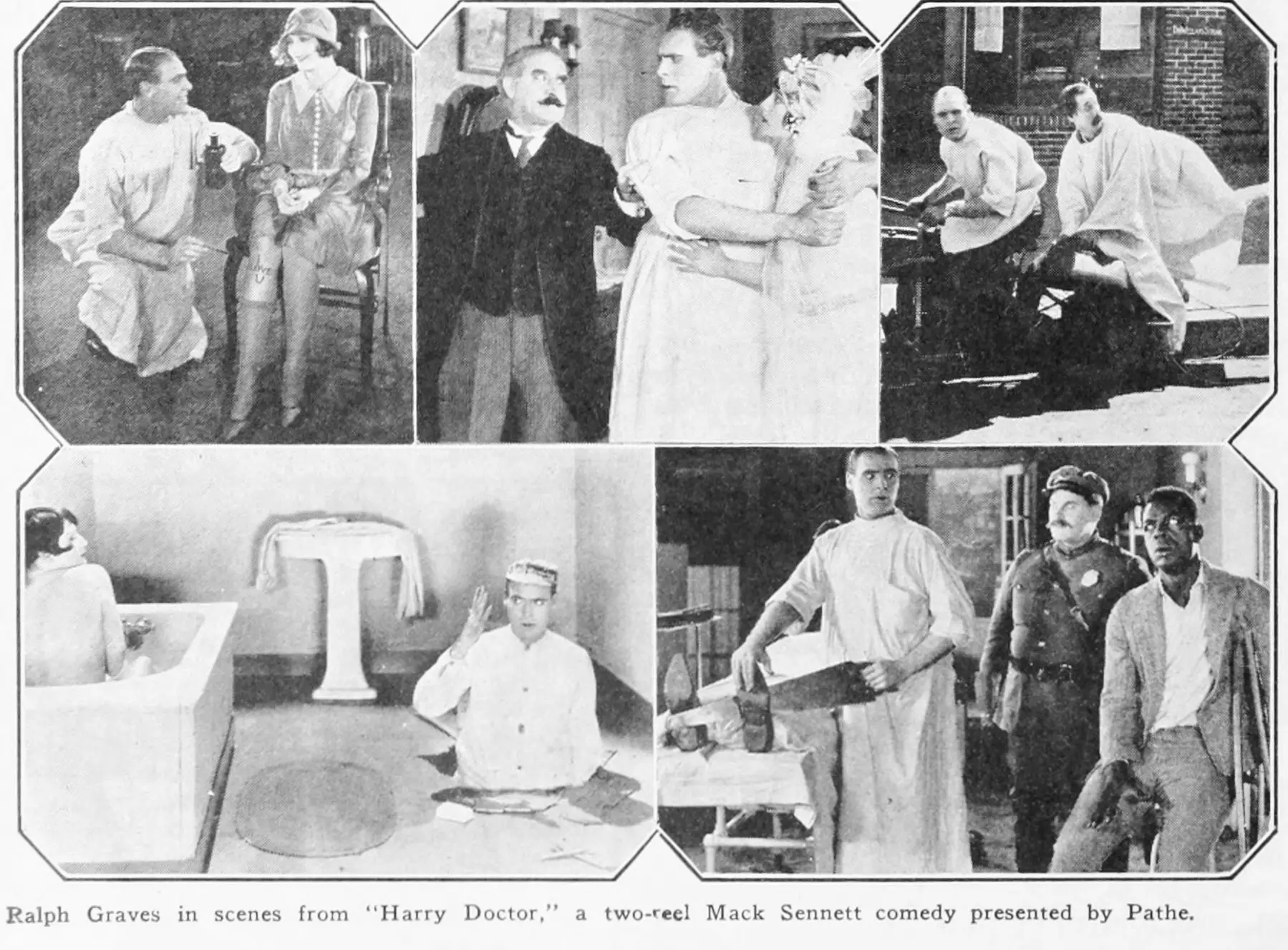
Cinematography, while not groundbreaking by today's standards, would have been functional and effective for its purpose. Expect clear, well-composed shots that prioritize visibility of the physical comedy. The camera often acts as a static observer, allowing the actors' movements and the unfolding chaos to fill the frame. However, during moments of extreme urgency, one can imagine handheld shots or dynamic angles to enhance the feeling of a world spiraling out of control, a technique still innovative for its time.
Consider a sequence where the doctor's car breaks down. The camera might first establish the wide shot of the stranded vehicle, then cut to a close-up of Graves's exasperated face, followed by a rapid montage of failed attempts to fix the engine, each accompanied by a title card expressing his growing frustration. This interplay of static and dynamic, wide and close, is the silent film director's toolkit, used here to maximum comedic and dramatic effect.
The tone of "Hurry, Doctor!" is unequivocally lighthearted, despite the underlying seriousness of a medical emergency. It's a testament to the era's ability to extract humor from almost any situation. The film never truly allows the audience to feel genuine dread; instead, it invites them to laugh at the absurdity of the doctor's predicament. This tonal consistency is one of its strengths, ensuring that the comedic beats land effectively without being undermined by undue melodrama.
Pacing, as mentioned, is critical. The film starts with a clear objective, builds momentum through a series of escalating comedic set-pieces, and culminates in a frantic race against the clock. The writers, Ewart Adamson, Vernon Smith, and Al Giebler, understood the rhythm of silent comedy: establish the premise, introduce complications, accelerate the action, and resolve it with a satisfying, if often simplistic, conclusion. It works. But it’s flawed.
One unconventional observation is how effectively the film uses the very concept of 'time' as a villain. The ticking clock, though unseen, is a constant, palpable presence, driving every character's actions and every comedic beat. This abstract antagonist is far more compelling than any mustache-twirling villain, providing a universal tension that transcends the specific gags.
For silent film aficionados, "Hurry, Doctor!" is a definite yes. It offers a clear example of the comedic storytelling prevalent in the 1920s. For casual viewers, it depends on your patience for historical cinema. It's a quick, energetic watch that doesn't demand much, but rewards an appreciation for the foundations of cinematic comedy.
It serves as an excellent case study in how simple premises can be stretched into engaging narratives through sheer kinetic energy and dedicated physical performance. Its historical value alone makes it a worthwhile experience for anyone curious about the evolution of film. Don't expect a modern blockbuster, but anticipate a charming trip back in time.
"Hurry, Doctor!" is far from a forgotten masterpiece, but it is an undeniably important piece of cinematic archaeology. It's a brisk, effervescent ride that showcases the raw talent and boundless energy of early filmmakers and performers. While its narrative simplicity and reliance on well-worn tropes might not endear it to every modern viewer, its historical significance and pure, unpretentious charm are undeniable. It's a film that asks for little but gives a surprising amount, particularly in its ability to transport you to a time when cinema was still finding its voice, but already knew how to make an audience laugh.
It’s a foundational text for anyone interested in the evolution of comedic timing and physical performance on screen. Don't go in expecting a profound experience, but do expect a delightful, if occasionally quaint, journey into the origins of screen hilarity. It's a film that, despite its age, still possesses a vibrant pulse, urging you to lean in and enjoy the ride. A solid recommendation for its niche, and a fascinating look at how films used to, well, hurry along.
IMDb 5.4
1923
Community
Log in to comment.