DbcultAccessing Vault...
6.9/10
Senior Film Conservator
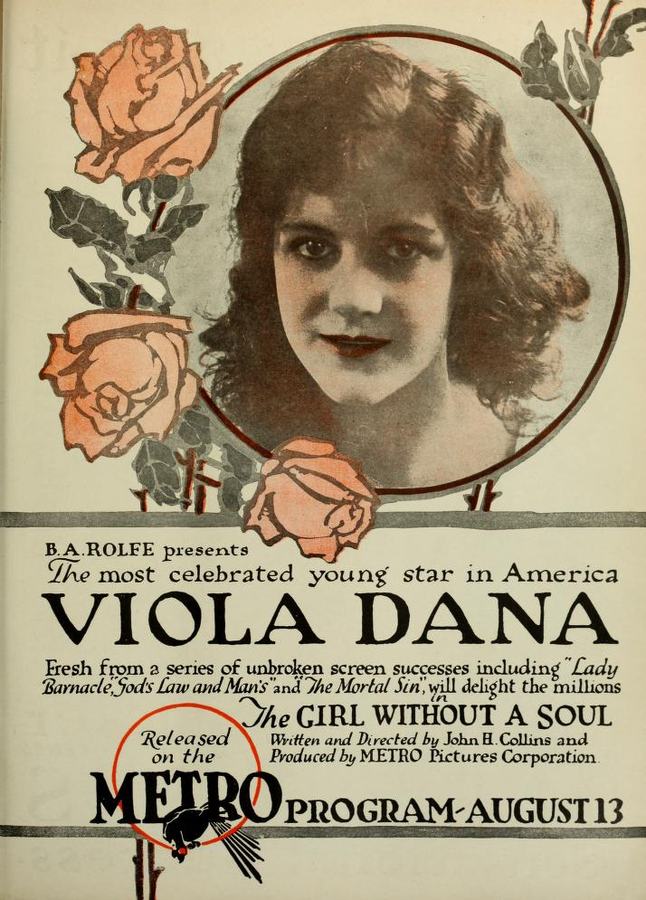
A definitive 6.9/10 rating for a film that redefined the boundaries of cult cinema. The Girl Without a Soul remains a cornerstone of transgressive art.
There are silents that murmur; this one howls down a well.
John H. Collins, only twenty-nine when he etched this fever dream onto nitrate, understood that the camera could be both scalpel and mirror. Every tableau in The Girl Without a Soul feels like it was lit by lanterns held too close to the face—skin becomes parchment, eyes become inkwells. The film’s very title is a dare: to watch without blinking, to decide whether a soul is something you can misplace like a thimble or whether it can be pawned along with a harp.
Technically the picture is black-and-white, yet Collins sneaks chromatic ghosts into the grayscale. Prue’s practice room is swabbed with zinc-white backlights so her arms appear carved from alabaster; the river reek is painted with charcoal filters, swallowing hems of dresses until the girls seem to wade through liquid tar. In the Austrian coda, double-printed snowflakes flicker like moths, each flake a frame flashed twice—an unintended strobe that makes the失忆的 fiddler shimmer between dimensions. Contemporary tinting would have added amber lamplight or cerulean night, but even without dyes the values hum.
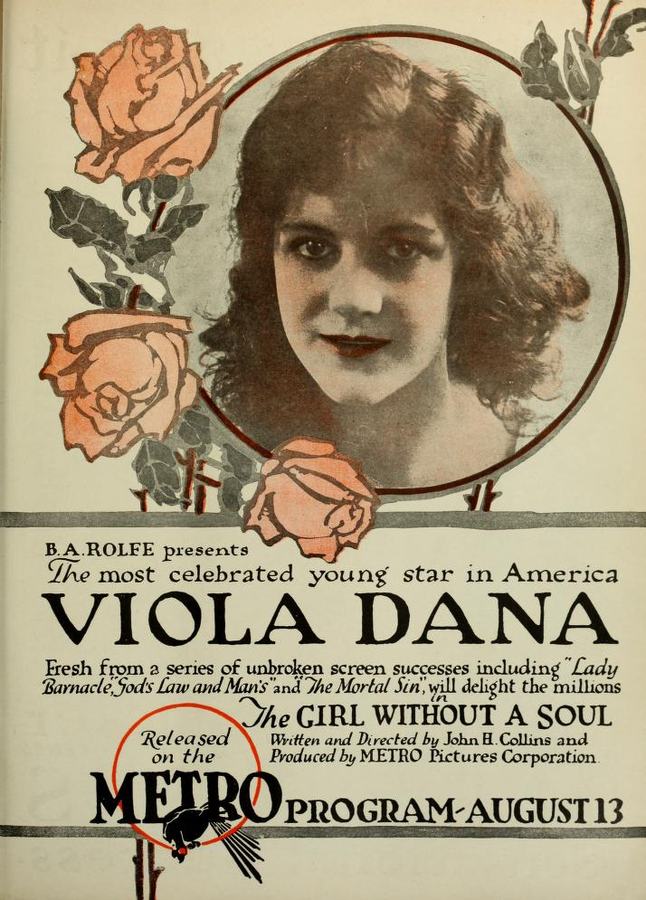
Viola Dana—born Virginia Flugrath—was twenty-two and already a veteran of thirty shorts when she accepted the schizophrenic assignment of embodying both resigned martyr and feral avenger. Watch her wrists: when Prue plays, they droop like broken bird wings; when Lally assumes the façade, the same wrists stiffen into hatchet blades. Dana’s eyes perform a fugue—one moment the pupils dilate as if swallowing the world, next they retract to pinpricks of contempt. Critics of the era compared her to Lillian Gish’s waif, yet Dana’s fragility is barbed, closer to the raw nerves in Scottish melodramas than to Griffith’s porcelain saints.
Robert Walker’s carpenter, Hiram, is introduced through a pane of glass: we see him sanding a cradle he will never rock for a child not yet imagined, his reflection superimposed over the river that will later almost claim Prue. The scoundrel, unnamed save for “Mr. Lyde,” wears spats so glossy they mirror tavern ceilings, a visual shorthand for moral rot. In the pivotal seduction scene, Collins positions the camera beneath the piano lid; strings slice the frame into prison bars while Lyde’s fingers crawl across ivory like maggots. The juxtaposition of manual trades—Hiram’s honest shavings vs. Lyde’s parasitic arpeggios—renders class warfare without a single title card.
Formally, the plot bifurcates like the siblings themselves. Intertitles vanish for an eleven-minute midpoint sequence, forcing us to read faces the way illiterates read weather. A match-cut of a steamboat whistle dissolves into Prue’s scream underwater; the sound we cannot hear becomes the image we cannot forget. The temporal ellipsis between presumed suicide and resurrection is bridged by a single shot of lace curtains billowing: months collapse into seconds, a trick later borrowed by detective noirs and even by Hitchcock in Vertigo.
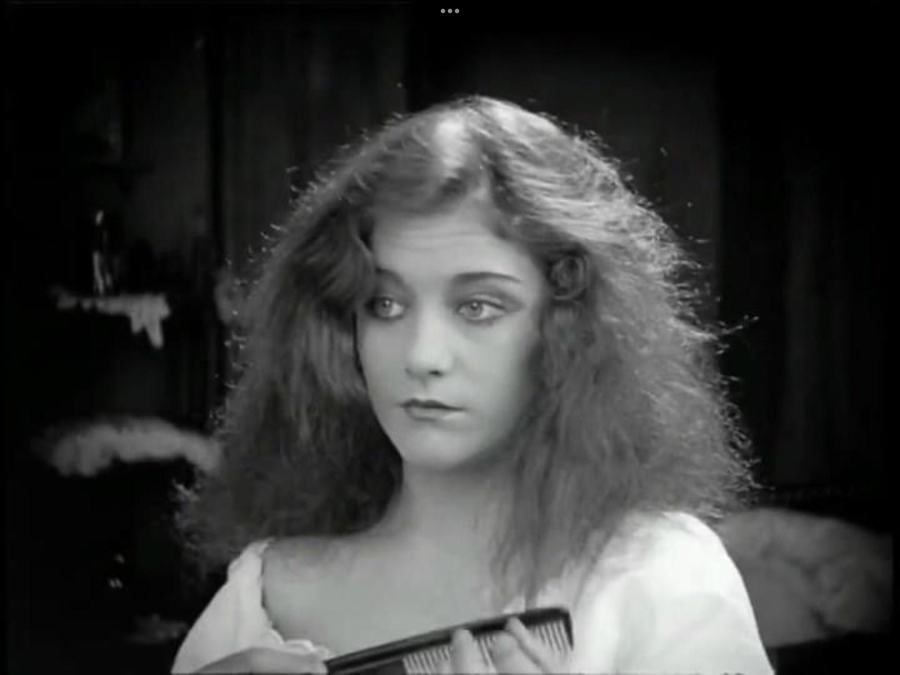
Water here is not mere setting but co-conspirator. Cinematographer John W. Brownell lenses the river with a diopter that smears moonlight into hammered pewter; when Prue steps from the pier, the splash is filmed in reverse so droplets appear to levitate back into the sky, as if creation itself were trying to undo the drowning. Meanwhile, town elders gossip in doorways framed like tableaux from Stowe—their silhouettes become a moral lattice through which the sisters must squeeze.
The harp—once pawned—reappears in a junk shop where Prue, now amnesiac, fingers its strings but cannot conjure her own études. Collins denies us auditory memory; instead, he overlays a close-up of her tremolo on the carpenter’s saw blade, turning tools into surrogate instruments. Silence, in this film, is never empty—it is the negative space where conscience echoes. Compare this to the Sporting Duchess where music is ornament; here it is oxygen.
Released in March 1917, six months before the Suffrage Pickets first stood outside the White House, the film straddles Victorian martyrology and emergent feminism. Lally’s final choice—to marry the carpenter yet keep her own surname in intertitles—was radical enough that several Midwestern exhibitors snipped the wedding scene. Collins, husband of star Dana, reportedly fought distributors, arguing that “a woman may rescue herself and still desire a partner, not a master.” The compromise—a ring without a kiss—lingers longer than any embrace.
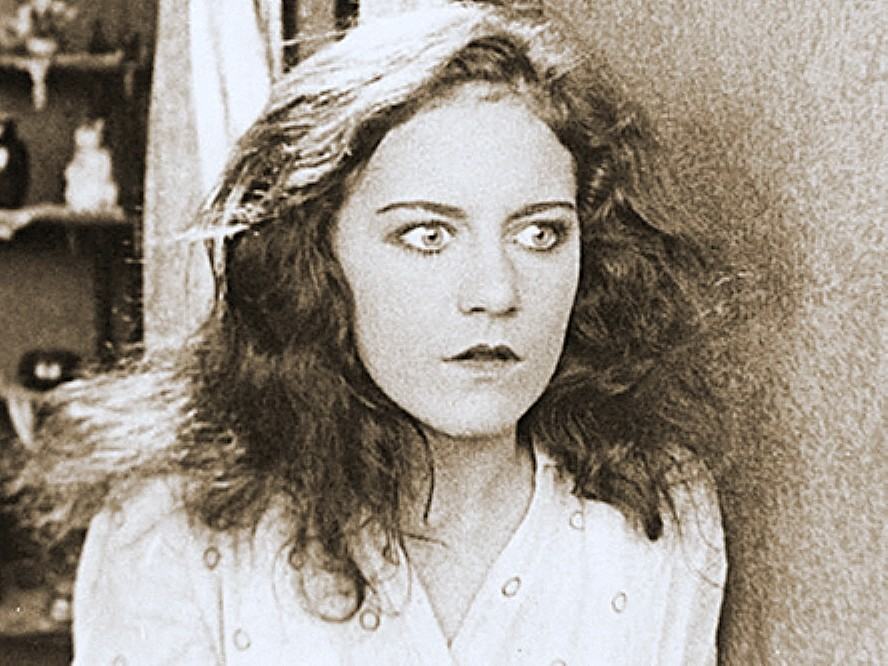
Fast-forward a decade: Victor Sjöström’s The Wind borrows the river-drowning-that-isn’t; Hitchcock’s Rich and Strange lifts the amnesiac-resurrection trope; even Technicolor musicals echo the sister-duality device. Yet few cinephiles today can name The Girl Without a Soul; the negative is lost, only a 16‐mm abridgement circulates among archivists like samizdat. What survives is enough to certify that Collins—dead at thirty-one from influenza—was mapping emotional topographies Griffith never dared.
Should you locate the 46-minute cut (usually mislabeled as Her Sister’s Sin), watch it at half-speed; the under-cranked 18 fps becomes a trance of 12, letting candlelight flicker like heart arrhythmia. Pair with Satie’s Gymnopédies rather than the provided Wurlitzer cues; the dissonance births a frisson no censor can excise. Then chase it with Saints and Sorrows for a double bill of penitential sisterhood that will leave you questioning whether redemption is ever anything more than rebranded amnesia.
Verdict: A lacerating poem etched on nitrate, haunting as footsteps that stop outside your door yet you find no prints in the snow.
IMDb 6.8
1925
Community
Log in to comment.