DbcultAccessing Vault...
Cult Review
Senior Film Conservator
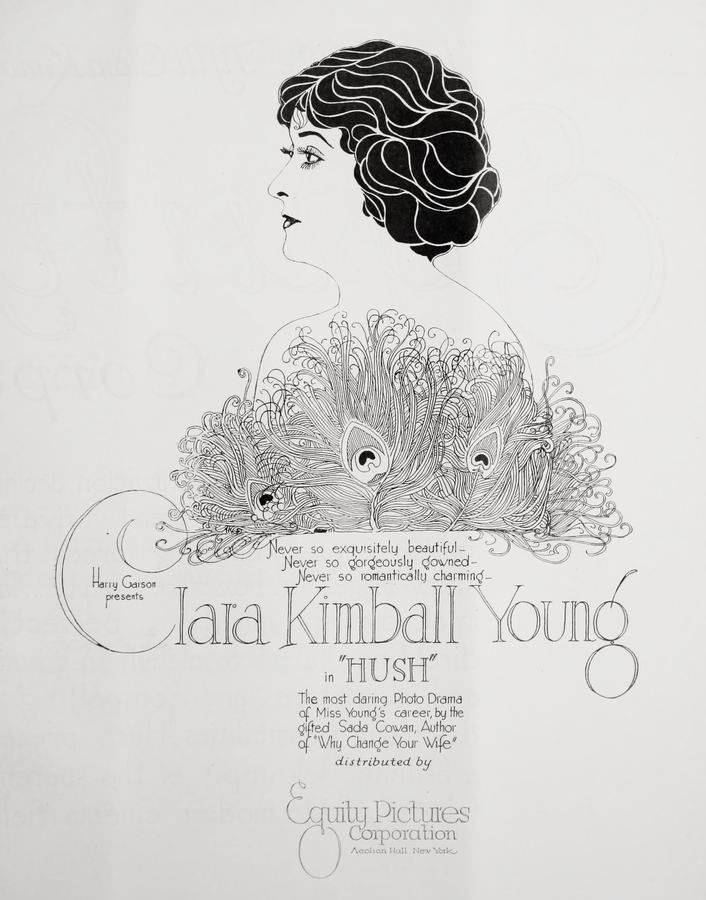
The title card reads merely Hush, but the silence that follows is carnivorous.
There are films that scream and films that whisper; this one exhales once—an icy breath down the nape of your marriage—and then waits for frostbite to set in. Directed by the largely unsung J. Frank Glendon (who also cameos as the poker-faced physician), the picture belongs to that tremulous moment in 1920 when Hollywood still believed shadows could carry dialogue more eloquently than words. Shot on flickering orthochromatic stock that turns crimson lips into coal-smudge and ivory skin into lunar glare, Hush is a domestic noir before the term existed, a post-divorce melodrama without the decree, a horror film whose monster is the half-spoken.
Plot, on paper, sounds almost banal: Irene reveals an old flame to her husband. But writers Sada Cowan and Lenore J. Coffee—two women navigating the suffocating gender politics of scenario departments—understand that the crime is not infidelity but curation. The film’s tension coils around what Irene doesn’t confess: that the ex-lover, Lang, now negotiates contracts across from Walter at the mahogany table where futures are bartered. Williams plays Irene like a woman who has sewn her own mouth shut with diamond thread; every close-up is a ledger of micro-tremors: the nostril that flares when Walter mentions “the new consultant,” the blink that arrives a fraction too late. Silent cinema rewards such calibrated physiognomy, and Williams—once touted as America’s answer to Asta Nielsen—delivers a masterclass in epidermal disclosure.
Jack Pratt, whose career would tragically gutter only a year later after a studio fire, imbues Walter with the brittle grandeur of a man whose self-image is founded on the assumption that he controls narrative. When that assumption fractures, Pratt’s shoulders don’t sag; they re-align, as though some interior scaffolding has been re-bolted by spite. Watch the way he chops his cigar in half with a paper cutter the morning after Irene’s partial confession—a miniature violence that substitutes for the gun he will never fire.
Lang, the requisite foil, could have been a mustache-twirling home-wrecker. Instead, Bertram Grassby—Britain’s export to early Hollywood, all cheekbones and languid entitlement—plays him as a man who collects resentments the way dowagers collect ivory fans. Notice how he positions himself in Walter’s office: half-turned toward the window, as if forever posing for an unseen portraitist, voiceless yet audible in the language of posture. His reappearance in Irene’s life is less resurrection than haunting, a reminder that the past is never safely archived; it merely changes clothes.
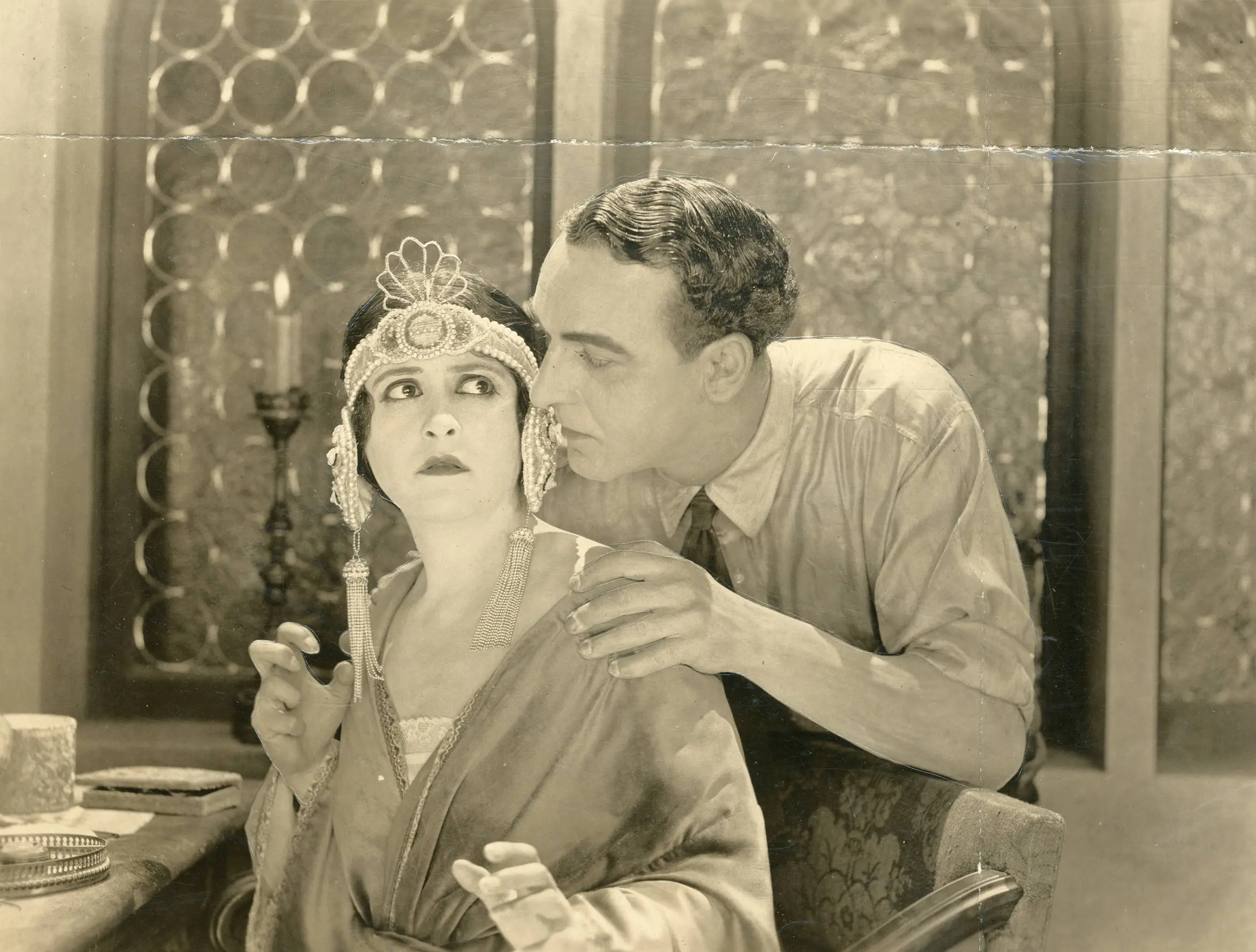
Meanwhile, Clara Kimball Young’s Beatrice—officially the “family friend”—slips through scenes like a gossip-bearing wraith. Young, once a million-dollar star for World, had by 1920 begun her vertiginous slide to supporting roles; she weaponizes that professional humiliation here, letting Beatrice’s smile convey both commiseration and cannibalism. In one devastating insert, she offers Irene a vial of smelling salts, then pockets the vial before Irene can accept—an act of mercy repossessed.
Cinematographer Friend Baker (who would later shoot Der Golem pick-ups in 1921) composes in depth rather than breadth. Drawing rooms become dollhouses with the front wall removed; we peer in like children studying the anatomy of an implosion. A recurring visual motif is the half-open door—its threshold a sliver of liminal darkness where eavesdroppers hover. Irene’s silhouette repeatedly bisects these doorframes, literalizing her existential straddle between candor and concealment. The film’s most vertiginous flourish arrives during a ballroom sequence shot entirely in reflections: couples swirl across polished mahogany, their faces discernible only as tremors on a liquid surface, marriages reduced to mirage.
Intertitles—usually the blunt instruments of silent storytelling—here resemble sutures: brief, surgical, leaving scars. Cowan and Coffee pare dialogue to haiku. When Walter finally confronts Irene, the card reads merely: “You stitched a lie into my sleep; now I wake bleeding.” The sentence is overwrought, yes, but onscreen it flashes like a single frame of subliminal gore.
Because the film is co-written by women, its gaze complicates the era’s usual Madonna/virago binary. Irene’s transgression is not promiscuity but authorship—she dares to script her own past, to decide which chapters her husband may read. The narrative punishes her for that authorial agency, yet the camera lingers on her face with something approaching reverence, implying that her real sin is not adultery but editorial control. In 1920, only months after the 19th Amendment’s passage, such a subtext would have hummed like a tuning fork in a theater packed with newly enfranchised women. One imagines the audible intake of breath when Irene, asked if she regrets the affair, simply folds her arms—an unthinkable refusal of penitence.
Conversely, Walter’s wounded pride is never valorized; Pratt lets flickers of pettiness leak through the masculine stoicism. In one close-up, after learning Lang’s identity, Walter studies his own reflection in a shaving mirror, then flips the glass face-down, as though even his likeness were colluding with his rival. The gesture is infantile, and the film knows it.
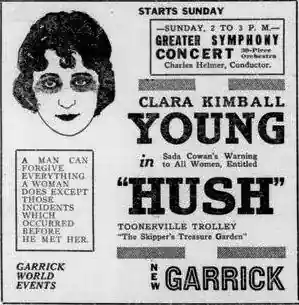
Modern viewers, duped by nostalgia, sometimes forget how noisy silent films were: orchestras, nickelodeon pianists, audience chatter, the popcorn orchestra of rattling crates. Hush was conceived for the new deluxe exhibition sites springing up on America’s main streets—palaces hungry for prestige fare. Surviving cue sheets suggest a score cobbled from Grieg’s Holberg Suite and the adagio from Rachmaninoff’s Second Symphony, music that would have saturated the auditorium in velvety fatalism. Today, when we watch the film in pixelated silence on laptops, the absence of that score creates a meta-hush: we supply our own interior soundtrack of marital resentments, the creak of IKEA cupboards, the text message we shouldn’t have read.
Critics seeking genealogical context might pair Hush with A Pair of Silk Stockings (1918), where marital fissures also yawn beneath consumerist baubles, or with Her First Kiss (1919), another Williams vehicle that likewise toys with the ethics of revelation. Yet those films resolve into romantic catharsis; Hush offers only stalemate, a drawn battle whose casualties are invisible. More apt is the bitter aftertaste of His Divorced Wife, where divorce itself feels less terminal than the cold war of coexistence.
One could even triangulate with European pessimism: Lang’s sociopathic elegance anticipates the refined cruelty found in The Stranglers of Paris, while Irene’s self-erasure rhymes with the haunted wife in Under Kærlighedens Aag. Yet these comparisons illuminate without diminishing the film’s uniquely American claustrophobia—the sense that inside every prairie-dream bungalow lurks a whirlpool of repression.
For decades, Hush slumbered among the missing, misfiled under the generic moniker Temptation in a Czechoslovakian asylum archive. Its 2018 4K restoration by EYE Filmmuseum peeled away a century of fungal freckles, revealing Baker’s intricate lighting: the way a single overhead klieg turns Irene’s cheekbone into a cliff-edge, or how Walter’s pupils dilate into black universes the moment he recognizes Lang’s handwriting on an invoice. The restoration team opted for a digital tinting scheme of amber interiors and viridian nocturnes, hues that map neatly onto the film’s feverish ambiguities. Projectionists report that modern audiences—accustomed to jump-scare exposition—squirm audibly during the film’s long withholding silences, a bodily testimony to its continued voltage.
Great art doesn’t answer questions; it contaminates your bloodstream with better ones. Walking—or rather scrolling—away from Hush, you confront the Irene within: which of your stories have you doled out in digestible morsels, and which corpses have you buried beneath the floorboards of politeness? The film’s triumph is that it withholds even the satisfaction of moral outrage; every character is both predator and prey, locked in a danse macabre whose music stopped a century ago yet somehow keeps echoing in the marrow.
So if you wander into Hush expecting the quaint melodrama of mismatched couples and last-reel reconciliations, brace yourself for frostbite. It is not a film you watch; it is a film that listens—to the hush inside your own house, the hush that grows teeth.
Runtime: 68 min. | Director: J. Frank Glendon | Scenario: Sada Cowan, Lenore J. Coffee | Cinematography: Friend Baker | Available: Restored Blu-ray from EYE, streaming via Majestic Silent Cinema
IMDb —
1919
Community
Log in to comment.