DbcultAccessing Vault...
6.3/10
Senior Film Conservator
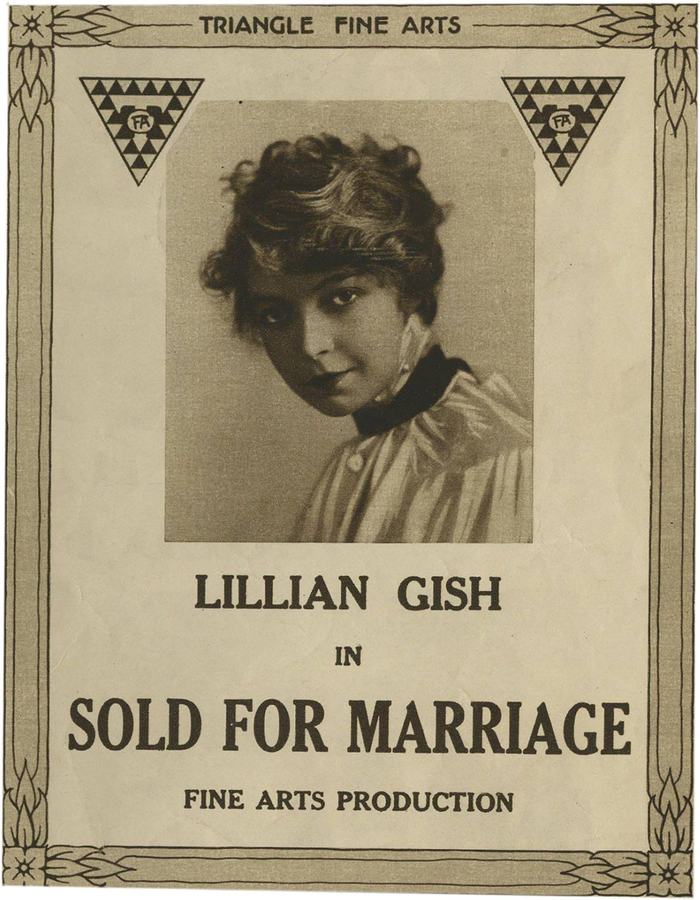
A definitive 6.3/10 rating for a film that redefined the boundaries of cult cinema. Sold for Marriage remains a cornerstone of transgressive art.
The year 1916 was a watershed moment for the cinematic medium, a period when the grammar of film was being articulated by pioneers who understood that the silver screen could serve as both a mirror and a megaphone. In Sold for Marriage, we witness the confluence of raw melodrama and early political idealism. This isn't merely a story of a girl in peril; it is a cinematic treatise on the transformative power of the American Dream, viewed through the lens of a fragile yet indomitable Russian protagonist. Unlike the darker explorations of social decay found in The Waif, this Christie Cabanne-directed piece seeks to reconcile the trauma of the Old World with the perceived benevolence of the New.
Lillian Gish, even at this early stage of her career, possesses a luminosity that feels almost otherworldly. Her Marusia is not a passive victim, though the script subjects her to the most venal of human impulses. When her uncle, played with a chilling, mercenary detachment by William Lowery, decides to monetize her youth, Gish conveys a sense of internal collapse that requires no intertitles. The way she occupies the frame—often isolated against the stark, oppressive architecture of her Russian village—creates a visual language of entrapment. It reminds one of the tragic trajectory in Manon Lescaut, where beauty itself becomes a curse, drawing the attention of predators who mistake a human soul for a tradable asset.
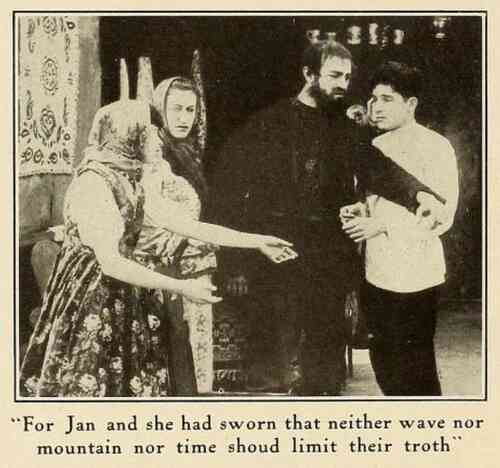
The technical prowess of the Triangle Film Corporation is on full display here. The cinematography captures the claustrophobia of the steerage passage with a grit that anticipates the realism of later decades. As the ship cuts through the Atlantic, the vessel becomes a liminal space—a floating purgatory where Jan (Frank Bennett) and Marusia remain separated by deck levels and social standing, yet united by a singular, desperate intent.
The narrative structure of Sold for Marriage is fascinatingly bifurcated. The first half is steeped in the aesthetics of European tragedy, echoing the somber tones of The Deserter. We see the crushing weight of poverty and the casual cruelty of those in power. However, once the silhouette of the American coastline appears, the film undergoes a tonal metamorphosis. The transition from the 'oppressive' Russian police to the 'friendly' American officers is handled with a didacticism that is almost jarring to the modern viewer. While films like Strejken dealt with the harsh realities of labor and state power, Sold for Marriage presents the American police as a secular priesthood, ready to intervene in the private domestic sphere to ensure that liberty is not just a concept, but a lived reality.
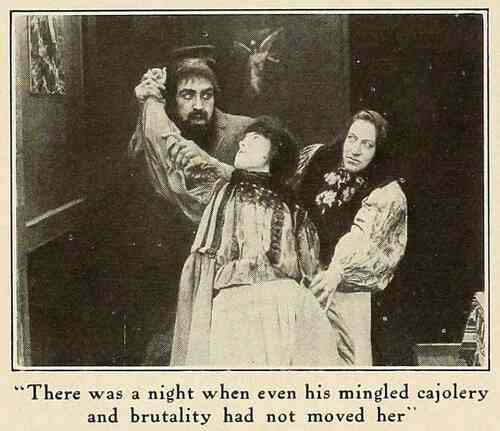
Frank Bennett’s Jan serves as the audience’s surrogate—the returning immigrant who has already been baptized in the waters of American individualism. His shock at the efficacy of the U.S. legal system is perhaps the film’s most overt propaganda, yet it is played with such earnestness that it transcends mere messaging. The confrontation at the end of the journey, where the uncle’s mercantile machinations are dismantled by the badge of authority, is a cathartic reversal of the power dynamics established in the opening act. It lacks the moral ambiguity of The Better Woman, opting instead for a clear-cut triumph of institutional goodness over individual greed.
One cannot overlook the supporting cast, which reads like a who's who of early Hollywood character actors. Walter Long and Frank Brownlee provide a textured backdrop of masculinity that ranges from the menacing to the mundane. The presence of Allan Sears and Fred Burns adds a layer of rugged authenticity to the American sequences, contrasting sharply with the stylized villainy of the Russian prologue. In many ways, the film functions as a comparative study of cultural archetypes, much like The Duke's Talisman explored the clash of tradition and desire, though here the stakes are rooted in the immigrant's survival rather than aristocratic intrigue.
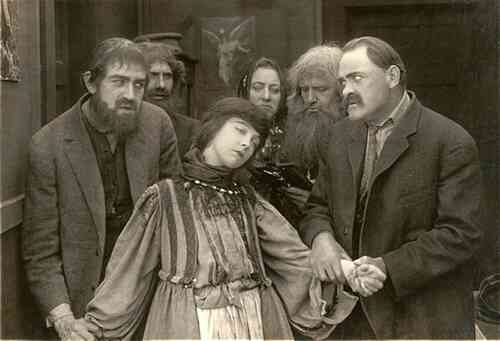
Visually, the film utilizes a chiaroscuro effect that highlights Gish’s porcelain features against the dark, grimy interiors of the ship. This visual contrast serves as a metaphor for the film's central theme: the light of innocence surviving the darkness of exploitation. This motif is a recurring one in the era’s output, seen in varied forms in The Lost Chord and A Butterfly on the Wheel. However, Cabanne’s direction gives Sold for Marriage a kinetic energy that prevents it from becoming a static morality play. The editing during the final rescue sequence is particularly sophisticated for 1916, building a sense of urgency that mirrors the racing pulses of the protagonists.
For those interested in the evolution of the 'damsel in distress' trope, this film offers a complex variation. Marusia is physically vulnerable, yes, but her internal resolve remains the narrative's true north. She is not waiting for a prince; she is waiting for a system that recognizes her humanity. In this regard, the film shares a thematic kinship with The Fighting Hope, where the struggle for justice is intertwined with personal salvation. The resolution of Marusia’s plight is not merely a romantic union, but a legal emancipation—a distinction that makes the film surprisingly progressive despite its melodramatic trappings.
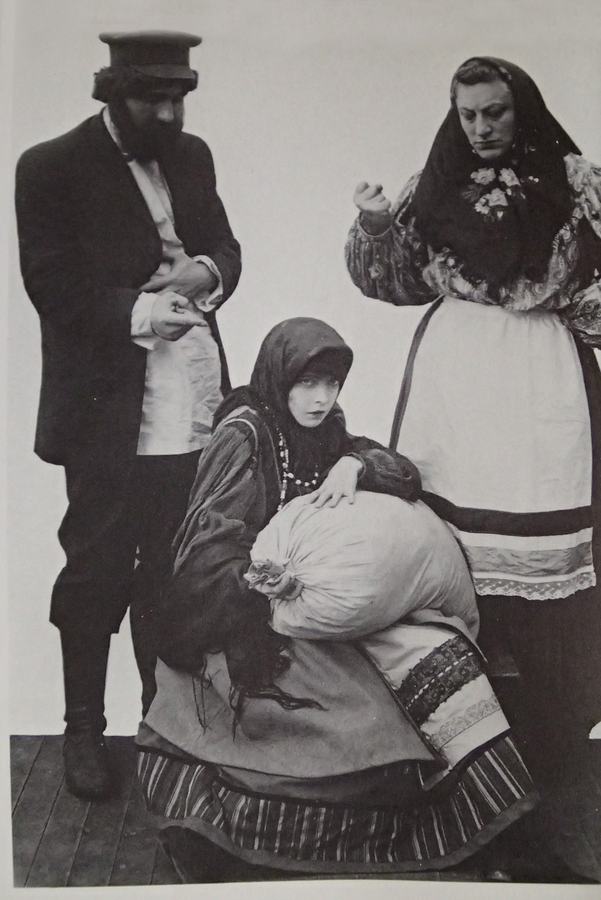
When we compare this to the sprawling, almost nihilistic ambition of Homunculus, released the same year, Sold for Marriage feels intimate and human-centric. It doesn't seek to explain the cosmos; it seeks to explain the neighborhood. It asks the audience to believe that a single life, bartered away in a backroom deal, is worth the intervention of a nation's full legal might. It is a fairy tale of the industrial age, where the magic wand is replaced by a police officer’s billy club and the castle is a tenement in New York.
The screenplay by William E. Wing avoids the lyrical abstraction found in The Luck of Roaring Camp, favoring a direct, punchy narrative flow. Each scene is a brick in the wall of the uncle’s conspiracy, and each subsequent scene is a hammer blow against it. The economy of storytelling here is masterful. There are no wasted gestures. Even the minor characters, like the ones played by Pearl Elmore or Mike Siebert, contribute to a sense of a world that is lived-in and breathing. The film avoids the stagey artifice of The Suburban, opting instead for a location-based grit that makes the arrival at Ellis Island feel like a documentary fragment.
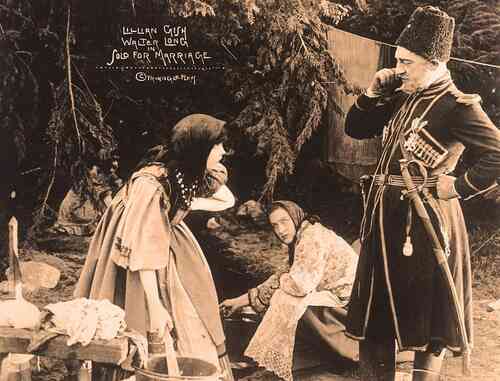
Ultimately, Sold for Marriage is a testament to the power of Lillian Gish as the definitive face of the silent era’s conscience. Her performance anchors the film, preventing it from drifting into the realm of pure propaganda. She makes us care not just about the injustice of her situation, but about the specific, trembling hope of Marusia herself. As the credits roll—or rather, as the final iris closes—one is left with a profound sense of the optimism that defined the early 20th-century American identity. It is a film that believes in the possibility of a clean slate, a theme also explored with varying degrees of success in Are They Born or Made? and The Squatter and the Clown.
To watch this film today is to look through a keyhole into a lost world—a world where the lines between right and wrong were drawn in thick, cinematic ink, and where the promise of a new life was worth every hardship of the steerage. It lacks the cynicism of modern noir or the complexity of later immigration dramas like The Mystery of the Poison Pool, but it possesses a purity of intent that is increasingly rare. Sold for Marriage remains a vital piece of film history, a soaring melodrama that captures the heartbeat of an era standing on the precipice of global change.
Note: This film is a crucial entry in the Triangle-Fine Arts catalog and represents the peak of the collaboration between Cabanne and Gish before her legendary work with D.W. Griffith reached its zenith. It is a must-watch for any serious student of the silent era.
IMDb 5.9
1937
Community
Log in to comment.