DbcultAccessing Vault...
7.2/10
Senior Film Conservator
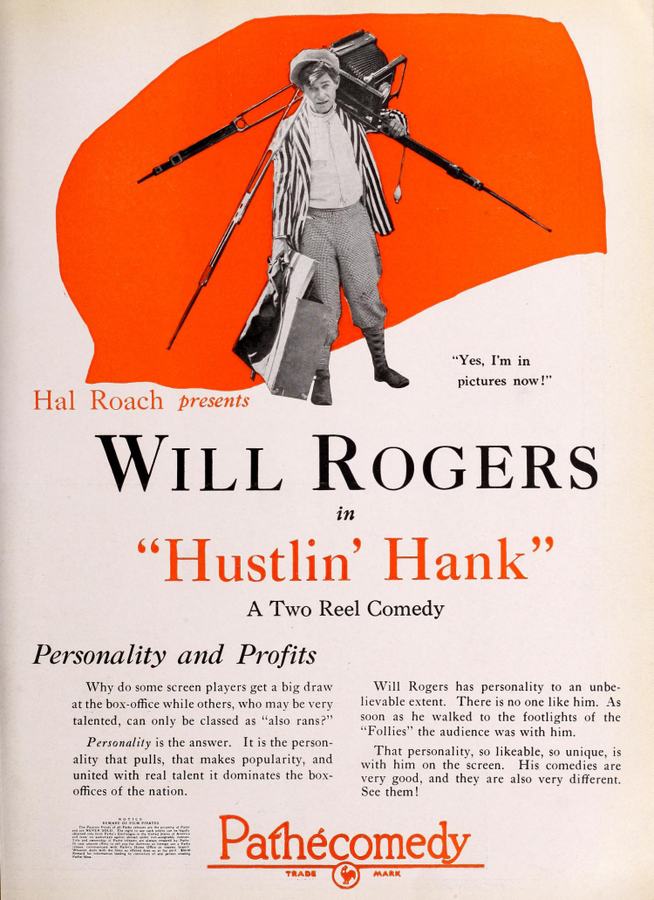
A definitive 7.2/10 rating for a film that redefined the boundaries of cult cinema. Hustlin' Hank remains a cornerstone of transgressive art.
When Hal Roach assembled the cast for Hustlin' Hank, he tapped into a cultural zeitgeist that glorified the rugged outdoors while simultaneously mocking the pretensions of the burgeoning celebrity class. Will Rogers, already celebrated for his quick‑draw wit, embodies a paradoxical hero: a man whose inertia is so profound that the mere notion of labor induces nausea. This paradox fuels the film’s central tension, positioning Will as both the object of ridicule and the unwitting catalyst for comedic brilliance.
Rogers’ portrayal of Will is a masterclass in physical comedy. He oscillates between exaggerated sighs, languid gestures, and sudden bursts of frantic energy when confronted by the camera’s clunky mechanics. Marie Mosquini, cast as the resourceful love interest, provides a counterbalance. Her eyes sparkle with a blend of exasperation and affection, delivering lines with a crispness that cuts through the film’s slapstick haze. Billy Engle, as the bumbling assistant, contributes a series of pratfalls that echo the kinetic humor found in Squabs and Squabbles, while Gus Leonard’s curmudgeonly elder offers a gruff commentary reminiscent of the sardonic elders in The Bearded Lady. Vera White and Eddie Baker round out the ensemble, each delivering brief yet memorable moments that enrich the narrative tapestry.
The film opens with a panoramic sweep of a sun‑baked farm, the camera lingering on Will’s slumped silhouette as he leans against a fence, eyes half‑closed. The naturalist, a flamboyant figure draped in tweed and sporting an oversized hat, bursts onto the scene with a proposition that feels both earnest and absurd. He promises Will fame, fortune, and the chance to “capture the untamed soul of America” – a promise that is undercut by Will’s immediate physical reaction: a retching gag that signals his aversion to any exertion.
What follows is a series of episodic set‑pieces, each designed to heighten the disparity between Will’s lethargy and the wild environments he is forced to navigate. The first encounter—a staged “hunt” of a fox—descends into chaos when Will, attempting to conceal himself behind a low shrub, inadvertently triggers a chain reaction of collapsing props. The fox, a trained animal, darts away, leaving Will tangled in canvas and his camera dangling precariously.
Subsequent scenes amplify this formula. A bear’s den becomes a cramped studio where Will’s attempts to photograph the creature result in a comedic tug‑of‑war over the camera lens. The naturalist’s lofty narration—delivered in a grandiose, almost melodramatic tone—contrasts sharply with Will’s muttered curses, creating a rhythm that propels the comedy forward.
Roach’s direction leverages the limitations of silent cinema to its advantage. The film’s intertitles, penned by H.M. Walker, are crisp, witty, and strategically placed to punctuate physical gags. The cinematography, while constrained by the era’s technology, employs inventive framing: close‑ups of Will’s bewildered expression are juxtaposed with wide shots of the wilderness, emphasizing his alienation within the natural world.
Lighting plays a crucial role, especially during night‑time sequences where lanterns cast flickering shadows that both obscure and highlight the absurdity of Will’s attempts to remain inconspicuous. The use of practical effects—such as wind machines to simulate gusts that displace Will’s hat—adds a tactile quality that modern audiences often miss in contemporary digital productions.
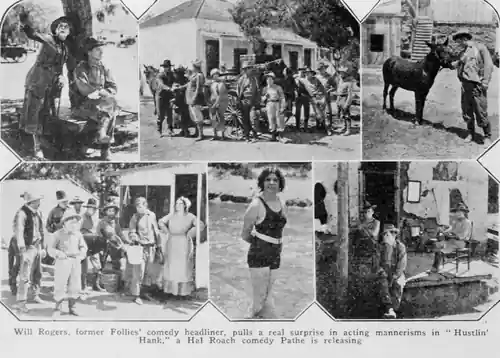
Beyond its surface-level humor, Hustlin' Hank offers a subtle critique of the early 20th‑century fascination with “naturalists” who packaged wilderness adventures for urban consumption. The naturalist character embodies a self‑aggrandizing archetype, preaching reverence for the wild while exploiting it for profit. Will’s accidental success—stemming not from skill but from a series of mishaps—underscores the film’s satirical edge: fame is often a byproduct of circumstance rather than merit.
This theme resonates with the era’s burgeoning media culture, where figures like Charles Lindbergh were lionized despite limited technical expertise. By portraying a hapless farmhand as an accidental wildlife photographer, Roach invites viewers to question the authenticity of fame and the narratives constructed around “explorers.”
While Hustlin' Hank stands on its own, its comedic DNA can be traced to other Hal Roach productions. The rapid-fire gag structure mirrors that of Head Over Heels, where physical mishaps drive the narrative momentum. Moreover, the film’s interplay between a naive protagonist and a pretentious authority figure recalls the dynamic in The Antics of Ann, suggesting Roach’s consistent fascination with class and competence inversion.
Upon its 1922 release, Hustlin' Hank garnered mixed reviews. Critics praised Rogers’ magnetic screen presence but lamented the thinness of the plot. Box office receipts, however, reflected a robust audience appetite for light‑hearted escapism in the post‑World War I climate. Over the ensuing decades, the film has been reassessed by scholars who appreciate its meta‑commentary on celebrity culture—a prescient observation that feels increasingly relevant in the age of social media influencers.
Modern retrospectives often highlight the film’s influence on later slapstick comedies, noting that its blend of situational absurdity and character‑driven humor foreshadows the works of later icons such as Buster Keaton and the Marx Brothers. The film’s preservation status is notable; a restored print, screened at the 2021 Silent Film Festival, showcased the original intertitles and a newly commissioned score that accentuated the comedic beats without overwhelming the visual humor.
The 2021 restoration introduced a live piano accompaniment that adhered to the film’s tempo, employing motifs that echo the rustling of leaves and the thundering hooves of imagined beasts. This auditory layer enriches the viewing experience, allowing contemporary audiences to sense the tension between Will’s lethargy and the frantic pace of the naturalist’s ambitions.
In the final analysis, Hustlin' Hank transcends its modest runtime to offer a layered comedy that operates on both visceral and intellectual planes. Its deft combination of physical gags, character interplay, and satirical subtext ensures that it remains a valuable artifact for film historians and a delightful romp for casual viewers. Whether one is drawn to Will Rogers’ charismatic deadpan, the film’s clever intertitle wit, or its broader commentary on the construction of fame, there is a richness to be mined within its black‑and‑white frames. For those seeking a silent‑era comedy that balances slapstick exuberance with thoughtful critique, Hustlin' Hank stands as a compelling recommendation.
IMDb —
1921
Community
Log in to comment.