DbcultAccessing Vault...
Cult Review
Senior Film Conservator
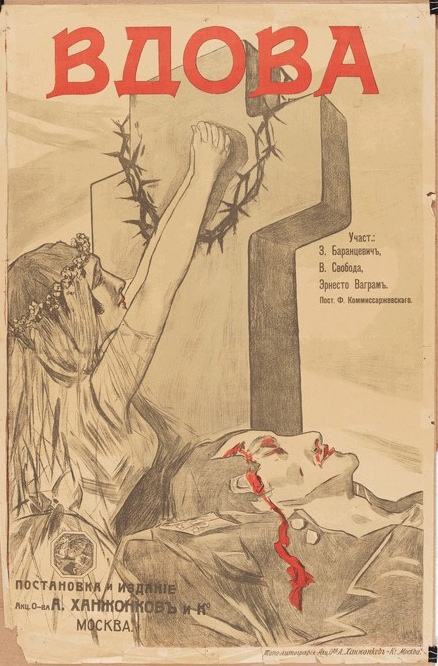
In the annals of early cinematic art, where the nascent language of film was still finding its voice, a rare gem like "Vdova" emerges not just as a historical artifact but as a profound testament to the medium's capacity for psychological depth. Released during an era when narratives often relied on broad strokes and overt melodrama, "Vdova" dared to delve into the intricate labyrinth of the human mind, specifically the mind of a woman teetering on the precipice of sanity. It's a film that speaks volumes without uttering a single word, relying instead on the potent alchemy of visual storytelling, a masterstroke of direction, and performances so nuanced they transcend the limitations of their time. The film's enduring power lies in its ability to evoke dread, sympathy, and intellectual curiosity in equal measure, cementing its place as an unsung precursor to the modern psychological thriller.
From its opening frames, "Vdova" establishes an atmosphere of pervasive gloom and unsettling grandeur. The sprawling, isolated estate known as "Blackwood Manor" is not merely a setting; it is a character unto itself, an imposing edifice of stone and shadow that reflects Anya's internal state. Its high ceilings, cavernous rooms, and winding corridors become metaphors for her increasingly fractured psyche. The cinematographer, whose name, regrettably, is often lost to the mists of time, conjures an almost tangible sense of claustrophobia despite the manor's vastness. Shadows stretch like grasping fingers across the walls, distorting familiar objects into monstrous shapes, a visual technique that brilliantly externalizes Anya's escalating paranoia. The film's visual grammar, reminiscent of German Expressionism's nascent stages, uses stark contrasts between light and dark to emphasize emotional extremes, plunging the viewer into Anya's subjective experience. Each flickering lamp, each moonbeam piercing the oppressive darkness, serves to heighten the tension, suggesting that clarity is fleeting and danger ever-present. This meticulous attention to environmental detail transforms the manor from a mere backdrop into a living, breathing entity that actively participates in Anya's torment, a silent antagonist whose very existence seems to conspire against her dwindling sanity.
While the film is undeniably Anya's journey, the performance of Theodor Komisarjevsky as Boris's inscrutable cousin, Alexei, provides a chilling counterpoint that elevates "Vdova" beyond a simple tale of a woman's breakdown. Komisarjevsky, celebrated more for his theatrical direction, brings a rare, understated menace to the screen. His portrayal is a masterclass in subtlety; he doesn't resort to overt villainy but instead cultivates an aura of quiet observation, his eyes holding a depth of unspoken calculation that is profoundly unsettling. Every gesture, every lingering glance, every slight tilt of his head is imbued with a double meaning, forcing the audience to question his motives alongside Anya. Is he a concerned relative, a silent protector, or a cunning manipulator? Komisarjevsky's genius lies in maintaining this ambiguity throughout much of the film, allowing suspicion to fester and grow organically. His presence is a constant, almost spectral weight, a visual manifestation of Anya's growing unease. He is the quiet storm, the eye of the hurricane that swirls around Anya, and his performance is a crucial anchor in the film's psychological architecture. This level of nuanced characterization was revolutionary for its time, eschewing the often-exaggerated acting styles prevalent in early cinema for something far more internal and psychologically complex. It's a performance that demands repeated viewing, revealing new layers of intent with each subsequent watch, solidifying Komisarjevsky's unexpected prowess as a screen actor.
The unnamed actress embodying Anya delivers a tour de force performance, navigating the treacherous emotional terrain of grief, isolation, and mounting paranoia with breathtaking vulnerability. Her initial portrayal is one of profound sorrow, her eyes conveying a depth of loss that transcends the silent medium. As the film progresses, her physical demeanor subtly shifts; her movements become more hesitant, her gaze more darting, her expressions increasingly haunted. The film meticulously charts her psychological unraveling, from the initial seeds of doubt about Boris's accidental death to the full-blown hallucinations and panic attacks that plague her. The director masterfully uses close-ups to capture the nuances of her internal struggle, allowing the audience to witness the subtle tremors of fear, the fleeting moments of clarity, and the overwhelming waves of terror that wash over her. It's a raw, unflinching depiction of a mind under siege, a testament to the power of non-verbal communication in conveying complex emotional states. The film’s strength lies in making Anya’s paranoia feel entirely justified, even as her grip on reality loosens. We, the viewers, are trapped in her subjective experience, questioning every shadow, every sound, every interaction, until her world becomes our own terrifying reality. This empathetic portrayal of a woman on the edge of madness is what truly resonates, making "Vdova" a deeply human, if profoundly disturbing, cinematic experience. It reminds us of films like The Closed Road, which similarly explores the harrowing psychological journey of an individual trapped by circumstances, though "Vdova" pushes further into the realm of existential dread.
Beyond its immediate thrills and psychological tension, "Vdova" is rich with thematic resonance. It probes the societal expectations placed upon women in widowhood, particularly those of means. Anya, stripped of her husband's protective presence, becomes vulnerable not only to her own internal demons but to external forces seeking to exploit her newfound solitude and wealth. The film subtly critiques the patriarchal structures of the time, where a woman's sanity and agency could be easily questioned and dismissed, especially when large inheritances were involved. There's an underlying current of class struggle and the predatory nature of greed that permeates the narrative, hinting at the darker underbelly of aristocratic society. The film also explores the elusive nature of truth and memory, questioning whether Anya's recollections of Boris are accurate or colored by her grief and the unfolding events. Is the past truly immutable, or can it be reconfigured by present dangers? These profound questions elevate "Vdova" from a mere genre piece to a thoughtful examination of human nature and societal pressures. In this regard, it shares a thematic kinship with films such as Her Father's Gold, which similarly explores themes of inheritance and moral ambiguity, albeit with a different narrative focus.
The technical prowess displayed in "Vdova" is nothing short of remarkable for its era. The use of innovative camera angles, particularly low-angle shots that emphasize the manor's imposing nature and high-angle shots that miniaturize Anya, effectively conveying her helplessness, demonstrates a nascent understanding of cinematic language as a tool for psychological manipulation. The editing, while perhaps rudimentary by today's standards, is surprisingly effective in building suspense, utilizing quick cuts during moments of shock and longer takes to dwell on Anya's internal suffering. The decision to forgo intertitles for extended periods, relying solely on the actors' expressions and the visual narrative, was a bold choice that pushed the boundaries of silent film storytelling. This emphasis on pure visual rhetoric forced audiences to engage more deeply with the imagery and the unspoken emotions, creating a more immersive and visceral experience. The film's influence, though perhaps not overtly acknowledged in mainstream film history, can be seen in later psychological thrillers and horror films that explore similar themes of isolation, paranoia, and the unreliability of perception. It stands as a testament to the visionary filmmakers who understood the profound power of the moving image even in its infancy.
Placing "Vdova" within the broader context of early cinema reveals its unique position. While films like Koroleva ekrana might have celebrated the glamour of the burgeoning star system, "Vdova" deliberately eschewed such overt spectacle for a more intimate, unsettling drama. It shares a certain thematic kinship with works exploring moral dilemmas and dangerous entanglements, much like Molly Entangled, but "Vdova"’s focus is less on external societal pressures and more on the internal disintegration of its protagonist. Where A Gentleman of Leisure might have offered escapism through its portrayal of sophisticated antics, "Vdova" plunges the viewer into a nightmare from which there seems to be no escape. The film's intricate plotting and the slow reveal of its central mystery could be compared to the meticulous construction of suspense found in The Mystery of the Double Cross, though "Vdova" layers its mystery with a thick psychological fog that makes its resolution even more impactful. It stands apart from more straightforward melodramas such as The Love Trail or The College Widow by virtue of its commitment to psychological realism, however heightened. Its portrayal of a woman's vulnerability and strength in the face of overwhelming adversity also draws parallels to the emotional core of The Hand That Rocks the Cradle, though "Vdova" approaches these themes through a lens of existential dread rather than domestic drama. Even films like Betty Be Good, which might have explored themes of virtue and vice, would find a darker, more complex morality woven into the fabric of "Vdova"’s narrative. The film, in essence, operates on a different plane, prioritizing atmosphere and internal conflict over overt action, making it a challenging yet ultimately rewarding viewing experience that pushes the boundaries of cinematic expression for its period.
The precise authorship of "Vdova"'s screenplay, often attributed to a collective of uncredited writers and possibly influenced by the director's own dramatic sensibilities, is shrouded in the historical ambiguities of early cinema. However, one can discern a singular, powerful vision at its core. The narrative, despite its silent nature, is meticulously crafted, unfolding with a deliberate pace that allows tension to build organically. The writers, whoever they may have been, demonstrated a sophisticated understanding of dramatic structure, employing foreshadowing and subtle clues that reward attentive viewing. The recurring motif of the fragmented melody, for instance, is a stroke of genius, a non-visual element that haunts Anya and, by extension, the audience. This auditory memory, even when depicted visually through her reactions, serves as a powerful symbol of the past's inescapable grip and the insidious nature of psychological manipulation. The story's ability to maintain ambiguity regarding Alexei's true intentions for such an extended period is a testament to the skill of its narrative architects. They understood that fear is often more potent when its source remains undefined, allowing the audience's imagination to fill in the terrifying blanks. This deliberate vagueness, rather than being a flaw, becomes a strength, contributing significantly to the film's lasting psychological impact. The narrative's complexity rivals that of more celebrated contemporary stage plays, demonstrating a precocious understanding of how to translate intricate psychological states into a purely visual medium, a challenge that many filmmakers even decades later would struggle to master. The anonymous writers of "Vdova" crafted a narrative that, through its sheer ingenuity, transcends the limitations of its period, proving that a compelling story, regardless of its medium, can achieve timeless resonance.
"Vdova" remains a compelling, if often overlooked, piece of cinematic history. Its rediscovery and restoration in recent years have allowed new generations of cinephiles to appreciate its groundbreaking artistry. It is a film that demands patience and an open mind, rewarding viewers with a deeply unsettling and intellectually stimulating experience. In an era saturated with sound and spectacle, the silent power of "Vdova" serves as a potent reminder of cinema's fundamental ability to communicate profound truths through imagery and performance alone. It stands as a powerful argument for the enduring relevance of silent film, proving that the absence of spoken dialogue can, paradoxically, amplify the emotional impact and psychological depth of a narrative. Its influence, though subtle, can be traced through the lineage of psychological thrillers, from Hitchcockian suspense to contemporary art-house dramas exploring mental fragility. "Vdova" is not merely a film to be watched; it is an experience to be absorbed, a journey into the darkest corners of the human psyche, leaving an indelible imprint long after the final frame fades to black. It's a film that echoes the profound human struggles depicted in works like Farkas, which also delved into existential angst, or even the more adventurous spirit seen in Dr. Mawson in the Antarctic, in its own way charting uncharted emotional territories. The film's ability to resonate across nearly a century speaks volumes about its universal themes and its masterful execution, a testament to the visionary artists who crafted such a timeless piece of art. It stands as a vital piece of the cinematic puzzle, reminding us of the diverse and experimental spirit that characterized the early days of filmmaking, a period of boundless creativity and daring innovation that continues to inspire. Its legacy is not just in its historical significance, but in its ongoing capacity to provoke thought, evoke emotion, and remind us of the enduring power of visual storytelling.
To experience "Vdova" is to engage with a piece of cinema that transcends its historical context, speaking to universal fears and anxieties. It's a challenging watch, not due to explicit horror, but due to its relentless psychological tension and its unflinching portrayal of a mind under siege. The deliberate pacing, the evocative cinematography, and the haunting performances coalesce into a work that is both deeply disturbing and profoundly beautiful. It’s a film that demands your full attention, rewarding it with a rich tapestry of emotional complexity and narrative ingenuity. For those willing to immerse themselves in its silent world, "Vdova" offers a unique glimpse into the artistic ambition and technical sophistication of early cinema, proving that even without words, a film can scream volumes. Its power lies in what it suggests rather than what it overtly shows, in the shadows it casts, and the questions it leaves lingering in the mind long after the credits have rolled. It’s a true masterpiece of its genre, a testament to the enduring power of visual storytelling, and a film that continues to haunt and fascinate all who encounter its desolate beauty.

IMDb 6.4
1919
Community
Log in to comment.