DbcultAccessing Vault...
Cult Review
Senior Film Conservator
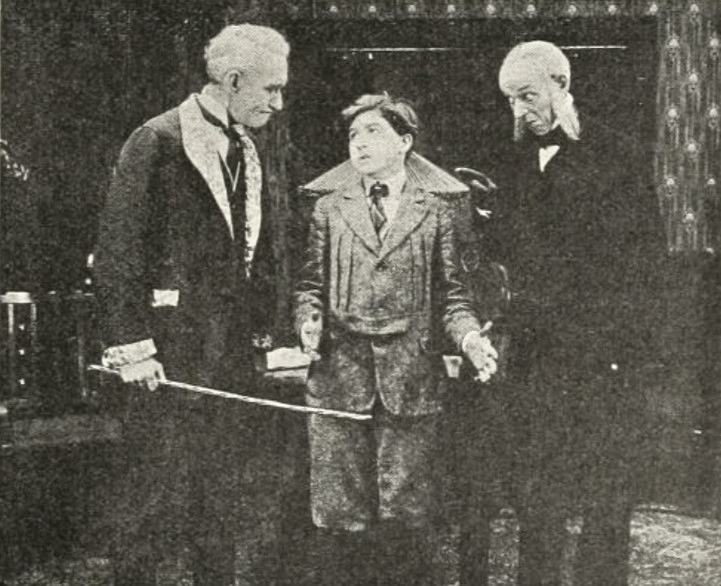
Step right up, cinematic adventurers, and prepare to be whisked away to an era when the silver screen was still finding its voice, yet already brimming with unbridled imagination. Today, we're unearthing a true gem from the vaults of early cinema: Chris and His Wonderful Lamp, a film that, despite its humble origins, offers a surprisingly robust dose of magical realism and slapstick comedy. Directed by Albert Stearns, with a screenplay penned by Stearns himself alongside Charles Sumner Williams, this 1917 silent marvel takes a beloved ancient fable and injects it with a distinctly modern, turn-of-the-century American sensibility. It’s a delightful, if at times quaint, exploration of wish fulfillment, youthful mischief, and the inevitable chaos that ensues when supernatural powers collide with mundane existence.
At its core, the narrative orbits around Chris, portrayed with an endearing blend of impishness and exasperation by Victor McManus. Chris isn't your archetypal protagonist; he's a student, yes, but one whose ambition is singularly focused on avoiding the drudgery of academic life. His tutors, no doubt, see him as a perpetual thorn in their side, and his days are seemingly a continuous cycle of minor infractions and looming disciplinary actions. This youthful recalcitrance sets the stage for his extraordinary encounter. It's during an auction, a seemingly prosaic setting, that Chris's destiny pivots. He acquires an old Oriental lamp, not because of any mystical premonition, but simply because its unusual design catches his eye. A connoisseur of peculiar aesthetics, perhaps, or merely drawn to its antique charm, he brings it home, unaware that this dusty relic harbors an ancient secret.
The true magic, as it always does, reveals itself in the most unassuming of moments. While polishing his new acquisition, a colossal slave, an entity of immense power and presence, materializes before him. This genie, brought to life with a captivating blend of gravitas and comedic timing by George D. Melville, declares Chris his master, sworn to obey his every command. This pivotal scene, though likely executed with rudimentary special effects by today's standards, must have been a spectacle for audiences of the era. The sheer concept of such limitless power at the command of a mischievous schoolboy is inherently fertile ground for comedy and adventure. Chris, ever the pragmatist with a penchant for self-preservation, decides to test his newfound power. His first command? To have the genie transform into an exact replica of himself. Melville, therefore, pulls double duty, embodying both the powerful genie and Chris’s doppelgänger, a feat that undoubtedly required considerable skill in an age before sophisticated editing.
The ensuing scheme is pure comedic genius: the double Chris is dispatched to school, serving as a convenient scapegoat for all the real Chris's academic woes and misbehavior. The doppelgänger endures the thrashings, the detentions, and the myriad jokes and indignities meant for the authentic article. This premise, while simple, allows for a wealth of farcical situations. The humor derives from the contrast between the genie’s immense power and its mundane, humiliating tasks, as well as the sheer audacity of Chris's plan. It’s a fantasy of every schoolchild: a magical stand-in to absorb the consequences of youthful rebellion. This early exploration of a 'double' or 'doppelgänger' trope is fascinating, predating many later iterations and showcasing the enduring appeal of such narrative devices. One might draw a thematic parallel to the comedic misunderstandings in films like Betsy's Burglar, where mistaken identity fuels much of the narrative's humor, though Chris and His Wonderful Lamp adds a fantastical layer to the mix.
However, even omnipotent beings have their limits. The genie, after a period of unwilling servitude as Chris's academic whipping boy, finally decides it has had enough. This is where the real fun, and indeed the real trouble, begins. The genie’s refusal to continue its double duty precipitates a hilarious cascade of mix-ups that draw in Chris's unsuspecting father and mother, his exasperated teachers, and even the family doctor. The film accelerates into a whirlwind of misunderstandings, mistaken identities, and escalating chaos, all unfolding with a rapidity that keeps the audience thoroughly engaged. The plot, initially confined to Chris's school life, broadens to encompass his entire domestic and social sphere, transforming a simple magical prank into a full-blown farcical spectacle. The performances by Joe Blaize, Shirley Braithwaite, Nellie Grant, and Claire Adams, among others, contribute to this escalating pandemonium, each playing their part in the unraveling sanity of Chris’s world.
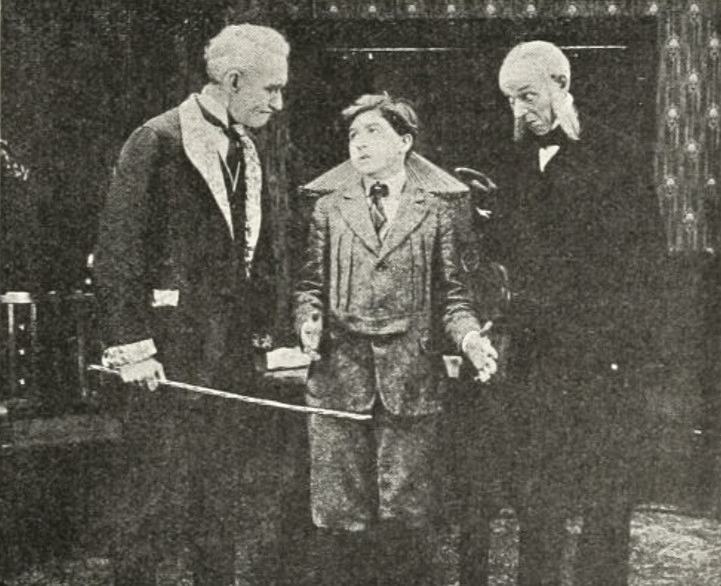
What makes Chris and His Wonderful Lamp particularly noteworthy is its ability to transplant the exoticism and boundless imagination of the Arabian Nights into a distinctly modern, Western setting. In an age when cinema was still defining its narrative language, this film boldly embraces fantasy and weaves it into a relatable, albeit exaggerated, domestic comedy. The doings of Chris and his magical lamp, set against the backdrop of the early Twentieth Century, indeed rival the best of those ancient tales, proving that the desire for wish fulfillment and the comedic potential of its misuse are timeless themes. The film's charm lies in its unpretentious approach to its fantastical premise, treating the genie's existence as a catalyst for human folly rather than a profound philosophical exploration. This lighthearted touch is crucial to its enduring appeal.
From a technical perspective, assessing a silent film from 1917 requires a different lens than contemporary critique. The direction by Albert Stearns, working with Charles Sumner Williams on the script, would have focused heavily on visual storytelling, exaggerated expressions, and physical comedy to convey narrative and emotion without spoken dialogue. The pacing, especially in the latter half, seems to be a key strength, as the "farcical mix-ups develop with great rapidity." This suggests a keen understanding of comedic timing and escalation, vital for maintaining audience engagement in a silent format. The use of intertitles would have been critical for exposition, character dialogue, and advancing the plot, guiding the audience through the increasingly complex web of Chris's magical mishaps.
The cast, including Joseph Burke, Thomas Carnahan Jr., Rolinda Bainbridge, William Wadsworth, and P.J. Rollow, would have relied on broad gestures and facial expressions to communicate their characters' reactions to the unfolding absurdity. Victor McManus as Chris would have needed to balance his character's mischievous nature with a believable vulnerability when things inevitably go awry. George D. Melville's dual role as the genie and Chris's double is particularly commendable, requiring distinct physicalities and comedic nuances for each persona. The visual humor stemming from the genie's attempts to mimic a human schoolboy, and its subsequent frustration, would have been a highlight. This kind of physical comedy, often exaggerated for the silent screen, remains a foundational element of many comedic performances even today. The film's success hinges on the audience's willingness to suspend disbelief and revel in the sheer joy of its fantastical premise.
The thematic undercurrents of Chris and His Wonderful Lamp are also worth noting. It playfully explores the concept of temptation and the moral quandaries that arise when immense power falls into the hands of someone lacking wisdom or foresight. Chris, driven by a desire to evade responsibility, succumbs to the allure of the lamp's magic without fully considering the long-term ramifications. This age-old narrative, common in folklore and literature, finds a charming expression here. The film, in its own comedic way, serves as a cautionary tale about the unintended consequences of shortcuts and deceit, even when aided by the supernatural. It’s a lighthearted examination of ethics, wrapped in a blanket of boisterous laughter and escalating chaos.
Comparing it to other films of its era, Chris and His Wonderful Lamp stands out for its embrace of pure fantasy within a comedic framework. While many films of the time focused on melodramas, social commentaries, or historical epics, this one dares to be purely entertaining through its imaginative premise. It doesn't aim for the profound social commentary of something like Peace on Earth, nor the dramatic intensity of The Siren's Song. Instead, it carves out its niche as a delightful, family-friendly romp, proving that escapism and laughter were just as vital to early cinema audiences as they are today. Its unique blend of magical realism and domestic farce makes it a fascinating artifact for film historians and casual viewers alike, offering a glimpse into the diverse storytelling landscape of the early 20th century.
In conclusion, Chris and His Wonderful Lamp is far more than a historical curiosity. It is a vibrant, imaginative piece of early cinema that expertly blends fantasy with boisterous comedy. The film’s narrative ingenuity, its memorable characters, and its rapid-fire farcical situations ensure that it remains a captivating watch, even a century after its release. It reminds us that the fundamental ingredients of compelling storytelling – engaging characters, a touch of the extraordinary, and a healthy dose of humor – are truly timeless. For those seeking a charming escape into the past, a film that showcases the boundless creativity of early filmmakers, Chris and His Wonderful Lamp shines brightly as a testament to the enduring power of a good story, even without a single spoken word.
IMDb 6.1
1931
Community
Log in to comment.