DbcultAccessing Vault...
Cult Review
Senior Film Conservator
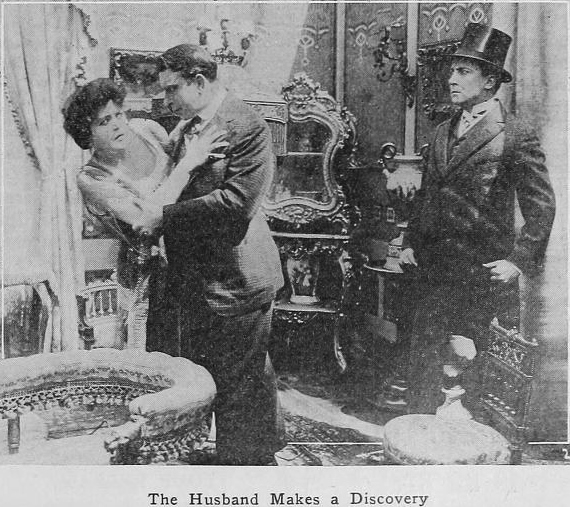
In the annals of early cinema, few titles resonate with such piercing clarity as Hugh C. Weir's seminal work, Hypocrisy. This silent film masterpiece, though decades removed from its initial exhibition, remains a potent and unflinching examination of moral duplicity, societal facades, and the often-devastating chasm between outward appearance and inner corruption. Released during an era grappling with rapid social change and burgeoning moral complexities, Hypocrisy did not merely entertain; it provoked, it challenged, and it held a mirror to the very soul of a society often content to gloss over its imperfections. Its narrative, woven with threads of human frailty and the corrosive power of deceit, offers a profound commentary that feels startlingly contemporary, cementing its status not just as a historical artifact, but as an enduring piece of art that speaks to the universal human condition.
Weir, with a keen eye for human nature, crafted a story that transcends the limitations of its medium, communicating profound truths through powerful visual storytelling and the nuanced performances of its exceptional cast. The film’s strength lies in its relentless pursuit of authenticity, even when that authenticity is uncomfortable, forcing audiences to confront the uncomfortable truths about the masks we wear and the secrets we keep. It’s a work that demands contemplation, leaving an indelible mark long after the final frame flickers into darkness.
At the heart of Hypocrisy beats the dark pulse of Alfred Swenson, portrayed with chilling conviction. Swenson is a titan of industry and a vocal champion of public morality, his sermons on virtue echoing through the city's grandest halls. He funds orphanages, backs temperance movements, and is, by all outward appearances, a pillar of the community – a man whose very name is synonymous with rectitude. Yet, beneath this meticulously polished veneer lies a festering core of corruption. Swenson's philanthropic empire is, in reality, a sophisticated front for a sprawling network of illicit activities: gambling dens, loan sharking operations, and a system that preys on the desperate and the vulnerable. His charity is a cruel irony, a mechanism designed not to uplift, but to ensnare and exploit. This stark duality forms the narrative's central conflict, a moral battleground where the forces of good and evil are not always easily discernible.
Into Swenson's web of deceit stumbles Lydia Dickson, brought to life by the remarkable Lydia Dickson. Young, innocent, and brimming with an earnest hope, Lydia seeks assistance from Swenson's 'charity' for her struggling family – her ailing father, Henry Leone, and her beleaguered mother, Adella Barker. Her initial awe of Swenson gradually gives way to a creeping unease as she witnesses the subtle cruelties and systemic exploitation lurking beneath the surface of his benevolent façade. Lydia’s journey is one of painful awakening, her idealism slowly corroded by the harsh realities of the world Swenson has constructed. Her disillusionment is palpable, a silent scream against the injustice she uncovers. The film masterfully builds tension, drawing the audience deeper into the moral quagmire, as Lydia’s growing awareness threatens to unravel Swenson’s carefully constructed empire. Her transformation from naive supplicant to a woman steeled by bitter truth is one of the film's most compelling arcs, showcasing a profound understanding of character development, even without spoken dialogue.
The ensemble cast of Hypocrisy delivers a masterclass in silent film acting, each performer contributing to the intricate tapestry of human experience. Alfred Swenson’s portrayal of the titular hypocrite is nothing short of magnetic. His public persona radiates warmth and trustworthiness, a performance so convincing it initially deceives not only the characters within the film but also the audience. The subtle shifts in his expression, the glint in his eye when his true nature surfaces, are chillingly effective, making him a villain of considerable depth and complexity. He is not merely a caricature of evil, but a deeply flawed individual consumed by ambition and self-preservation, a figure whose charm makes his depravity all the more insidious.
Lydia Dickson, as Lydia, is the film's emotional compass. Her initial wide-eyed innocence and subsequent journey through disillusionment are conveyed with an exquisite sensitivity. Her silent tears, her hopeful gazes, and finally, her resolute despair speak volumes, drawing the audience into her plight with an almost unbearable empathy. Her performance grounds the film, providing a human anchor amidst the swirling currents of moral decay. Henry Leone and Adella Barker, as Lydia’s parents, provide a poignant depiction of working-class struggle, their weary faces and hopeful gestures underscoring the desperation that drives Lydia into Swenson’s orbit. Their quiet dignity in the face of hardship is a powerful counterpoint to Swenson’s ostentatious charade.
The supporting cast further enriches the narrative. Gladys Morris shines as the cynical socialite, whose sardonic observations and knowing glances hint at a world far more complex than the one presented by Swenson. She represents the jaded segment of society that sees through the pretensions but often lacks the will to act. Virginia Pearson, as the tenacious journalist, embodies the relentless pursuit of truth. Her character’s unwavering determination to expose Swenson’s corruption provides a vital counter-narrative, a beacon of justice in a morally ambiguous landscape. Pearson’s intensity and focus are palpable, conveying her character’s commitment to journalistic integrity even in the face of powerful opposition. John Webb Dillion, as the dogged detective, plays a crucial role in the film's climactic unraveling, his methodical investigation slowly but surely tightening the net around Swenson. His quiet perseverance is a testament to the idea that truth, eventually, finds a way to surface. And finally, Ida Darling, as the silent witness within Swenson's own household, portrays the quiet suffering and complicity of those trapped within a corrupt system, her expressive eyes conveying a profound sense of moral burden. Each performance, meticulously crafted, contributes to a collective portrayal of a society grappling with its own moral compass, making Hypocrisy a truly immersive experience.
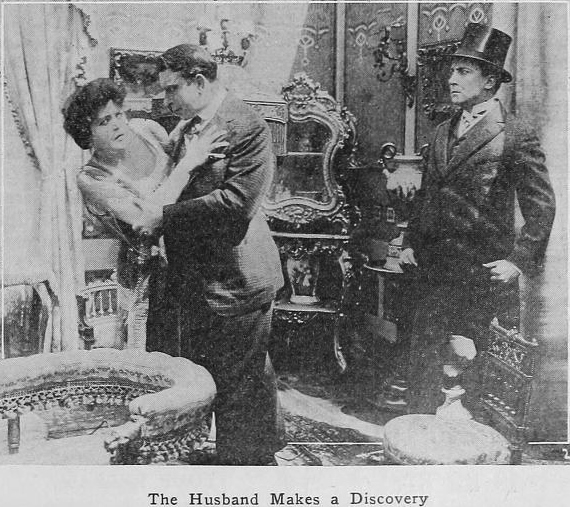
Hugh C. Weir, though primarily credited as the writer, undoubtedly exerted a profound influence on the film’s overall vision and execution. In the nascent days of cinema, the writer's role often extended far beyond mere dialogue, shaping the very structure, pacing, and thematic depth of the narrative. Weir's screenplay for Hypocrisy is a masterclass in dramatic construction, building tension incrementally, revealing character through action and reaction, and culminating in a cathartic, albeit tragic, climax. His understanding of the human psyche is evident in the finely drawn characters, each with their own motivations and internal struggles. The narrative avoids simplistic black-and-white morality, instead delving into the grey areas of human behavior, making the film feel remarkably sophisticated for its time.
Weir's influence is also palpable in the film's visual language. The juxtaposition of opulent settings, representing Swenson's public facade, with the stark, grimy realities of the city's underbelly, where his true operations thrive, is a powerful visual metaphor. The use of shadows and light, a hallmark of early cinema, is employed with great artistry to underscore thematic elements – the darkness that shrouds Swenson’s secrets, and the eventual harsh light of truth that exposes him. The film’s pacing, a delicate balance between slow-burning character development and dramatic bursts of revelation, keeps the audience utterly captivated. It’s a testament to Weir’s narrative acumen that the story unfolds with such compelling momentum, a testament to the power of a well-crafted script in shaping a cinematic experience.
Placing Hypocrisy within the broader cinematic landscape of its era reveals its unique strengths and thematic resonance. While films like A Fool There Was explored moral downfall through the lens of temptation and femme fatales, Hypocrisy delves into a more insidious form of corruption, one born from a deliberate, calculated deception rather than irresistible passion. Its focus on the societal consequences of individual moral decay sets it apart, offering a more systemic critique.
The film’s social commentary finds kinship with works such as The Daughter of the People, which also tackled class struggles and the plight of the vulnerable. However, Hypocrisy elevates this critique by focusing on the powerful elite as the source of exploitation, rather than merely depicting the struggles of the working class. The internal conflict and moral wrestling present in Brother Against Brother might explore familial discord, but Hypocrisy extends this to a societal scale, where the 'brother' is the public persona and the 'other' is the hidden, corrupt self. The dual identity theme, reminiscent of Alias Jimmy Valentine, is explored here with a darker, more cynical edge; Swenson's dual nature is not a path to redemption but a descent into further moral depravity.
Furthermore, the themes of moral decay and the consequences of unchecked desire in Hypocrisy echo the philosophical underpinnings of works like The Magic Skin, where the pursuit of worldly gain leads to an inevitable spiritual and personal cost. Unlike the more romantic or adventurous narratives of films like A Venetian Night or The Island of Regeneration, Hypocrisy grounds itself firmly in the grittier realities of urban life and the moral quandaries inherent in power. It stands as a stark, uncompromising exposé, a cinematic sledgehammer against the fragile glass of societal pretense, solidifying its place as a significant contribution to early social realism in film.
Decades after its premiere, Hypocrisy continues to resonate with a chilling relevance. The film's central theme—the perilous dance between public image and private truth—is a perennial concern, one that echoes in contemporary discourse about leadership, ethics, and the pervasive nature of deceit. It serves as a stark reminder that the battle against superficiality and moral compromise is an ongoing one, as pertinent today as it was in the early 20th century. The film’s raw emotional power, conveyed through the expressive artistry of silent cinema, transcends temporal boundaries, allowing modern audiences to connect with its characters and their struggles on a deeply human level. It’s a testament to the enduring power of compelling storytelling and a testament to the fact that some truths are simply timeless.
Hypocrisy is more than just a historical curiosity; it is a profound piece of cinema that challenges us to look beyond the surface, to question authority, and to champion authenticity. Its legacy lies not only in its technical achievements but in its unwavering commitment to moral inquiry, proving that even without a spoken word, a film can speak volumes about the human condition. It is an essential viewing for anyone interested in the evolution of cinematic storytelling and the timeless exploration of ethical complexities.
IMDb 6.4
1937
Community
Log in to comment.