DbcultAccessing Vault...
Cult Review
Senior Film Conservator
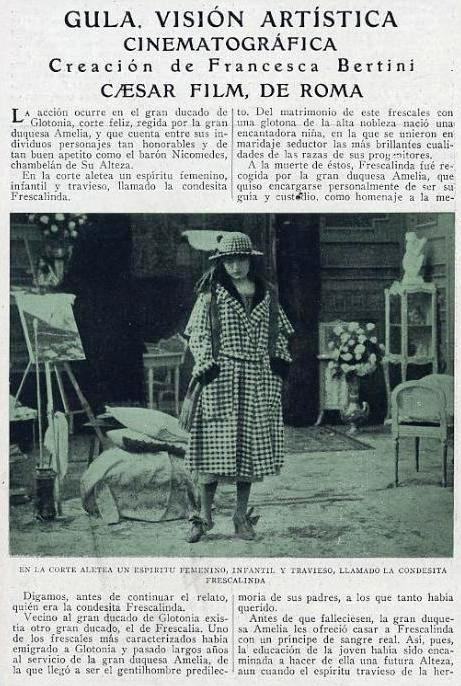
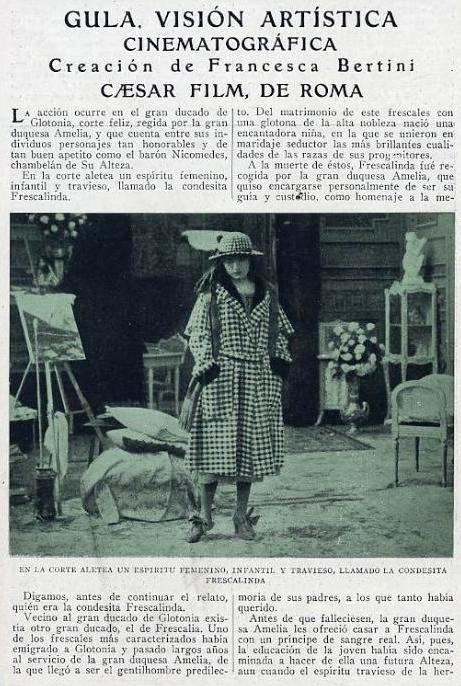
There are movies you taste, others you merely swallow. La Gola—literally “the gullet”—demands that you chew its images until your mandible aches, then lick the plate clean of every shadow. Shot on nitrate that smells faintly of truffle and rot, this 1923 Italian curio has resurfaced like a perfectly aged Parmigiano, its cracks filled with the crystalline umami of history.
Pio Vanzi, a name whispered in the corridors of cine-philology like an unreliable rumor, directs with the eye of a famished Caravaggio. His frames blister with candle-grease chiaroscuro: a roast boar gleams like wet marble, courtiers’ faces bloat into doughy cherubs, and Frescalinda’s tears—caught in iris-shot—become globules of mercury sliding down porcelain. The camera itself appears to salivate; every slow lap-dissolve feels like swallowing.
Glotonia’s court is a theatre of the omnivorous. Long tables sag under the weight of peacock reconstructions, candied skulls, and sugar-paste globes of the world—edible conquest. Vanzi crosscuts these orgiastic montages with Frescalia’s antiseptic parlours, where dinner is a single glass of aerated virtue. The editing dialectic—gluttony versus restraint—mirrors post-WWI Europe: bloated empires gorging on their own marrow while austere ideologies fast in the wings.
Francesca Bertini, queen of the Italian divas, plays Frescalinda with mercurial appetite. One moment her glance is a famined hawk; the next, a queasy dove. Watch the scene where she steals into the palace larder at dawn: alone, she cradles a wheel of cheese like a newborn, then devours it with the ferocity of a mother protecting her young. No intertitle intrudes; the silence is carnivorous.
“Love is merely hunger wearing perfume,” her eyes seem to say, and the camera, complicit, dollies closer until the viewer feels implicated in every swallow.
Opposite Bertini, Livio Pavanelli’s Gallardo is less a suitor than a sommelier of sedition. His leather jerkin strains like over-proofed bread, yet his smile is a blade flicked across a peach. In the celebrated cellar duet, he and Frescalinda sample forbidden wines whose labels bear the wax seals of enemy houses. Each sip is a treaty broken; each drunken giggle, a border erased. Cinematographer Alberto Albertini lenses their entwined shadows so that they meld into one amorphous, gulping silhouette—an image that anticipates the erotic dissolve in Lili by three decades.
But La Gola is no mere romance garlanded in prosciutto. The Great Duchess—played by an icy, scene-stealing Camillo De Riso in drag—embodies the film’s thesis: that etiquette is empire by other means. In a bravura sequence, she conducts a dinner rehearsal like a Prussian drillmaster. Napkins snap like flags; cutleries clatter in martial time. The camera looks downward, transforming the banquet into a cartographic chessboard. The Duchess’s voice (rendered through kinetic title cards that stutter like Morse) issues commandments: “Bite neither before nor after the chord of the orchestra’s fourth horn.” The absurdity is chilling; fascism begins with table manners.
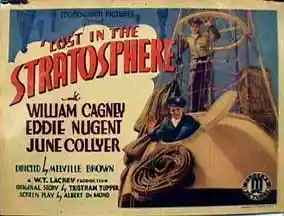
Vanzi, ever the alchemist, literalizes the metaphor of consumption. A match-cut segues from Frescalinda biting a fig to the gates of Frescalia snapping shut on a protest mob. Another juxtaposition: a courtier vomits rosewater foam, and the next frame reveals a fountain spewing identical froth—aristocratic excess literally recycled into public spectacle. If Whom the Gods Destroy moralizes about hubris through ruin, La Gola does so through regurgitation.
The score—recently reconstructed by the Cineteca di Bologna—pairs barrel-organ jollity with atonal growls, as if Stravinski’s Petrushka were force-fed through a meat grinder. During the wedding banquet, the orchestration inflates to a belching waltz; violins saw through gristle, percussion mimics cleaver chops. Viewers at the 2022 Pordenone Silent Film Festival reported involuntary salivation followed by acute nausea—a gastronomic mise-en-abyme worthy of Brillat-Savarin.
What sharpens the film’s teeth is its stance on the female body as consumable commodity. Frescalinda is traded like a prime cut: marbled, aged, priced. Yet Bertini subverts this by weaponizing her own appetite. In the pivotal “butter scene,” she slathers a whole crock across her collarbones, daring Gallardo to lick. The eroticism is garish, almost grotesque, but the power reversal is absolute: she who was to be devoured now demands the devourer’s tongue. Compare this to the sacrificial femininity in Cheerful Givers, where charity is the only sanctioned mouth women may open.
Moreover, the film queers the masculine. Court fops sport codpieces shaped like artichoke hearts; their beards drip with sugared egg-white. When Gallardo rejects the betrothal duel, the Duchess forces him to eat a live songbird—an act of emasculation transmuted into communion. He swallows, but the bird’s song continues in iris-out superimposition, suggesting that true voice cannot be ingested. Try finding that brand of surreal protest in The Rail Rider.
Time itself roils throughout the narrative. Vanzi overlays decay onto opulence: strawberries mold in real time, a roasted stag’s eye socket blackens between shots, a wedding cake collapses under its own baroque weight. This organic entropy foreshadows Visconti’s The Leopard, yet Vanzi’s touch is more septic. The finale—a danse macabre around the rotting banquet—unspools in reverse motion, as if the film stock were vomiting its own spectacle back into the projector. Archivists discovered that several frames were hand-scratched to suggest maggots; nitrate pits became perforations of genuine rot. Thus the film eats itself, a celluloid ouroboros.
For decades, La Gola survived only in hearsay: a censored print allegedly torched by Mussolini’s morality squads for “inciting gustatory rebellion.” Its rediscovery reframes the silent era’s final gasp as an avant-garde burp. You can trace its DNA in Witchcraft’s sensual horror, in the culinary eroticism of Babette’s Feast, even in the vomitorium satire of Monty Python’s Meaning of Life. Yet no successor dares equate desire so directly with digestion.
Viewing tips: arrive ravenous, leave nauseated. The film performs best when projected onto a dining-room wall, the audience passing bread that no one dares eat. Pair with a bone-dry Lambrusco; its fizz will echo the film’s perverse effervescence. And remember: gluttony is not a sin here—it is the language through which power speaks, swallows, and ultimately gags.
In an age of algorithmic comfort food, La Gola is a rancid truffle buried beneath the mulch of film history: pungent, priceless, and likely to haunt your palate long after the lights return. Taste it, but do so at your own peril; some hungers, once awakened, refuse to be sated.
IMDb 7.3
1936
Community
Log in to comment.