DbcultAccessing Vault...
Cult Review
Senior Film Conservator
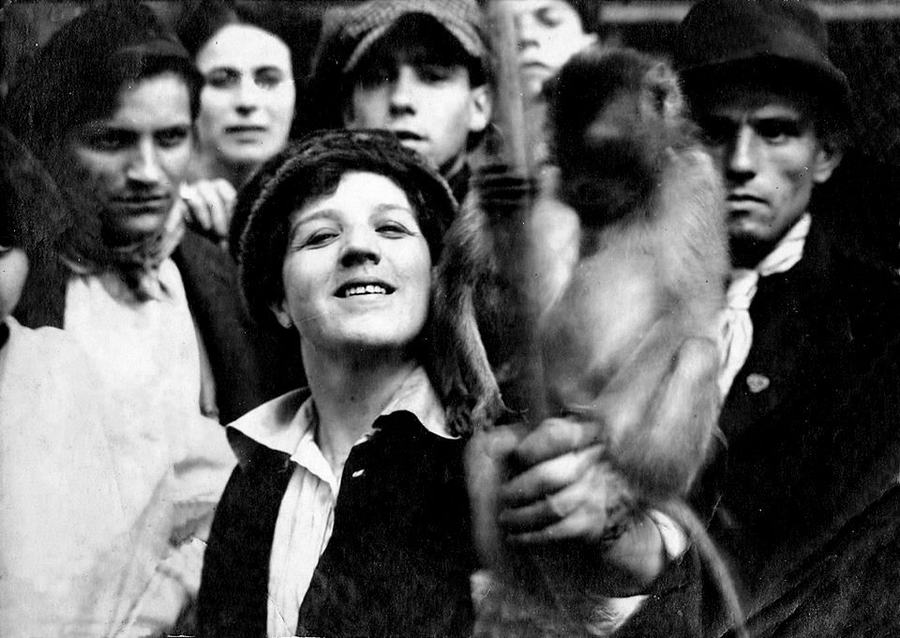
Stepping back into the cinematic tapestry of the early 20th century, one encounters films that, despite their age, possess an uncanny ability to resonate with the enduring human condition. Among these, the Italian silent drama 'I bimbi di nessuno' (Children of No One) emerges as a particularly poignant artifact. Penned by the insightful duo Carlo Dadone and Ennio Grammatica, and brought to life by the evocative performances of Ettore Piergiovanni and Paola Pezzaglia, this film transcends its historical context, offering a raw, unflinching look into the lives marginalized by societal neglect. It's a testament to the power of early cinema to not only entertain but also to provoke thought and stir the conscience, a tradition that contemporary blockbusters often struggle to uphold.
The film unfurls its narrative in the bustling, yet often brutal, thoroughfares of Rome, where the protagonist, Pietro, portrayed with a compelling blend of youthful resilience and simmering despair by Ettore Piergiovanni, exists on the fringes. He is one of the titular "children of no one," a moniker that encapsulates the very essence of his existence: unmoored, unnoticed, and unloved by the broader societal currents. His daily grind, selling newspapers and running errands, is a constant tightrope walk between survival and destitution, a harsh reality rendered with an almost documentary-like authenticity by the filmmakers. The visual language of the era, with its stark contrasts and expressive gestures, perfectly captures the fragility of Pietro’s world, where every meal is a victory and every night a silent prayer for dawn.
Amidst this bleak tableau, a flicker of humanity emerges in the form of Maria, brought to life with understated grace by Paola Pezzaglia. A seamstress struggling with her own privations, Maria extends a hand of kindness to Pietro, offering not just sustenance but a rare commodity: genuine compassion. Her presence serves as a moral compass, a quiet counterpoint to the harsh realities that threaten to consume Pietro. This delicate relationship, built on shared vulnerability and unspoken understanding, forms the emotional core of the film, highlighting the profound impact of even the smallest acts of human connection in an otherwise indifferent world.
However, the streets, ever-present and omnipotent, also offer a darker form of belonging. Pietro is inexorably drawn into the orbit of Il Corvo (The Crow), a charismatic but manipulative figure who leads a gang of street urchins in petty thievery. Il Corvo’s allure lies in his promise of a path out of poverty, a seductive illusion of power and camaraderie that momentarily eclipses Pietro’s innate moral compass. Piergiovanni’s portrayal of Pietro’s internal conflict—the yearning for legitimate belonging pitted against the desperate need for survival—is remarkably nuanced for the silent era, conveying a profound sense of a soul adrift. This descent into the criminal underworld, depicted with a raw, almost visceral realism, serves as a powerful commentary on the societal failures that push vulnerable youth towards illicit means of survival. The film doesn't shy away from depicting the grim consequences, culminating in a harrowing sequence where Pietro, attempting to shield a younger accomplice, is brutally apprehended by the authorities, a scene that leaves an indelible mark on the viewer's psyche.
Maria, ever the steadfast anchor, nurses Pietro back to health, her unwavering empathy finally piercing through his hardened exterior. It is during this period of convalescence that a long-dormant truth begins to surface. Signor Rossi, a benevolent scholar who had previously employed Pietro for odd jobs, notices the boy's prolonged absence and Maria's quiet vigilance. His investigation, initially driven by concern, gradually unearths a tragic secret: Pietro is, in fact, his own son, abandoned to an orphanage years prior after the untimely death of his mother. This revelation, masterfully orchestrated by Dadone and Grammatica, transforms the narrative from a simple tale of hardship into a complex exploration of identity, guilt, and the redemptive power of familial connection. Rossi’s struggle to reconcile his past negligence with his newfound paternal longing is depicted with a quiet dignity, emphasizing the profound emotional landscape that silent actors were capable of conveying through gesture and expression.
The film culminates in a powerful, emotionally charged confrontation. Pietro, now armed with a renewed sense of self and purpose, emboldened by both his father's acknowledgment and Maria's unwavering friendship, confronts Il Corvo and his gang. This is not a simplistic battle of good versus evil, but a nuanced plea for a different future, a challenging of the cycle of poverty and crime that ensnares so many. The tension in this scene is palpable, a testament to the directorial choices that allowed the actors to convey complex emotions without dialogue. The resolution, while offering hope for Pietro, is commendably realistic; it doesn't sugarcoat the enduring systemic issues. Pietro embarks on a path towards education and a life free from the streets, but the film pointedly reminds us that the plight of the other "children of no one" remains, a powerful, unresolved echo that lingers long after the final frame.
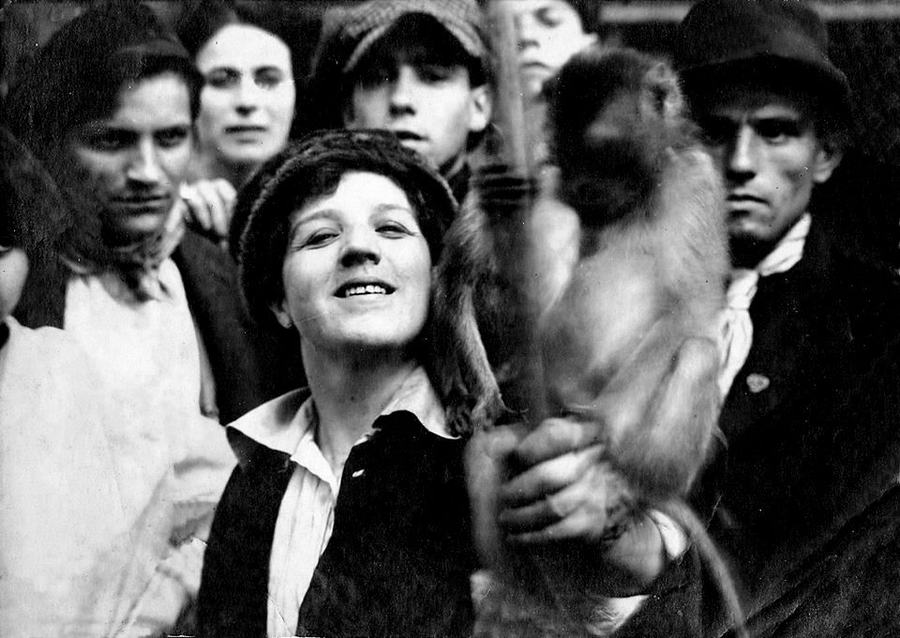
The strength of 'I bimbi di nessuno' lies unequivocally in its cast. Ettore Piergiovanni delivers a performance of remarkable depth as Pietro. His expressive eyes and body language convey a world of unspoken pain, resilience, and nascent hope. One can almost feel the gnawing hunger, the fear, and the fleeting moments of joy that define his character. It’s a performance that holds its own against the best of the era, evoking comparisons to the earnestness found in a character like Freckles in Freckles, another film deeply invested in the journey of an orphaned youth finding their way in a challenging world. Piergiovanni captures the raw, unpolished spirit of a child forced to grow up too soon, making Pietro’s journey profoundly affecting.
Paola Pezzaglia, as Maria, offers a masterclass in subtle, empathetic acting. Her character is the quiet strength of the film, a beacon of unwavering compassion. Pezzaglia conveys so much with so little, her gentle gestures and sorrowful gaze speaking volumes about her own struggles and her profound care for Pietro. She embodies the kind of moral fortitude that contrasts sharply with the harshness of the urban landscape. Her performance echoes the quiet dignity seen in protagonists battling social injustice, reminiscent of characters in films like Judge Not; or the Woman of Mona Diggings, where moral integrity shines brightest against a backdrop of societal judgment. The chemistry between Piergiovanni and Pezzaglia is understated yet powerful, forming the emotional bedrock of the narrative.
The directorial hand behind 'I bimbi di nessuno' navigates its melodramatic elements with a surprising degree of realism, avoiding the saccharine sentimentality that could easily plague a story of this nature. The use of location shooting in the Roman streets adds an undeniable layer of authenticity, grounding the narrative in a tangible reality. The cinematography, while constrained by the technology of the era, effectively uses light and shadow to underscore the film's thematic concerns – the stark contrast between the privileged and the poor, the visible dangers and the unseen hopes. The film’s pacing, deliberate yet never stagnant, allows the emotional weight of each scene to fully land, drawing the audience into Pietro’s arduous journey.
Thematically, the film is a powerful indictment of social inequality and the plight of abandoned children, a concern that was echoed in other social dramas of the period. It grapples with questions of moral choice, the corrupting influence of poverty, and the redemptive potential of compassion and familial love. While it shares a thematic kinship with films exploring social strata and moral dilemmas, such as A Lady of Quality, it does so with a particular focus on the very young, making its message all the more urgent. The film also touches upon the idea of identity and belonging, a universal human need that Pietro so desperately seeks, first in the misguided camaraderie of Il Corvo's gang, and later in the revelation of his true parentage.
The script by Carlo Dadone and Ennio Grammatica is noteworthy for its ability to convey a complex narrative arc through visual storytelling. The intertitles are used judiciously, serving to enhance rather than dictate the emotional flow, allowing the actors' expressions and actions to carry the bulk of the storytelling burden. This is a hallmark of truly effective silent filmmaking, where the writers understood that the camera, not just the text, was the primary storyteller. Their work here is a testament to the sophistication of early screenwriting, crafting a story that is both deeply personal and broadly resonant, a narrative that explores the interior lives of its characters even as it depicts the unforgiving exterior world.
'I bimbi di nessuno' stands as a significant piece of Italian silent cinema, not only for its artistic merits but also for its enduring social commentary. It reminds us that the struggles of the marginalized are timeless, and the need for compassion and justice remains constant. While it may not possess the grandiosity of some epic productions of its time, its intimate focus on one boy's struggle for survival and identity gives it a powerful, universal appeal. It's a film that, much like The Kingdom of Youth, captures the precarious innocence and resilience of young lives facing immense challenges.
For cinephiles and historians alike, 'I bimbi di nessuno' offers a compelling window into the narrative concerns and aesthetic sensibilities of early 20th-century filmmaking. It’s a film that demands to be seen, not just as a historical curiosity, but as a vibrant, emotionally charged work of art that continues to speak volumes about humanity's capacity for both cruelty and profound kindness. Its legacy is not just in its existence, but in its ability to provoke reflection on societal responsibility and the enduring hope for a better future, especially for those who, through no fault of their own, are labeled the "children of no one."
IMDb —
1917
Community
Log in to comment.