DbcultAccessing Vault...
4.9/10
Senior Film Conservator
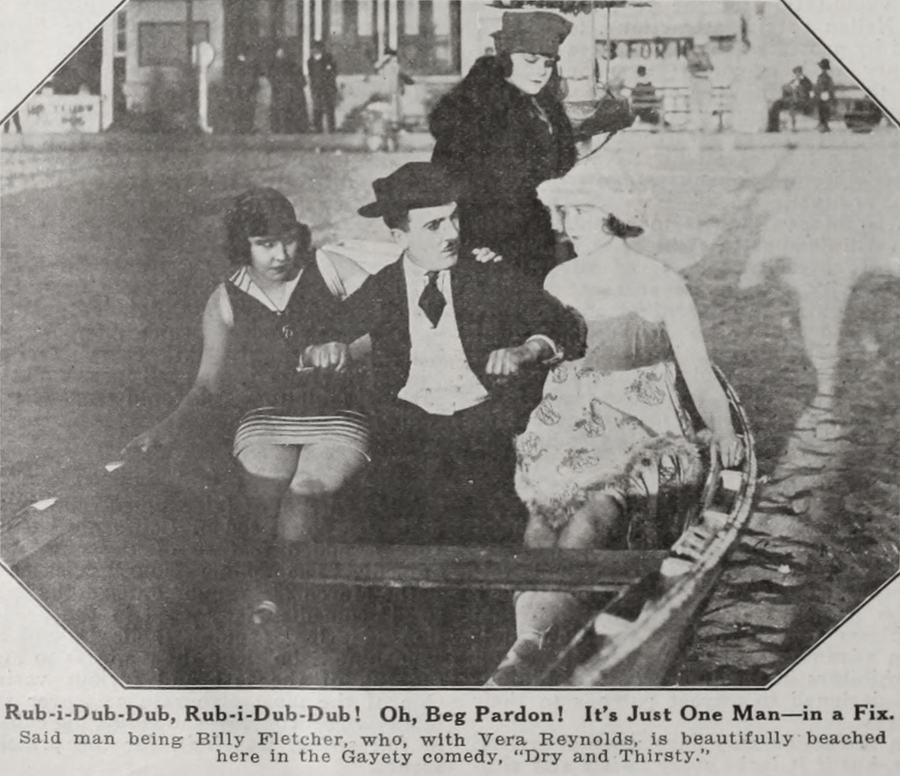
A definitive 4.9/10 rating for a film that redefined the boundaries of cult cinema. Dry and Thirsty remains a cornerstone of transgressive art.
In the cinematic tapestry of 1920, few films capture the immediate, visceral anxiety of the Prohibition era with the same frantic energy as Dry and Thirsty. Directed by and starring the versatile Billy Bletcher, this short-form comedy serves as a microcosm of a nation grappling with the sudden evaporation of its legal spirits. The narrative doesn't merely present a plot; it presents a condition—a chronic, yearning dehydration that drives our protagonist, Horace Radish, into a series of slapstick maneuvers that are as much about survival as they are about humor. This film, appearing in the same year as more dramatic explorations of human nature like The ABC of Love, chooses to tackle the absurdity of social engineering through the lens of the Everyman's struggle.
The opening frames establish Radish not as a drunkard, but as a man of principle whose primary principle happens to be the consumption of alcohol. Bletcher’s performance is a masterclass in kinetic desperation. His eyes, perpetually darting in search of a hidden flask or a sympathetic bartender, reflect the collective paranoia of a society where a casual drink has become a criminal act. Unlike the more refined social deceptions found in Who's Who in Society, the deceptions in 'Dry and Thirsty' are raw, immediate, and physical. Radish is a man stripped of his social veneer, reduced to his most primal instincts.
Every great comedy requires a foil, and in John Dempsey’s portrayal of William Allways Tryan, we find the perfect personification of the Volstead Act. Tryan is not merely a policeman; he is an atmospheric force of prohibition. His presence at the Bootlegger's Haven Hotel transforms a potential oasis into a high-stakes arena of cat-and-mouse. The name itself—Allways Tryan—serves as a linguistic nod to the relentless nature of legal enforcement during the 1920s. While films like The Fugitive deal with the heavy consequences of being on the run, Bletcher keeps the tone buoyant, even as the threat of jail looms over every frame.
The dynamic between Bletcher and Dempsey is reminiscent of the best silent-era rivalries. There is a rhythmic quality to their interactions, a choreography of near-misses and narrow escapes that utilizes the architecture of the hotel to its fullest potential. The hotel, with its labyrinthine hallways and deceptive doorways, becomes a character in its own right, much like the settings in The Bogus Uncle. It is a space where the promise of 'haven' is constantly subverted by the reality of surveillance.
Vera Reynolds provides a crucial anchor to the film's chaotic energy. While the men engage in their frantic pursuit of and flight from the bottle, Reynolds offers a presence that reminds the audience of the domestic and social stakes involved. Her performance, while perhaps secondary to the central chase, adds a layer of texture to the film that prevents it from becoming a one-note gag. In the broader context of 1920 cinema, such as the emotive Hungry Eyes, Reynolds’ ability to convey narrative stakes through subtle facial expressions is a testament to the evolving sophistication of silent film acting.
The chemistry between the cast members is palpable, creating a sense of a lived-in world despite the short runtime. The film doesn't waste time with unnecessary exposition; it trusts the audience to understand the cultural weight of Prohibition. This economy of storytelling is something Bletcher mastered, ensuring that every frame serves the central theme of 'thirst'—be it for alcohol, for freedom, or for a simple moment of respite from the law.
Technically, Dry and Thirsty is a fascinating artifact. The cinematography, while standard for the period, excels in its timing. The use of the 'chase'—a staple of early cinema—is elevated here by the specific socio-political context. We aren't just watching a man run from the law; we are watching the manifestation of a national conflict. The editing is sharp, emphasizing the frantic nature of Radish’s quest. When compared to the more deliberate pacing of Therese, Bletcher’s film feels like a precursor to the modern action-comedy.
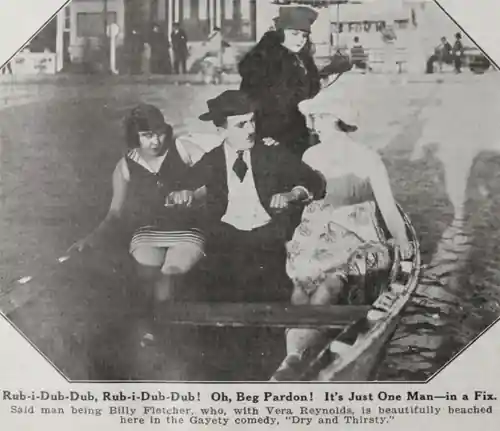
The visual gags are meticulously constructed. From the creative ways Radish attempts to hide his intentions to the physical comedy of Tryan’s unrelenting pursuit, the film relies on a visual language that transcends the need for intertitles. It is a pure form of cinema that speaks to the audience through movement and reaction. The 'Bootlegger's Haven' itself is a brilliant set piece, a microcosm of a society operating under the surface of legality, much like the themes explored in Intrigue.
While 'Dry and Thirsty' is undeniably a comedy, it would be a mistake to ignore the underlying critique of the era. The film highlights the absurdity of a law that turns ordinary citizens into criminals for pursuing a common habit. Horace Radish is not a villain; he is a victim of a shifting moral landscape. This theme of the individual versus the state's moral impositions is a recurring motif in cinema of this period, often seen in more somber works like What Becomes of the Children?.
By framing the struggle as a comedy, Bletcher makes the critique more palatable and, arguably, more effective. The laughter generated by Radish’s failures is tinged with a sense of shared frustration. Every viewer in 1920 would have recognized the 'Dry' reality of the world outside the theater, making the 'Thirsty' protagonist a highly relatable figure. The film acts as a pressure valve, allowing the audience to laugh at a situation that was, in reality, quite tense and transformative for American society.
When placing 'Dry and Thirsty' alongside its contemporaries, its unique position becomes clear. Unlike the romanticized struggles in Salomy Jane or the exoticized desires of The Island of Desire, Bletcher’s work is grounded in a very specific, mundane American reality. It lacks the melodrama of The Keys to Happiness, opting instead for a gritty, albeit hilarious, look at the lengths to which a man will go for a drink.
Even when compared to other comedies like Johnny Get Your Gun, 'Dry and Thirsty' feels more urgent. There is a sense that the comedy is born out of a very real, very current problem. It doesn't rely on far-fetched scenarios but on the very real prohibition laws that were making headlines every day. This topicality gives the film a weight that many other shorts of the era lack. It is a document of its time, captured in the amber of silent film.
In conclusion, Dry and Thirsty is more than just a relic of the silent era; it is a vibrant, hilarious, and insightful look at a pivotal moment in history. Billy Bletcher proves himself to be a formidable talent, both in front of and behind the camera. His ability to synthesize social commentary with high-energy slapstick ensures that the film remains engaging even a century later. The pursuit of the 'forbidden' is a timeless theme, and while the specific object of Radish’s desire might be a product of its time, the desperation of his quest is universal.
For those interested in the evolution of American comedy, or for those who simply appreciate a well-executed chase sequence, this film is essential viewing. It stands as a testament to the power of cinema to reflect and refract the world around it, turning the dry reality of Prohibition into a fountain of comedic inspiration. As we watch Horace Radish navigate the treacherous waters of the Bootlegger's Haven, we are reminded that even in the driest of times, the human spirit—and its various thirsts—cannot be easily quenched. It is a film that, much like its protagonist, refuses to be ignored, demanding our attention and our laughter in equal measure.
IMDb —
1922
Community
Log in to comment.