DbcultAccessing Vault...
Cult Review
Senior Film Conservator
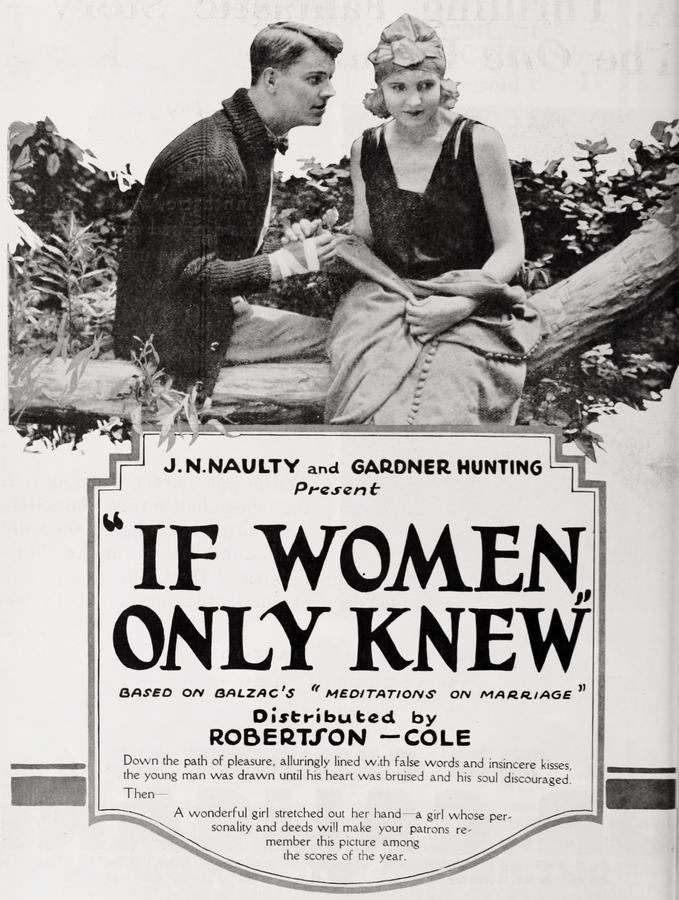
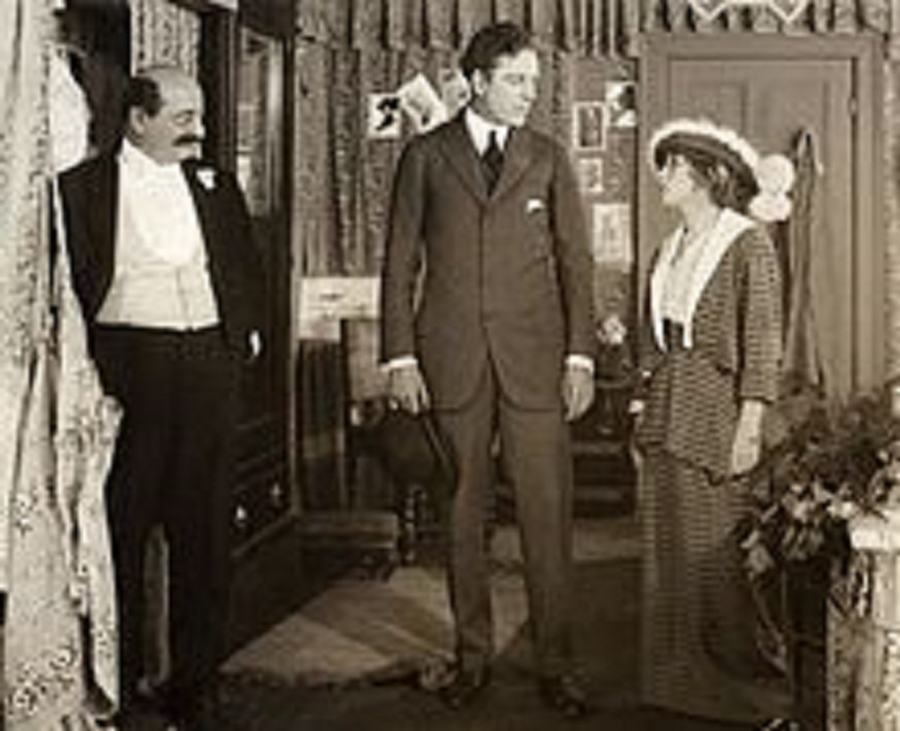
The 1930s cinematic landscape was a crucible for exploring the human condition, and *If Women Only Knew* stands as a testament to the era’s unflinching gaze into personal and societal disintegration. Directed with a deft touch by Honoré de Balzac and Gardner Hunting, the film is less a mere melodrama than a psychological excavation of its characters’ moral landscapes. Maurice Travers (Frederick Burton), the protagonist whose life is a series of misjudged choices, is framed as both victim and architect of his downfall. His mother’s sacrifices—financial, emotional, and physical—are rendered with harrowing intimacy, a motif that lingers like a shadow over the film’s first act.
Madeline Marshall (Madelyn Clare), the orphaned woman who harbors an unrequited love for Maurice, becomes the film’s moral compass. Her character is not defined by conventional tropes of passive suffering; instead, she is a study in quiet resilience. When Maurice marries the glamorous Donna Wayne (Blanche Davenport), the contrast is stark: Donna’s world is one of superficial opulence, while Madeline’s is built on foundational empathy. The film’s most incisive dialogue occurs in the interactions between these women, whose divergent values are laid bare in their exchanges with Maurice.
The narrative’s pivot point is Donna’s elopement with a wealthy suitor, a decision that mirrors Maurice’s own inability to sustain responsibility. This act of abandonment forces Maurice into a reckoning with his own inadequacies, a journey that culminates in the death of his mother—a scene that is neither sentimental nor exploitative, but rather a masterclass in understated grief. The film’s final act, in which Maurice finds solace in Madeline’s unwavering loyalty, is less a resolution than a philosophical coda, questioning whether redemption is found in love or in self-awareness.
Technically, *If Women Only Knew* is a product of its time, yet its emotional resonance transcends era. The cinematography, though constrained by the limitations of early talkies, uses shadow play to devastating effect, particularly in scenes where Maurice’s inner turmoil is mirrored by the dimming light of his mother’s vitality. The score, a sparse yet evocative blend of piano motifs, amplifies the tension in key moments without overpowering the dialogue.
Frederick Burton’s performance is a study in restraint. He embodies Maurice’s contradictions—his charm, his self-absorption, his capacity for growth—with a subtlety that avoids caricature. Madelyn Clare, often relegated to the background in the film’s early acts, delivers a crescendo of emotional complexity in her final scenes, her dialogue sparse yet resonant. Blanche Davenport’s portrayal of Donna Wayne is a nuanced exploration of privilege as both armor and vulnerability, a role that avoids the pitfalls of mere villainy.
Thematically, the film interrogates the societal pressures of the interwar period. Maurice’s failure to graduate from college—sacrificed for athletic pursuits—echoes the broader cultural tension between personal ambition and societal expectation. His mother’s blindness and eventual death serve as a metaphor for the erosion of traditional values in the face of modernity. The film’s exploration of class is equally perceptive: Donna’s elopement is not framed as a betrayal but as an economic necessity, a stark contrast to Madeline’s selflessness.
Comparative context reveals *If Women Only Knew*’s unique contribution to the 1930s canon. Unlike the more overtly tragic *Their Dizzy Finish* or the stark realism of *Her Right to Live*, this film balances its emotional stakes with a quiet optimism. It shares thematic DNA with *Rule G*, particularly in its examination of societal structures, but diverges in its focus on personal rather than institutional failure. The film’s narrative structure, which alternates between moments of high drama and contemplative pauses, anticipates the psychological depth of later works like *The Life Line*.
While the film’s pacing may feel deliberate by today’s standards, its deliberate construction is a strength. The dialogue, though occasionally stilted, is infused with a literary quality that elevates the material beyond mere melodrama. The writers’ adaptation of Honoré de Balzac’s source material brings a European sensibility to the narrative, grounding its emotional truths in a broader cultural context.
The film’s legacy lies in its ability to humanize its characters without romanticizing their flaws. Maurice’s eventual redemption is not a tidy conclusion but a complex acknowledgment of his past. The final scene, in which he and Madeline walk away from the ruins of his former life, is left open to interpretation—is it hope, resignation, or something in between? This ambiguity is the film’s greatest triumph, inviting viewers to reflect on the nature of forgiveness and the cost of survival.
In an era saturated with stories of triumph and tragedy, *If Women Only Knew* distinguishes itself by focusing on the quiet, often unacknowledged sacrifices that shape lives. It is a film that rewards patience, offering layers of meaning beneath its surface narrative. For modern audiences seeking a blend of emotional depth and historical texture, it remains a compelling artifact of early cinema’s capacity to confront human frailty with both honesty and grace.
IMDb —
1924
Community
Log in to comment.