DbcultAccessing Vault...
7.2/10
Senior Film Conservator
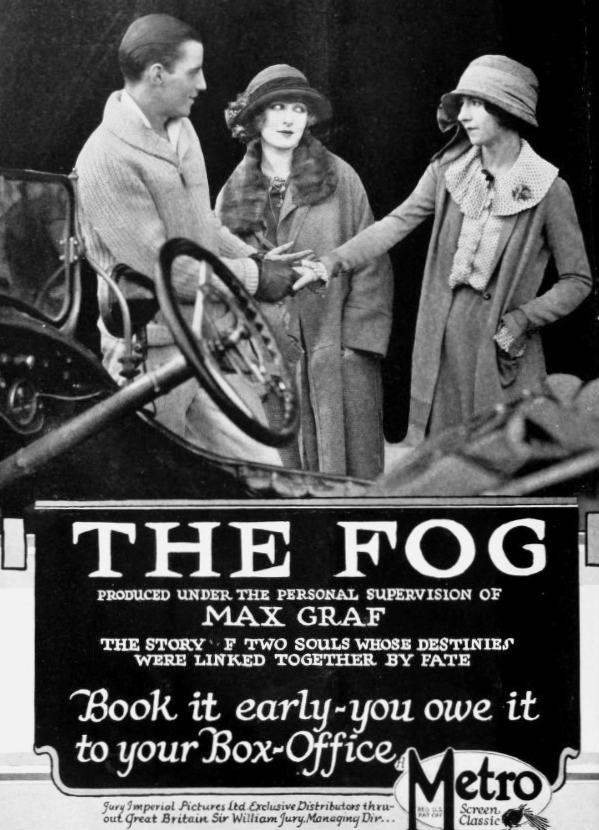
A definitive 7.2/10 rating for a film that redefined the boundaries of cult cinema. The Fog remains a cornerstone of transgressive art.
Ah, the silent era! A time when storytelling relied not on spoken word but on the eloquent ballet of human expression, the dramatic sweep of cinematography, and the evocative power of a well-crafted narrative. And among the myriad gems unearthed from this fascinating period, one film, in particular, continues to resonate with a quiet, persistent hum: the 1923 drama, The Fog. Directed with a delicate hand and brought to life by a stellar ensemble, this cinematic journey is far more than a mere period piece; it is a timeless exploration of love's enduring power, the crucible of human suffering, and the profound solace found in an unexpected, destined reunion. For anyone who believes in the redemptive arc of a life lived through hardship, this film offers a compelling, almost spiritual, experience.
At the heart of The Fog lies Nathan Forge, portrayed with a captivating blend of vulnerability and nascent strength by the ever-charismatic Cullen Landis. Nathan is not merely a character; he is an archetype, the sensitive artist trapped within the iron cage of pragmatism. Born under the unforgiving gaze of a cruel businessman father, Nathan’s early life is devoid of the warmth and affection so vital to a budding spirit. His father, a figure of relentless ambition and emotional austerity, casts a long shadow, stifling any creative impulse. Yet, within Nathan, a poetic soul yearns for expression, a yearning that finds its initial, tentative outlet in a simple, heartfelt poem. This poem, a tender tribute to a girl who once offered him a fleeting moment of connection, is more than just verse; it is a declaration of his inner world, a fragile beacon lit against the encroaching darkness of his reality.
The beauty of this narrative device is its sheer simplicity and profound impact. The poem, published in a local newspaper, becomes a conduit, a whisper carried on the wind that finds its way to the very girl who inspired it. Ann May, in her portrayal of this unnamed girl, imbues her with an ethereal quality, a quiet dignity that hints at a deep well of understanding. Her recognition of herself in Nathan’s words is not merely an act of identification but a spiritual affirmation, a silent acknowledgment of a shared, unspoken bond. This initial spark, though seemingly minor, sets in motion a chain of events that will define Nathan’s arduous journey, an odyssey through personal turmoil and global upheaval.
The years that follow the poem's publication are anything but kind to Nathan. His path is strewn with the jagged shards of misfortune, each trial serving as a brutal sculptor of his character. We witness his descent into an unhappy marriage, a union devoid of genuine affection and intellectual companionship. This particular subplot, handled with a nuanced hand by writers William Dudley Pelley, H.H. Van Loan, and Winifred Dunn, is a poignant exploration of societal pressures and the devastating consequences of marrying for reasons other than love. It’s a narrative thread that could easily be compared to the domestic strife explored in films like The Other Man's Wife, though The Fog imbues it with a distinct sense of Nathan’s quiet despair rather than overt conflict.
Further compounding his woes, Nathan endures the injustice of imprisonment, a period that strips him of his freedom and tests the very limits of his resilience. This segment of the film is a powerful commentary on the arbitrary nature of fate and the often-unjust mechanisms of society. The silent screen, through Landis’s expressive performance, conveys the crushing weight of confinement, the slow erosion of hope, and the profound isolation that such an experience engenders. It's a testament to the power of silent acting that such complex emotions are communicated so effectively without a single spoken word.
And then, there is the war. The Great War, a cataclysm that reshaped the world, also sweeps Nathan into its vortex. While the film doesn't delve into the horrors of the battlefield with the same visceral intensity as later war epics like Glory, its impact on Nathan is profound. It represents a period of immense suffering, loss, and transformation. The war serves as a crucible, burning away the vestiges of his youthful naivety and forging him into a man tempered by experience, empathy, and an even deeper understanding of humanity’s fragility. His journey through these various hardships is not just a sequence of unfortunate events; it is a pilgrimage, each trial a necessary step towards a deeper understanding of himself and the world.
The narrative of The Fog culminates in a setting as starkly beautiful as it is emotionally charged: the vast, unforgiving landscapes of Siberia. It is here, far removed from the societal constraints and personal tragedies that had defined his earlier life, that Nathan finds his purpose. Working for the International Red Cross, he dedicates himself to alleviating the suffering of others, a testament to the profound transformation he has undergone. This act of selflessness, of pouring his empathy into humanitarian work, positions him not as a victim of fate, but as an active participant in the healing of a fractured world.
And it is amidst this backdrop of quiet heroism and profound human connection that destiny, with its subtle, unerring hand, intervenes once more. The girl, the subject of his long-ago poem, reappears. This reunion is not a dramatic, thunderous event but a gentle, almost inevitable unfolding. It is a moment steeped in the kind of poetic justice that only the most resonant narratives can achieve. Their paths, divergent for so long, finally converge, not through chance, but through the magnetic pull of a connection forged in the innocence of youth and tested by the fires of experience. The film, through this reunion, suggests that true happiness is not merely the absence of suffering, but the profound recognition of a soulmate, a kindred spirit whose presence validates one's entire journey.
The success of any silent film hinges entirely on the expressive capabilities of its cast, and The Fog is exceptionally fortunate in this regard. Cullen Landis, as Nathan Forge, delivers a performance of remarkable depth and nuance. His facial expressions, subtle gestures, and body language convey a vast spectrum of emotions—from youthful idealism and quiet despair to hardened resilience and ultimately, serene contentment. He carries the weight of Nathan’s journey with an understated grace that draws the audience deeply into his plight. Landis masterfully navigates the character's evolution, making Nathan’s transformation feel earned and authentic.
Ann May, as the enigmatic girl, is equally compelling. Her portrayal is one of quiet strength and profound empathy. She doesn't need grand pronouncements to convey her character’s inner world; a slight tilt of the head, a lingering gaze, or a gentle smile is enough to communicate volumes. Her chemistry with Landis, though often separated by years of narrative time, feels palpable and destined. The supporting cast also contributes significantly to the film's rich tapestry. C.E. Anderson likely brought a formidable presence to Nathan’s cruel father, embodying the oppressive forces that shape our protagonist’s early life. Louise Fazenda, often celebrated for her comedic timing in films like Tillie's Punctured Romance, might have offered a contrasting performance here, perhaps hinting at the lighter moments of life or providing a foil to the drama, or even playing a role in Nathan's unhappy marriage, adding layers to the societal pressures he faces. Mildred Harris, known for her dramatic roles, would have brought a powerful presence, possibly as the unhappy wife, adding to the film’s emotional gravitas. The collective talent of Eddie Phillips, Ethel Wales, Ralph Lewis, Peggy Prevost, Louise Dresser, Frank Currier, George Henderson, and David Butler ensures that even the smaller roles contribute to the film’s immersive atmosphere, each actor a vital brushstroke in this expansive cinematic painting.
The directorial vision behind The Fog is crucial to its enduring appeal. Without the aid of dialogue, the director (whose name is not provided in the prompt, but the impact is undeniable) had to rely on visual storytelling, meticulous staging, and expressive intertitles to convey the narrative's intricacies and emotional depth. The cinematography, though perhaps constrained by the technological limitations of the era, would have been tasked with capturing the grandeur of Siberia, the claustrophobia of imprisonment, and the intimate moments of human connection. The use of light and shadow, framing, and close-ups would have been paramount in guiding the audience's emotional journey, creating a visual language that transcends the absence of sound.
The screenwriters, William Dudley Pelley, H.H. Van Loan, and Winifred Dunn, deserve immense credit for crafting such a compelling and expansive narrative. Their ability to weave together themes of romance, social critique, personal struggle, and ultimate redemption into a cohesive and emotionally resonant whole is remarkable. The plot, with its episodic nature spanning years and continents, could easily have felt disjointed, yet their skillful construction ensures a continuous, engaging flow. They understood the power of archetypes and universal human experiences, creating a story that, despite its specific historical context, speaks to the timeless longing for connection and happiness. The way the poem acts as a narrative anchor, resurfacing at crucial moments, is a testament to their clever plotting, a thread of fate weaving through the tumultuous fabric of Nathan’s life.
Beyond the individual performances and technical achievements, The Fog truly shines in its exploration of universal themes. The most prominent, of course, is the enduring power of love and destiny. The idea that two souls are fated to meet, even across vast distances and through immense personal suffering, is a romantic ideal that continues to captivate audiences. Nathan’s journey is a testament to the belief that true connection, once forged, can withstand the test of time and circumstance, acting as an invisible guide through the darkest passages of life. This narrative echoes the profound sense of destiny sometimes found in melodramas like Hearts United, though The Fog imbues it with a more understated, poetic sensibility.
The film also delves into the theme of resilience. Nathan’s ability to endure an unhappy marriage, imprisonment, and the ravages of war, only to emerge with his spirit intact and his capacity for compassion deepened, is deeply inspiring. It’s a powerful message about the human spirit’s capacity to overcome adversity and find meaning even in the most desolate circumstances. Furthermore, there's a subtle critique of societal expectations and the destructive nature of ambition without empathy, embodied by Nathan's cruel father and his unhappy marriage. The film suggests that true wealth lies not in material possessions or societal status, but in authentic human connection and a life lived with purpose.
Watching The Fog today is a revelatory experience, a powerful reminder of the artistry and emotional depth achievable in silent cinema. It stands as a testament to the universal language of human emotion, proving that a story can transcend technological limitations and speak directly to the heart, regardless of the era in which it was made. The film’s narrative, with its sweeping scope and intimate focus on a single individual’s journey, feels remarkably contemporary in its exploration of identity, purpose, and the search for happiness. It doesn't merely depict a series of events; it invites the viewer to reflect on their own understanding of fate, resilience, and the connections that truly matter.
For those uninitiated in the world of silent films, The Fog offers an accessible and deeply rewarding entry point. Its compelling plot, strong performances, and timeless themes make it an excellent example of why this particular period of cinematic history continues to captivate. It's a film that lingers in the mind long after the final frame, prompting contemplation on the twists and turns of life, the enduring power of a simple poetic gesture, and the profound joy of a destiny finally embraced. In an age saturated with noise and constant chatter, the quiet elegance of The Fog offers a refreshing, poignant reminder of the stories that truly resonate, a silent whisper that speaks volumes about the human condition.
This film, with its masterful blend of dramatic narrative and heartfelt emotion, proves that the golden age of cinema had many facets, and that even in its earliest forms, it was capable of producing works of profound artistic merit and lasting emotional impact. It's a journey worth taking, a story worth experiencing, and a silent film that continues to echo with the power of an enduring, destined love.
IMDb —
1936
Community
Log in to comment.