DbcultAccessing Vault...
Cult Review
Senior Film Conservator
To witness The Destruction of Carthage is to step into a time capsule where the nascent language of cinema grapples with the sheer weight of antiquity. This is not merely a film; it is a celluloid monument to the hubris of empires. The production, emerging from the golden age of Italian silent epics, captures a sense of scale that modern CGI often fails to replicate through sheer digital artifice. Here, the stones feel heavy, the dust of the African plains feels palpable, and the impending doom of a civilization is rendered with a somber, almost ritualistic intensity.
The film opens with the chilling rhetoric of the Roman Senate. We see Cato, portrayed with a staccato intensity that mirrors the real-world political anxieties of 1914, demanding the total erasure of Rome's greatest rival. This prologue sets a grim tone: the inevitability of war. Unlike the more intimate melodrama found in The Banker's Daughter, this narrative operates on a macroscopic level, where individual lives are mere pebbles in the landslide of history.
While Rome provides the external threat, the true rot is internal. Astrubal, the Governor of Carthage, is a character of profound complexity—a man whose lust for a crown blinds him to the smoke on the horizon. His decision to bar the mercenary troops from the city is a masterclass in political myopia. In these scenes, the film explores the tension between the ruling elite and the martial class, a theme similarly dissected in Schuldig, though here it is amplified by the stakes of national survival.
The assassination of General Annon in the Senate is a sequence of jarring brutality. The choreography of the daggers and the panicked dispersal of the council members evoke a sense of chaotic realism. It serves as the pivot point where Carthage ceases to be a functional state and becomes a fragmented collection of self-interests. Astrubal’s subsequent attempt to placate the warriors while simultaneously planning their massacre reveals a level of perfidy that makes him one of the most compelling antagonists of early cinema.
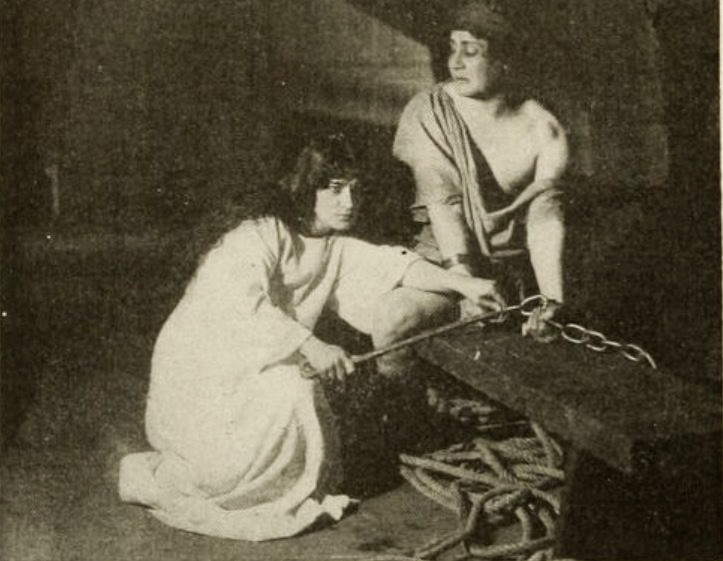
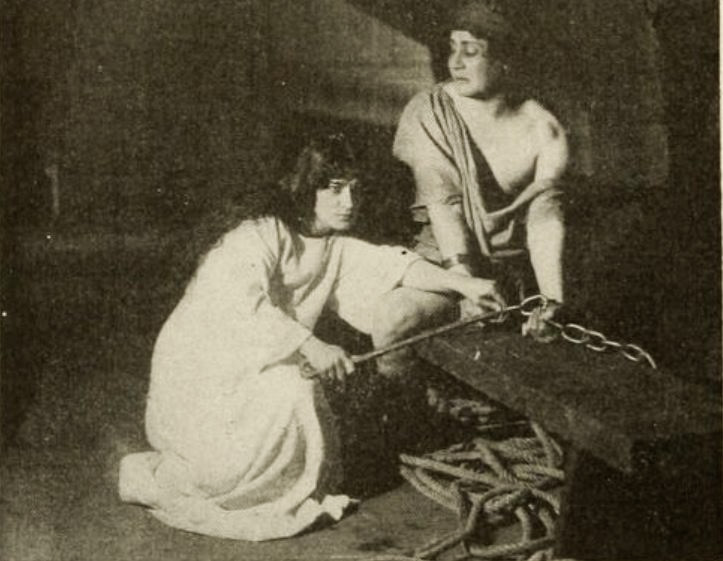
Amidst the clashing of gladius and shield, the film weaves a thread of human vulnerability through Markia and Sirabas. Markia, played with a delicate yet resilient grace by Giuseppina Valdata-Farinon, represents the innocent soul of Carthage. Her journey from the sanctuary of the Temple to the bowels of a Roman galley is a harrowing odyssey. Her relationship with Sirabas is fraught with the kind of misunderstandings that define the genre, yet it carries a weight of tragic necessity.
Sirabas himself is an interesting study in shifting loyalties. His transition from a Carthaginian lieutenant to a Roman ally—and eventually back to a desperate survivor—mirrors the fluid boundaries of the ancient Mediterranean world. When compared to the romantic archetypes in The Eagle's Mate, Sirabas feels more grounded in the grit of his environment. His rescue of Markia from the burning galley is not just a heroic trope; it is a desperate act of reclamation in a world that has been entirely consumed by fire.
The cinematography of The Destruction of Carthage utilizes the deep-focus capabilities of the era to create staggering tableaux. The scenes on the city walls, where the characters watch the retreating army, are composed with a verticality that emphasizes the height of the Carthaginian fortifications. The use of natural light in the Temple scenes creates a chiaroscuro effect that rivals the psychological depth of The Mysteries of Souls.
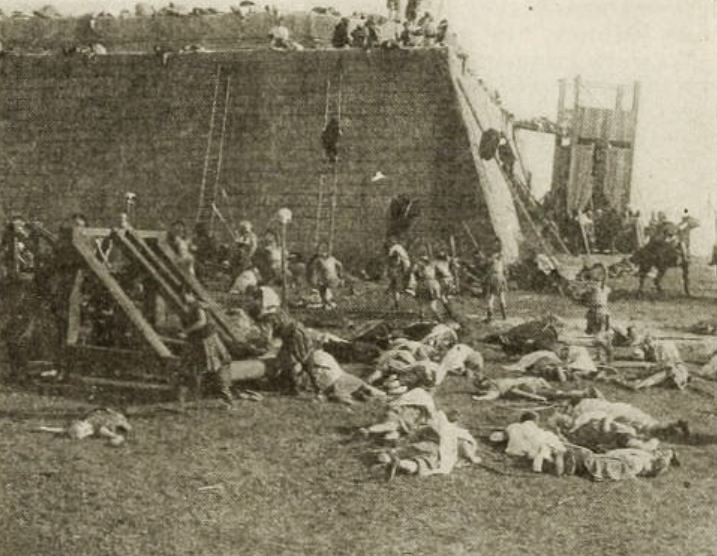
Special mention must be made of the siege sequences. The logistics of coordinating hundreds of extras in authentic-looking period armor, combined with the practical effects of collapsing walls and catapult fire, demonstrate a level of ambition that set the standard for future epics like Les Misérables, Part 2: Fantine. The final conflagration of the fleet is a visceral climax, the orange hues of the flames (even in their monochrome or tinted original state) suggesting a hellish end to a once-proud civilization.
One of the most evocative segments involves Sirabas’s descent into galley slavery. The rhythmic, agonizing toil of the oarsmen provides a rhythmic counterpoint to the frenetic energy of the land battles. This sequence highlights the dehumanizing nature of ancient warfare, where even a noble warrior can be reduced to a cog in a maritime machine. It evokes the same sense of trapped destiny found in Through Fire to Fortune, where the environment itself becomes an antagonist.
The intervention of Zamah, Astrubal’s wife, adds a layer of erotic and political jealousy to the plot. Her desire for Sirabas and her subsequent betrayal of him when he rejects her reflects the 'femme fatale' archetypes that would later dominate film noir, but here they are rooted in the classical tradition of Dido or Medea. Her refusal to flee the palace, choosing instead a 'heroic death' amidst the ruins, provides one of the film's most poignant moments of defiance.
When placed alongside contemporaries like Satanasso or Das Modell, 'The Destruction of Carthage' distinguishes itself through its commitment to historical scope. While La dame aux camélias focused on the minutiae of social tragedy, Carthage seeks to capture the death of a culture. It shares more DNA with the rugged landscapes of Jess of the Mountain Country or the expansive vistas of The Golden West, but with the added gravitas of historical finality.
The film’s pacing is deliberate, allowing the viewer to soak in the atmosphere of the Carthaginian court before the inevitable Roman onslaught. This slow-burn approach makes the final hour’s relentless action feel earned. Unlike the brief, kinetic bursts of The Corbett-Fitzsimmons Fight, the violence here is operatic and symbolic, representing the crushing weight of Roman hegemony.
The ending of the film—Markia and Sirabas reaching the shore as the Carthaginian fleet burns behind them—is a powerful image of rebirth. They are the remnants of a world that no longer exists, forced to forge a future on the ashes of the past. This theme of survival against insurmountable odds is a recurring motif in the era's cinema, seen in works like When Fate Leads Trump or The Other's Sins.
In the final analysis, The Destruction of Carthage remains a towering achievement of the silent era. It manages to balance the intimate and the epic, the personal and the political, with a dexterity that many modern blockbusters should envy. It reminds us that while empires fall and cities are razed to the ground, the stories of individual courage and love are the only things that truly survive the fire. The film is a haunting, beautiful, and ultimately devastating look at the cost of power and the resilience of the human heart.
For those interested in the evolution of the historical epic, this film is essential viewing. It bridges the gap between the theatrical staginess of the 19th century and the dynamic visual storytelling of the 20th. It is a testament to the power of the moving image to resurrect the ghosts of the past and give them a voice that resonates across the centuries.

IMDb 8.2
1934
Community
Log in to comment.