DbcultAccessing Vault...
Cult Review
Senior Film Conservator
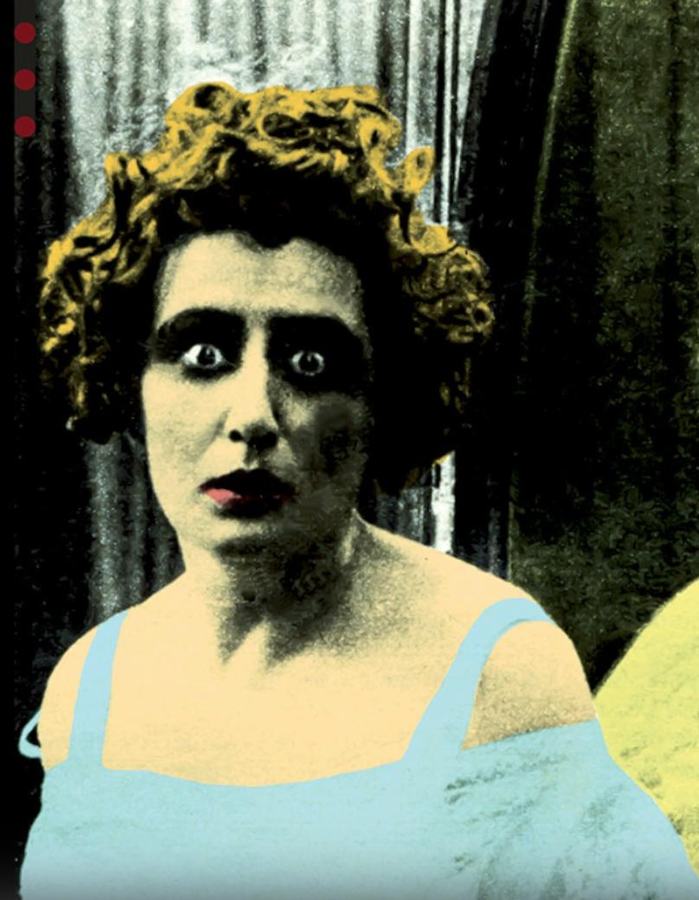
Ash from Vesuvius drifts like grey silk across the frame even before the intertitles dare to speak. In the guttering candlelight of a Neapolitan side-street, Lina Cipriani—all clavicle and carnival eyes—twirls a cigarette holder as if it were a bishop’s crozier. She is the reckless heart of Il miracolo della Madonna di Pompei, a 1923 film that never bothered to court international distributors and thus slumbered in sulfur-scented cans beneath a church crypt for the better part of a century. The surviving print, scabbed with emulsion rot and stippled by ecclesiastical censors, still radiates the feverish humidity of post-war Naples, where miracles are traded like contraband cigarettes.
The plot—if one insists on linearity—traces Cipriani’s nameless gamine from the alley behind the San Carlo opera house to the lava-baked ruins of Pompeii, but the film’s bloodstream is chiaroscuro Catholic guilt, not geography. She steals a gold-capped reliquary from a street-preacher’s kiosk, pawns it for a pair of scarlet dancing slippers, then spends the night tangoing with Eduardo Notari’s black-clad anarchist who preaches dynamite and free love in the same breath. Their pas de deux is shot in reverse silhouette: the camera peers through the dancer’s legs, turning the couple into an eight-legged demon of desire while the Madonna’s plaster face, cradled in a niche above the bar, seems to weep candlewax. The sequence is as erotically frank as anything in Love Madness, yet the Catholic Board of Spectacle still stamped it morally instructive because the girl ultimately collapses in contrite convulsions—never mind that the contrition is chemically indistinguishable from exhaustion.
Unlike The Girl Problem, which domesticates its flapper into suburban penance, or Stolen Honor, where female transgression is punished by narrative erasure, Il miracolo wallows in the contradictions. Cipriani’s anti-heroine flagellates herself with a rosary of stolen kisses; every Hail Mary is punctuated by a petty theft. The miracle, the film insists, is not that she repents but that the city itself—teeming, typhus-ridden, plaster-cracked—keeps spinning without divine intervention. Vesuvius becomes a co-conspirator: its distant rumbles provide diegetic bass notes for the tango orchestra, its nocturnal glow the only key-light on the girl’s collarbone when electricity fails.
Director-producer Eduardo Notari (doubling as the anarchist lover) was a Catholic autodidact who moonlighted as a newsreel cinematographer during the Red Biennium. His camera grammar is hybrid: Eisensteinian montage collides with the tableau vivant of Neapolitan nativity cribs. In one match-cut, the girl’s bitten lip dissolves into a cherub’s cracked cheek on a fresco; in another, the camera tilts ninety degrees as she faints inside a tram, turning the vehicle into a portable Pietà. The audience—mostly dockworkers and cloistered nuns on rare parole—would have recognized these images from street shrines. They would also have recognized the anarchist’s pamphlet, which is a word-for-word transcription of Errico Malatesta’s 1891 jailhouse letter. The film thus pirated sacred iconography and revolutionary propaganda in the same breath, a balancing act that miraculously escaped Fascist seizure in 1925, probably because the authorities never discovered the print beneath the altar cloths.
Where American silents often reserve amber for hearth sentiment and turquoise for nocturnes, Il miracolo deploys a reckless palette keyed to liturgical seasons. Reel two, bathed in arsenic green, chronicles the girl’s venereal panic after a back-alley tryst; reel three blooms in pumpkin orange when she joins a pilgrimage to Pompeii, clutching a candle stub so that her fingers drip wax like stigmata. The surviving nitrate is so fragile that the Italian archive projects it only once per decade, replacing the original tinting with digital LEDs calibrated to the exact chromatic values documented in a 1923 parish ledger. The result is hallucinatory: faces float in saffron halos, while the Madonna’s robe pulses between sea-blue cerulean and bruised indigo depending on the girl’s proximity to sacrament or sacrilege.
Compare this chromatic moralism to A Message from Mars, where color is merely ornamental, or Grekh, where monochrome severity stands in for ethical rigor. Notari instead weaponizes hue as narrative: the closer the heroine edges toward the sanctuary, the more the spectrum contracts until the final shot—a stark monochrome freeze-frame—renders redemption as a photographic negative, black sky and white ash swallowing her silhouette whole.
Because the film was shot without synchronous sound, Notari overlays visual onomatopoeia: intertitles shaped like Vesuvian lava bombs, letters that quiver when church bells toll off-screen. The girl’s dialect is so dense that when she spits “‘O cielo ch’‘a fa? ‘O cielo s’‘a guarda!” (“What does heaven do? Heaven watches!”) modern Neapolitans need subtitles. Thus the film anticipates the linguistic verismo of Israël and the polyglot chaos of Die Lieblingsfrau des Maharadscha – 3. Teil, yet predates both by half a decade.
During the climactic pilgrimage, the camera abandons the protagonists and tracks a chorus of barefoot widows whose voices we never hear. Their mouths open in lament, but the only audible element is the projector’s mechanical chatter, a ghost frequency that sounds like rosary beads on marble. This negative space is more harrowing than any orchestral score; it drills into the spectator the vertigo of divine silence that both terrifies and seduces the girl.
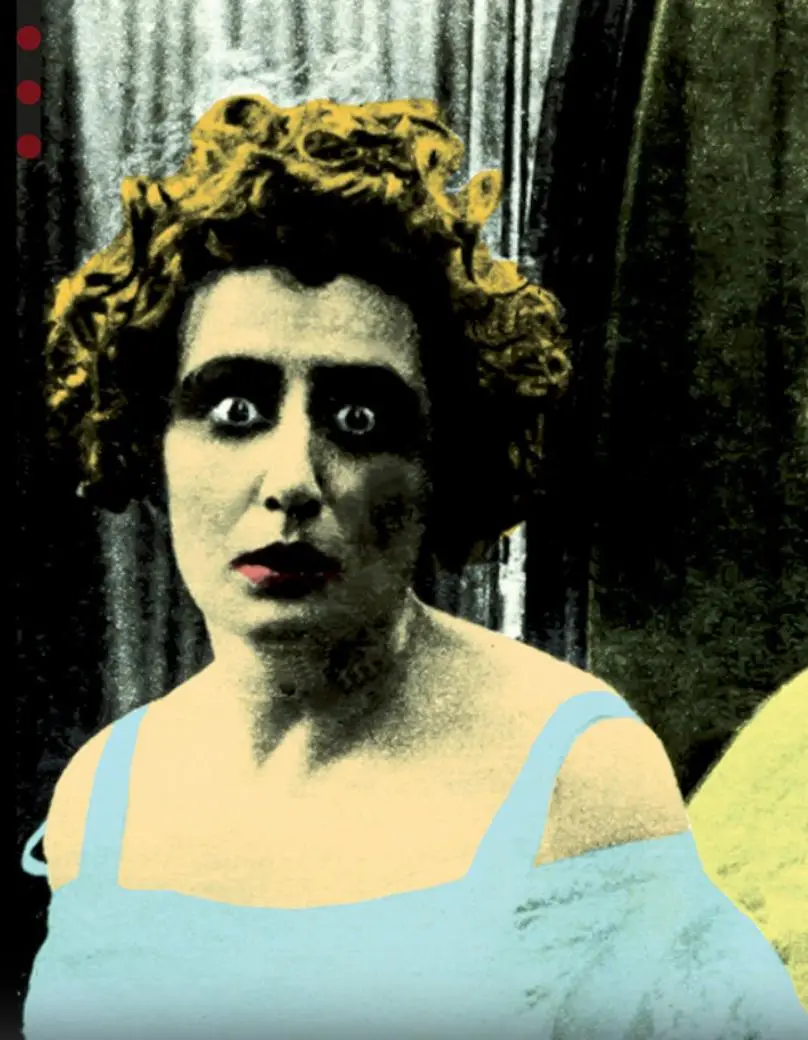
“I wanted to make a film that smelled of candle smoke and gunpowder,” Notari confessed in a 1938 letter to his Jesuit censor, “so that even the blind could see the difference between a miracle and a marketing stunt.”
Classical Hollywood would have married her off to the seminarian after a tear-stained conversion. European avant-garde might have killed her in a garret. Notari instead leaves her mid-stride on the crater’s lip, eyes wide, neither damned nor saved. The final intertitle, fragmentary and scorched, reads only: “…e il tuo nome sarà uno stormire di cenere” (“…and your name will be a rustle of ash”). There is no moral ledger, only the volcanic shrug of a universe that metabolizes sin into topsoil.
This open eschatology situates the film closer to the nihilist streak in Sundown Slim than to the tidy penance of The Honor of Mary Blake. Cipriani’s performance—equal parts street-cat and mystic—anticipates Maria Schneider’s raw nerve in Last Tango minus the bourgeois self-pity. Her gaze dares the spectator to moralize, then slips sideways, too mercurial to be pinned by either patriarchal pity or feminist recuperation.
In 1943 Allied bombs pulverized Notari’s studio; rumor claims a German officer confiscated the negative for its silver content. Yet a 16mm print resurfaced in 1978 inside a Neapolitan convent, mislabeled as Stations of the Cross for Children. Nuns had screened it during Sunday school, splicing out the tango and the brothel. The rediscovered reels—jumpy, water-stained—contain enough missing frames to resemble a stroboscopic Stations of the Cross anyway. Restoration funded by a Swiss watch conglomerate in 2019 interpolated digital mattes to stabilize the image, a decision that outraged purists who prefer the flicker that makes the Madonna’s eyes twitch like a nickelodeon flipbook.
Even in truncated form, the film detonates any sentimental narrative about Italian silent cinema as pastoral postcard. It is the sulfurous twin to Children of Destiny: where the latter aestheticizes poverty as operatic grandeur, Il miracolo grinds faces into volcanic grit and calls the residue sacred.
Critics seeking genealogical links might splice its eroticized martyrdom with The Mask’s hallucinatory guilt, or its anarchist fervor with Du sollst keine anderen Götter haben. Yet the film’s true analogue is closer to the feverish liminality of Southern Justice—both fuse regional folklore with the looming specter of modernity, both refuse to decide whether religion is opium or explosives.
What sets Il miracolo apart is its refusal to romanticize either sanctity or revolt. When the girl finally kneels, she does so on broken railway slag, not marble. The camera tilts up to reveal not a crucifix but a power line bisecting the sky. The miracle, Notari whispers, is not that the Madonna weeps but that the girl keeps walking after the tears have dried to salt.
As of 2024, no streaming service hosts the film; the only legitimate access is a 35mm showing at the Cinema Ritrovato festival, where it screens inside a deconsecrated church accompanied by a Neapolitan folk ensemble on mandolin and rum barrel. Bootlegs circulate on clandestine torrent sites, digitized from a VHS camcorder pointed at the screen, the autofocus hunting like a guilty conscience. Watching it this way—pixels pooling in the actress’s eye sockets—feels oddly faithful to the film’s theology: grace mediated through corruption, transcendence via distortion.
Meanwhile, scholars petition the Vatican to declare the print a religious artifact, thereby unlocking conservation funds. Opponents argue that ecclesiastical ownership would bleach the anarchist subplot into mere youthful indiscretion. The standoff continues, a fitting afterlife for a work that never resolved whether miracle is noun or verb.
If you spot a 35mm print in your nonna’s attic, resist the urge to project it on a bedsheet; the film stock contains diethyl ether, highly flammable. Contact the Cineteca di Bologna instead. And remember: in the economy of miracles, even ash has resale value.

IMDb 6
1935
Community
Log in to comment.