Summary
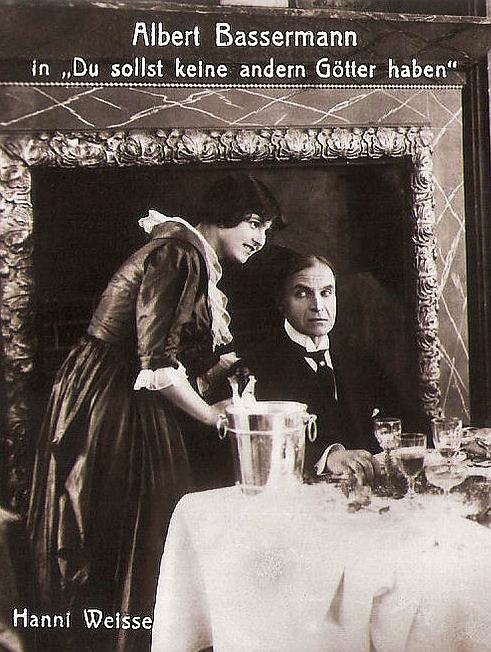
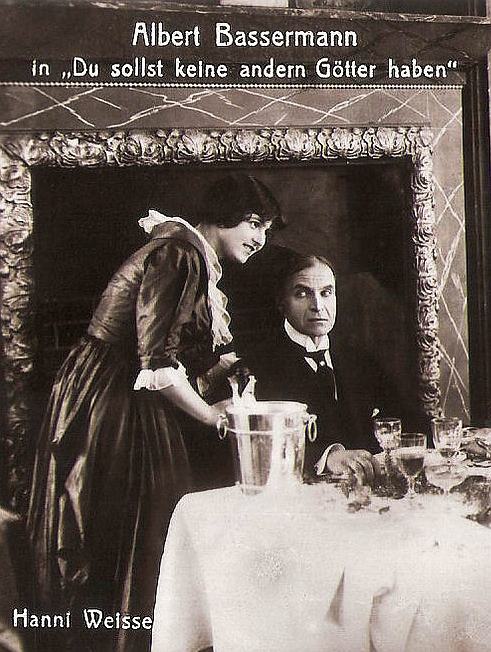
In the somber, morally charged landscape of early 20th-century Germany, "Du sollst keine anderen Götter haben" unfurls a chilling allegory of artistic integrity corrupted by worldly ambition. We are introduced to Elias Thorne (Albert Bassermann), a sculptor of profound spiritual conviction, whose creations resonate with an almost divine purity, earning him modest reverence but little material wealth. His devoted yet increasingly restless wife, Helene (Elsa Bassermann), yearns for a life beyond their ascetic existence, subtly swayed by the opulence paraded by the era's burgeoning industrial class. Into their studio steps Lena (Hanni Weisse), a young apprentice whose artistic promise is as vibrant as her naiveté, quickly captivated by the glittering promise of a world she barely knows. The serpent in this Eden arrives in the form of Baron von Kempten (Alfred Kuehne), a ruthless industrialist, who, recognizing Elias's genius, commissions him to craft a colossal monument — not to any spiritual ideal, but to the very concept of material progress and human endeavor divorced from higher purpose. Initially, Elias recoils, his artistic soul rebelling against such a vulgar commission. Yet, Helene's persistent, quiet pleas, coupled with Lena's wide-eyed admiration for Kempten's power, begin to erode his resolve. He succumbs, fashioning a magnificent, technically brilliant, yet utterly hollow edifice, a stark representation of his own artistic idolatry. The film meticulously charts the devastating ripple effects of this compromise: Helene descends into a frantic pursuit of social status, her spirit shriveling; Lena, entangled in Kempten’s web, faces a tragic disillusionment; and Elias himself, his creative wellspring poisoned, finds his once-sacred studio transformed into a mausoleum of his former self. The narrative culminates in a public unveiling of the monument, a spectacle of hollow triumph that exposes the moral decay beneath its gleaming surface, forcing Elias to confront the monstrous 'other god' he has inadvertently worshipped and, in a final, cathartic act, reclaim his soul from the clutches of materialism.
Review Excerpt
"
A Silent Sermon on the Soul's Betrayal: Revisiting 'Du sollst keine anderen Götter haben'
In the annals of early 20th-century German cinema, where shadows danced with a profound symbolic weight and human emotion was writ large across the silent screen, a particular gem, "Du sollst keine anderen Götter haben" (Thou Shalt Have No Other Gods), stands as a stark, compelling testament to the era's intellectual and moral anxieties. This film, a masterclass in allegorical storytellin..."