DbcultAccessing Vault...
Cult Review
Senior Film Conservator
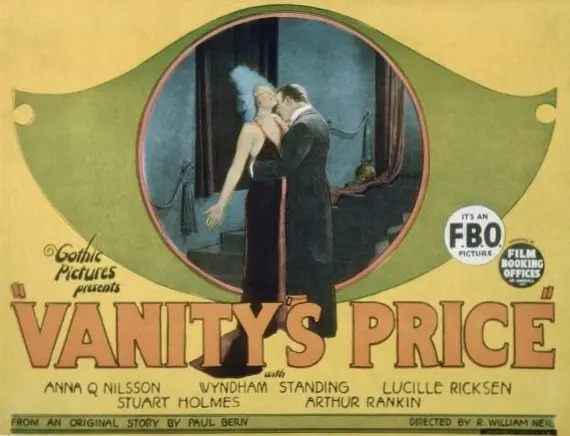
In the shimmering, often cruel twilight of the silent era, few films captured the intersection of female ambition and the biological clock with the surgical precision of Vanity's Price. Released in 1924, this Paul Bern-scripted melodrama serves as a grotesque yet fascinating mirror to the era's preoccupation with rejuvenation—a theme that permeated the cultural zeitgeist following the horrors of the Great War. We find ourselves staring into the weary, yet defiant eyes of Vanna Du Maurier, portrayed with a haunting intensity by Anna Q. Nilsson. Vanna is not merely an actress; she is a monument to her own craftsmanship, a woman whose singular desire to own her own theater represents the ultimate bid for sovereignty in an industry governed by the whims of men and the ticking of the clock. Unlike the protagonists in The Ne'er-Do-Well, who often drift through life’s circumstances, Vanna is a creature of pure, albeit exhausting, will.
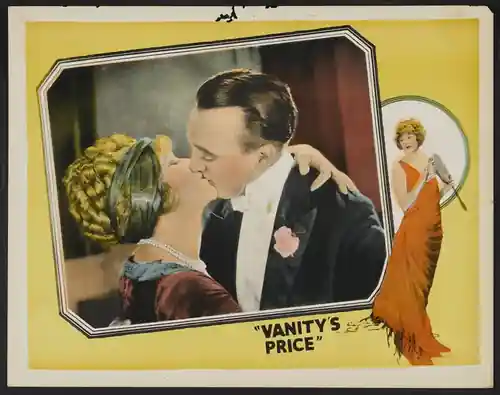
The narrative catalyst is the introduction of Henri De Greve, played with a chilling, sybaritic charm by Stuart Holmes. Holmes, a veteran of the screen's most detestable cads, brings a layer of oily sophistication that makes Vanna’s visceral reaction entirely earned. When Vanna recognizes him as the man who shattered her youth, the film shifts from a backstage drama into a psychological thriller. The shock is not merely emotional; it is physiological. It triggers in Vanna a terror of her own senescence. She sees in De Greve the man who stole her past, and in her own reflection, she sees the thief of her future. This leads to the film's most controversial and avant-garde sequence: the journey to Vienna. In the 1920s, Vienna was the epicenter of the rejuvenation craze, fueled by the real-world experiments of Eugen Steinach. Vanna’s quest for a medical miracle is presented not as a triumph of science, but as a desperate pact with a modern Mephistopheles.
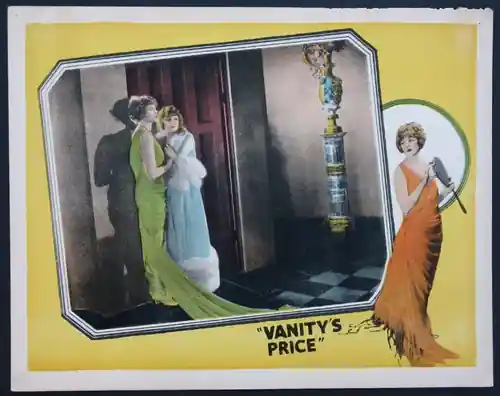
When Vanna returns from Europe, the transformation is jarring. Nilsson’s performance shifts from the weighted, matronly dignity of the first act to a brittle, high-strung vivacity. This is not a woman who has found peace; she has found a mask. The film masterfully explores the alienation this cause between her and her son, Teddy (Arthur Rankin). To Teddy, this new Vanna is a stranger, a spectral version of his mother that defies the natural order. The tension here is reminiscent of the spiritual fractures explored in Man and His Soul, where the external shell of a person no longer aligns with the internal truth. Vanna’s decision to use her newfound allure to distract De Greve from Sylvia Grayson (Lucille Ricksen) is a move of pure maternal martyrdom, yet it is perceived as the ultimate betrayal of her son’s trust.
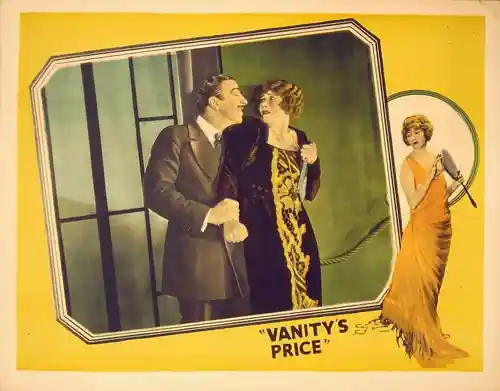
The cinematic language employed during Vanna’s "rejuvenated" phase is particularly noteworthy. The soft-focus lenses and high-key lighting create a halo of artificiality around her, contrasting sharply with the grounded, almost gritty realism of the scenes featuring Sylvia and Teddy. Sylvia’s attempted suicide by drowning is a stark reminder of the stakes involved. While Vanna plays a high-stakes game of social chess, Sylvia is the collateral damage of a world that values youth above all else. This thematic resonance with Bella Donna cannot be ignored, as both films grapple with the destructive power of a woman’s beauty when it is weaponized against the very people she should protect.
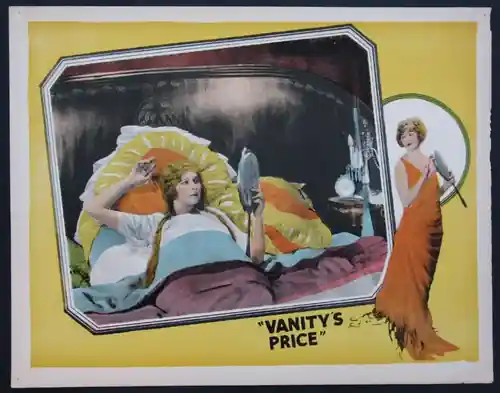
Everything in Vanity's Price builds toward the infamous boudoir scene. It is a sequence that remains shocking even by contemporary standards. Vanna lures De Greve to her private quarters, not for a romantic tryst, but for a reckoning. The shift from the seductive siren to the vengeful mother is instantaneous and terrifying. When she produces the riding crop, the film sheds its melodramatic skin and becomes a raw, primal scream of feminine rage. The beating she administers to De Greve is not just a punishment for his current predations, but an exorcism of decades of suppressed trauma. It is a rare moment in silent cinema where a woman takes physical agency over her abuser, refusing the role of the passive victim found in works like Humility.
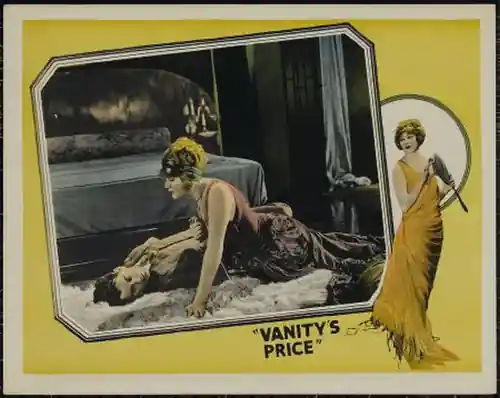
Nilsson’s physicality in this scene is breathtaking. The way she handles the crop, the coldness in her eyes, and the deliberate nature of her movements suggest a woman who has finally found a use for the strength she spent a lifetime cultivating on the stage. It is a performance of high lexical diversity in movement—each lash is a word, each strike a sentence in her indictment of De Greve’s character. The aftermath, however, is where the film finds its heart. The reconciliation with Teddy and Sylvia is handled with a delicate touch, avoiding the saccharine pitfalls that often plagued the genre. Vanna’s recognition of the "folly of vanity" is not a rejection of herself, but a rejection of the impossible standards that drove her to the brink of madness.
Comparing Vanity's Price to other contemporary works like A Tüz or Inspiration, one notices a distinct lack of moralizing about the actress's career itself. Paul Bern’s script doesn't punish Vanna for wanting a theater; it punishes the society that makes her feel she must be eternally young to deserve one. The character of Richard Dowling (Wyndham Standing) represents the antithesis of the De Greve archetype. He is the "man worthwhile," a figure of stability who sees Vanna for her essence rather than her artifice. His proposal is not a capture, but a sanctuary. It offers a resolution that feels earned, a quiet coda to a symphony of chaos.
The film also benefits from a robust supporting cast. Dot Farley and Cissy Fitzgerald provide necessary texture to the theatrical world, grounding Vanna's lofty ambitions in the day-to-day reality of the profession. The inclusion of Rowfat-Bey Haliloff adds a touch of the exoticism that was so prevalent in the mid-20s, yet here it feels less like a caricature and more like a part of the vibrant, cosmopolitan tapestry of Vanna’s life. Even in minor roles, the cast contributes to a sense of a lived-in world, much like the ensemble in Trois familles.
Technically, the film is a marvel of its time. The editing during the climax is sharp, creating a sense of claustrophobia that mirrors De Greve’s realization that he is trapped. The set design of Vanna’s boudoir—all silk, mirrors, and shadows—is a masterclass in using space to reflect character. It is a womb of artifice that becomes a tomb for De Greve’s ego. When we look at the broader landscape of 1924 cinema, including Distilled Love or the historical weight of Pyotr Velikiy, Vanity's Price stands out for its intimate, psychological focus. It doesn't need the sweep of history to feel epic; the battle for a woman's soul in the face of a mirror is epic enough.
Ultimately, the film asks a question that remains relevant: what is the cost of maintaining a public persona? Vanna Du Maurier pays the price in exhaustion, in the alienation of her family, and in the physical toll of her "rejuvenation." But she also finds redemption through the very thing she feared most—the truth. By stripping away the mask and facing De Greve as her authentic, wounded, and powerful self, she transcends the limitations of her profession. Vanity's Price is a vital piece of silent cinema that deserves a place alongside more famous explorations of the female psyche. It is a film that understands that while beauty may be fleeting, the scars of the past are permanent, and the only way to heal them is to face them head-on, riding crop in hand.
For those interested in the darker side of silent era melodrama, Vanity's Price is an essential watch. It pairs excellently with Forbidden Paths for its exploration of societal boundaries, or Body and Soul for its thematic focus on the duality of the human experience. It is a reminder that even in an era of "fresh paint" and new beginnings, as seen in Fresh Paint, some prices are simply too high to pay.
IMDb 5.8
1935
Community
Log in to comment.