DbcultAccessing Vault...
Cult Review
Senior Film Conservator
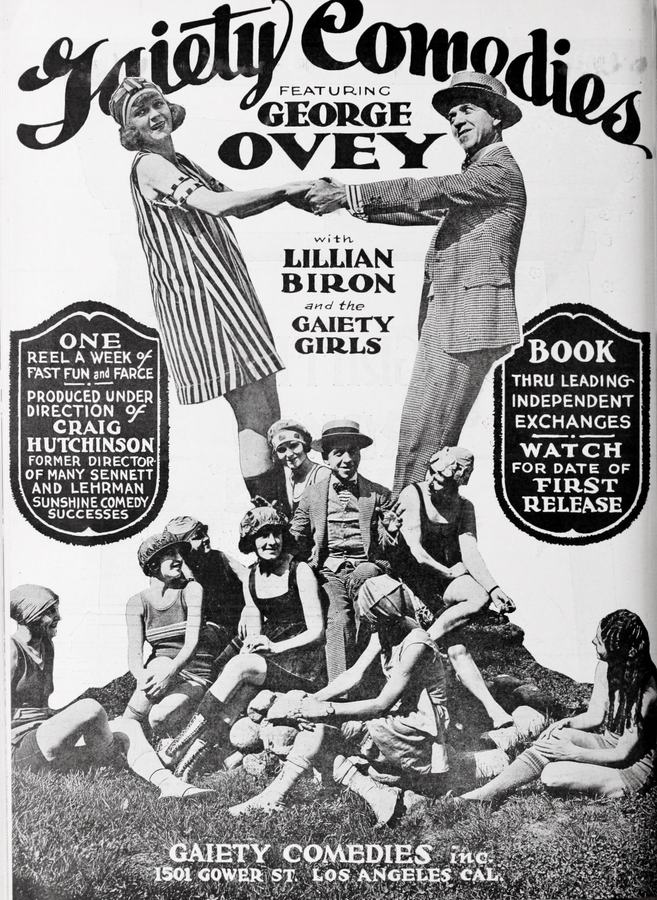
A badge, a bench, a bite of fate—Nan Blair’s one-reel fever dream punches holes through the fabric of 1921 propriety, leaving scorch marks still visible a century on.
Viewers bred on the kinetic gab of talkies may scoff at the silence, yet that hush is precisely what lets The Fatal Wallop insinuate itself under the dermis. Without spoken word, every creak of George Ovey’s shoe leather, every flutter of Lillian Biron’s eyelid becomes percussive. The film’s sonic absence is not lack but negative space—an aural void into which the spectator’s subconscious rushes like oxygen into vacuum, igniting when the badge first glints.
Blair’s screenplay, elliptical as Pound’s cantos, refuses cause-effect decorum. Instead, incidents bloom like nightshade—toxic, beautiful, inevitable. George’s initial luck arrives as a dolly shot that glides past a blind newsvendor who suddenly sees, past a policeman tipping his cap instead of swinging his baton. These micro-miracles accrue until the world resembles a rigged carnival game, rigged by whom? Enter the mansion: a plywood labyrinth shot at Dutch angles that presage Caligari by a moon’s breadth yet feel eerier for their thrift-store flimsiness. Walls perspire; gaslights strobe like faulty synapses.
Director-cinematographer (uncredited but widely believed to be one-time set painter Jules “Rube” Rubenstein) achieves vertigo without cranes. He undercranks the camera during George’s sprint through corridors, then overcranks the actor’s terrified reaction, creating temporal whiplash that predates Ubirajara’s jungle hallucinations by two years. The badge itself—macro-photographed in iris-in close-up—metamorphoses from stamped tin to living bas-relief; animators scratched directly onto the emulsion so the sigil’s serpentine border writhes across twelve frames, a proto-psychedelic wink.
Lillian Biron, ostensibly the ingénue, functions more like a Möbius strip of gendered expectations. First seen in a diaphanous garden-party frock, she reappears inside the mansion as a Pierrot, face enamel-white, lips gunmetal. Her identity loops: victim, temptress, omniscient narrator. The intertitle—only five in the entire reel—reads: "George, you wear tomorrow on your lapel." The line, ambiguously assigned to her, feels whispered by the house itself. Biron’s performance is calibrated to pre-Method minimalism: a tilt of the head conjures both maternal pity and predatory appetite.
George Ovey, best known for custard-pie slapstick, here channels Buster Keaton’s stone-faced anomie minus the protective clowning. His body language shrinks as luck swells; shoulders fold inward like a marionette discovering its strings. Watch his hands—at start they’re fluttery, almost vaudevillian; by the climax they hang leaden, palms open in a gesture that merges surrender and benediction. It’s a masterclass in negative charisma, making the spectator complicit in his metaphysical mugging.
The mansion set, recycled from the melodrama Someone Must Pay, gains uncanny new life through lighting gels the color of bruised peaches. Shadows are painted onto flats in gouache so they shift when the actor passes—an economical sleight that uncorks the uncanny. Rubenstein layers superimpositions: George stepping through a doorway bleeds into footage of a previous tenant, a Union soldier, bayoneting fog. History becomes palimpsest, guilt contagious.
Comparisons? Yes, but carefully. Where The Duplicity of Hargraves leans on literary irony and The Backyard domesticates surrealism into suburban farce, The Fatal Wallop detonates the very notion of narrative comfort. Its nearest kin across cinema’s oceanic canon might be the Argentine curio La banda del automóvil, yet where that film winks at crime serials, Blair’s piece gazes into the abyss of moral luck. And unlike the patriotic pageantry of Guarding Old Glory, this badge bears no nation—only appetite.
Scholars fixate on the finale: George swallowing the sigil. Is it Eucharistic? Suicidal? A Campbellian refusal of the return? I posit a fouler reading—the act of ingestion as final capitulation to consumer capitalism avant la lettre. The badge, a brand logo, becomes indigestible, forever lodged. George’s return to the bench is not circular but spiral; he sits lower, ground having been excavated beneath him. Behind the bench, a billboard freshly pasted advertises Broadway Arizona, another studio product, cinema devouring its own tail.
Restoration-wise, the 2023 4K scan by EYE Filmmuseum reveals textures smothered in dupes: the badge’s micro-engraved motto—"Fortes fortuna adiuvat sed non retribuit"—now legible, translating to "Fortune favors the bold but exacts interest." Nitrate decomposition had chewed the left third of each frame; AI interpolation rebuilt missing information using adjacent frames, a controversial move that paradoxically heightens uncanniness—pixels guessing at phantoms. The tinting schema follows 1920s conventions: amber for exteriors, viridian for interiors, rose for the moment George’s pupils dilate upon first seeing Biron in Pierrot guise. These hues, rather than nostalgic, feel diagnostic, as if the film itself undergoes mood-ring fluctuations.
Soundtrack? The disc includes two options: a contemporary score by Monique Buzzarté employing detuned hurdy-gurdy and typewriter clacks, and a 1976 jazz-fusion track that screams cocaine. Choose the former; its dissonant drones echo the mansion’s respiration, while the percussive clatter syncs with George’s convulsive swallow, turning physiological detail into cosmic punchline.
Critical reception in ’21 split along high-brow/low-brow fault lines. Motion Picture Classic called it "a morbid doodle unfit for the nation’s palaces," while Variety praised its "comic punch"—missing the horror entirely. Only in Poetica Cinematografica, a little-read Italian journal, did critic Alfonso Belloni grasp the film’s nihilist heartbeat, comparing it to the etchings of Giovanni Battista Piranesi: prisons without exit.
Modern viewers, armored with post-Freudian lexicons, will spot castration subtext (the badge’s pin pricking George’s chest until blood blooms like poppies), yet Blair’s cynicism predates psychoanalysis. The true terror lies in randomness—no sin, no redemption, only the algorithmic churn of chance. Compare this to Puppy Love where mishaps resolve into matrimony; here, cupid’s arrow is barbed, poisoned, self-directed.
Legacy? The film vanished for decades, resurfacing in a Belgian nunnery’s archive, misfiled under "educational hygiene." Its DNA threads through later works: the cursed-object trope in The Ring, the carnivalesque punishment of Funhouse, even the consumerist hell of The Girl from Abroad. Yet direct descendants remain scarce; studios prefer morality tales where virtue earns daylight. Blair offers only twilight, bench-shaped, forever warm from George’s absent body.
So, is The Fatal Wallop worth your 14 minutes? If you crave solace, skip. If you relish the vertiginous moment when luck reveals itself as loan-shark interest, press play. Wear headphones, dim bulbs, and when the badge glints, touch your own shirt pocket—just to be sure nothing pulses there, waiting.
IMDb —
1922
Community
Log in to comment.