DbcultAccessing Vault...
5.4/10
Senior Film Conservator
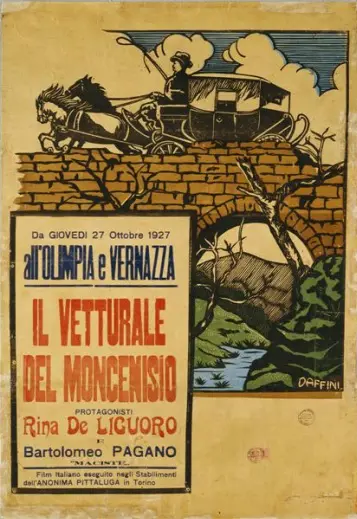
A definitive 5.4/10 rating for a film that redefined the boundaries of cult cinema. Il vetturale del Moncenisio remains a cornerstone of transgressive art.
Is Il vetturale del Moncenisio worth watching today? Short answer: yes, but with significant caveats that demand a particular kind of viewer. This film is an essential piece of cinematic history, offering a window into early Italian melodrama, yet its pacing and narrative conventions will undoubtedly test the patience of modern audiences.
This is a film explicitly for cinephiles, historians, and those with a deep appreciation for the foundational elements of silent cinema. It is emphatically not for viewers seeking fast-paced action, complex character studies, or contemporary narrative structures. Approach it as an artifact, and you'll find rewards; approach it as modern entertainment, and you'll likely be frustrated.
This film works because of its raw emotional power, delivered through the expressive performances typical of the silent era, and its ambitious use of natural landscapes. The sheer scale of the Alpine setting provides a grandeur that elevates the melodramatic narrative beyond mere theatricality. It’s a testament to the early filmmakers' ability to harness the environment as a character in itself, making the Mont Cenis pass more than just a backdrop; it’s an active participant in the unfolding drama.
This film fails because its narrative beats are often telegraphed, its character motivations occasionally simplistic, and its pacing can feel glacial by today's standards. The reliance on exaggerated gestures, while characteristic of the era, can sometimes border on caricature, making it difficult for contemporary viewers to fully connect with the emotional core without a conscious suspension of modern sensibilities. The predictability of the villain's schemes, while serving the melodrama, can detract from genuine suspense.
You should watch it if you are fascinated by the evolution of film, curious about the roots of melodrama, or simply want to experience the dramatic heft of a bygone cinematic age. It's a journey back in time, offering insights into storytelling techniques that laid the groundwork for everything that followed. Those with an interest in Italian cinematic heritage, in particular, will find this a rewarding, if challenging, viewing experience.
Baldassarre Negroni's "Il vetturale del Moncenisio" is a masterclass in the silent era's approach to grand-scale emotion and moral clarity. The film's narrative, centered on the virtuous coachman Matteo and his beloved Elena, is a familiar tale of innocence imperiled by villainy. Yet, it's the execution, not the originality of the plot, that truly distinguishes it. The story unfolds with a deliberate, almost operatic rhythm, each dramatic beat given ample space to resonate.
The choice of the Mont Cenis pass as the primary setting is inspired. It’s a location intrinsically linked to peril and majesty, a perfect crucible for the high-stakes human drama playing out. The constant threat of avalanches, treacherous roads, and isolation mirrors the emotional turmoil of the characters. This isn't just a convenient location; it's a character that actively pushes the plot forward and amplifies the stakes, a bold move that some modern films, like Frontier of the Stars, still struggle to achieve with their environments.
The tone is unremittingly serious, save for brief moments of pastoral romance that serve to highlight the happiness that is constantly under threat. There's no room for nuance in the moral landscape here; heroes are noble, villains are despicable. This stark dichotomy is a hallmark of the period, and Negroni embraces it fully, ensuring that the audience's sympathies are never in doubt. The emotional register is consistently high, demanding a willing surrender to its theatricality.
One particularly striking aspect is how the film uses its setting to visualize internal states. When Matteo is framed, the subsequent scenes often show him struggling against the elements, a clear externalization of his internal battle for justice. The barren, snow-swept landscapes reflect his isolation and despair, a powerful visual metaphor that transcends the need for dialogue. It’s a technique that, even today, can be incredibly effective when handled with such conviction.
Baldassarre Negroni, as director, demonstrates a keen understanding of silent film aesthetics, particularly in his use of composition and dramatic staging. His camera work, while not as fluid as later eras, is remarkably effective in capturing both the intimate emotional moments and the expansive grandeur of the Alpine environment. Long shots are employed to emphasize the isolation and scale of the Mont Cenis pass, dwarfing human figures against towering peaks and vast snowfields.
A memorable sequence involves the treacherous journey across a snow-laden ridge, where the camera holds a wide shot for an extended period. This isn't just a scenic interlude; it builds palpable tension, allowing the audience to truly grasp the peril faced by the coachman. This deliberate pacing and emphasis on environmental scale sets it apart from more studio-bound dramas of the time, such as The Mysterious Mr. Tiller, which relied more heavily on intricate set designs.
Negroni also masterfully utilizes lighting to enhance the film's dramatic impact. The harsh glare of sunlight on snow, or the deep shadows cast by craggy peaks, are not merely incidental; they are integral to the mood. Interior scenes, often dimly lit, create a sense of foreboding or intimacy, contrasting sharply with the bright, exposed exteriors. This interplay of light and shadow is a sophisticated element often overlooked in discussions of early cinema, yet it's profoundly effective here, guiding the viewer's emotional response.
The direction of crowd scenes, though sparse, also shows Negroni's skill. The villagers' reactions to Matteo's plight, for instance, are staged with a clear sense of collective emotion, their gestures and expressions conveying support or suspicion without a single spoken word. It’s a testament to the power of visual storytelling that these moments feel genuinely impactful, driving home the social stakes of the drama. The precision in these broader strokes is what allows the film's melodrama to land with such conviction.
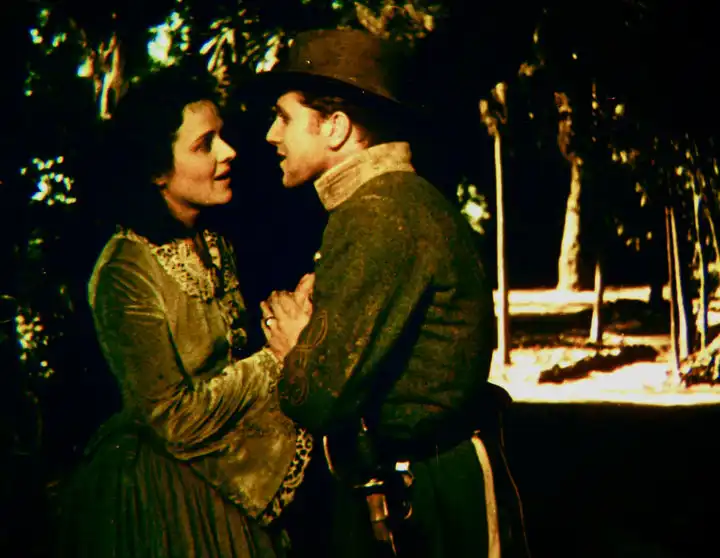
The performances in "Il vetturale del Moncenisio" are, as expected for the silent era, grand and expressive, relying heavily on physicality and facial communication. Bartolomeo Pagano, in the titular role of Matteo, is a commanding presence. Known for his robust, heroic characters, Pagano imbues Matteo with a stoic nobility and an unwavering sense of justice. His broad gestures and determined gaze convey a man of principle, even when unjustly accused. There's a particular scene where he clenches his fists, eyes blazing, upon realizing the extent of the Baron's treachery, a moment of raw, unadulterated passion that resonates deeply.
Rina De Liguoro, as Elena, provides the film's emotional heart. Her beauty is undeniable, but it's her ability to convey profound anguish, despair, and ultimately, resolute hope, through subtle shifts in expression and delicate hand movements that truly captivates. Her scenes of heartbreak, particularly after Matteo's initial arrest, are genuinely moving, her tears and trembling conveying a fragility that makes her eventual strength all the more impactful. She avoids the pitfalls of over-the-top melodrama that sometimes plague actresses of the period, offering a more nuanced portrayal than one might expect from a film like Pretty Lady.
Alex Bernard, as the nefarious Baron Valmont, is a deliciously despicable villain. His performance is a masterclass in silent-era antagonism, with a sneering smile and calculating eyes that leave no doubt about his malevolent intentions. Bernard’s physical portrayal of villainy, with his often hunched posture and predatory movements, effectively contrasts with Pagano's upright heroism. His smug satisfaction in a scene where he believes he has successfully framed Matteo elicits a visceral reaction, solidifying his role as the perfect foil.
The supporting cast, including Felice Minotti as a loyal confidante and Giuseppe Brignone in a smaller but significant role, provide solid foundations for the central drama. While their roles are less prominent, their reactions and interactions contribute significantly to the film's emotional texture and help ground the more theatrical performances. This ensemble work, though often overshadowed by the leads, is crucial for the overall success of the narrative, much like the ensemble dynamics in The Collegians.
The acting, while undeniably of its time, possesses a raw energy and commitment that, for the discerning viewer, can be far more engaging than some of the subdued realism favored in contemporary cinema. It’s a bold, direct form of communication that speaks directly to the audience’s emotions.
The pacing of "Il vetturale del Moncenisio" is a prime example of silent film rhythm, which often feels distinctly different from modern cinematic expectations. The narrative unfolds at a deliberate, almost stately speed, allowing scenes to linger, emotions to build, and the magnificent landscapes to truly sink in. This isn't a film designed for instant gratification; it demands patience and a willingness to immerse oneself in its particular temporal flow.
Modern viewers, accustomed to rapid-fire editing and constant narrative progression, might find certain sequences protracted. The extended scenes depicting Matteo's journeys through the pass, for instance, are not merely transitional; they are opportunities to establish mood, convey the arduous nature of his work, and build a sense of impending danger. This kind of environmental storytelling, allowing the setting to dictate rhythm, is a lost art in many ways.
However, this slower pace is not without purpose. It serves the melodrama beautifully, giving weight to every betrayal, every moment of despair, and every eventual triumph. The emotional stakes are amplified because the audience is given ample time to absorb the characters' predicaments. A film like Conflict, for example, might rush through its character motivations, but here, every glance, every gesture, is given time to register.
It works. But it’s flawed. The deliberate unfolding, while effective for building emotional resonance, can occasionally tip into sluggishness, particularly in scenes that reiterate already established plot points. A tighter edit in certain sections might have sharpened the overall impact without sacrificing the film's inherent grandeur. Yet, to judge it solely by modern pacing standards would be a disservice to its historical context and artistic intentions.
Yes, for a specific audience, "Il vetturale del Moncenisio" is absolutely worth watching today. It offers a unique window into the cinematic techniques and narrative conventions of early 20th-century Italian cinema. It’s a film that speaks to the power of visual storytelling before the advent of synchronized sound.
It's a historical document as much as it is entertainment. Those who appreciate the roots of film will find immense value. It challenges contemporary viewing habits by demanding patience and an open mind. This silent classic serves as a powerful reminder of how narrative and emotion were conveyed with purely visual means. It’s an experience that enriches understanding of film history.
"Il vetturale del Moncenisio" stands as a powerful, if demanding, artifact from the silent era. It is a testament to the evocative power of visual storytelling and the dramatic potential of grand natural settings. While its narrative simplicity and deliberate pacing might not appeal to everyone, its historical importance and the sheer conviction of its performances make it a compelling watch for those willing to engage with its unique rhythm.
Negroni's direction, particularly his ability to weave the Alpine landscape into the very fabric of the story, is genuinely impressive. The film is a valuable lesson in how early cinema communicated emotion and conflict without dialogue, relying instead on gesture, expression, and environmental grandeur. It’s not just a film; it’s a living piece of film history.
Ultimately, this is a film that rewards patience and an appreciation for the foundational elements of cinema. It may not offer the complex narratives of today, but it delivers a raw, emotional punch that still resonates. If you are a devotee of silent film or a student of cinematic evolution, do not miss the opportunity to experience this striking Italian melodrama. It's a journey worth taking, even if the road is sometimes a little slow.
IMDb —
1924
Community
Log in to comment.