DbcultAccessing Vault...
Cult Review
Senior Film Conservator
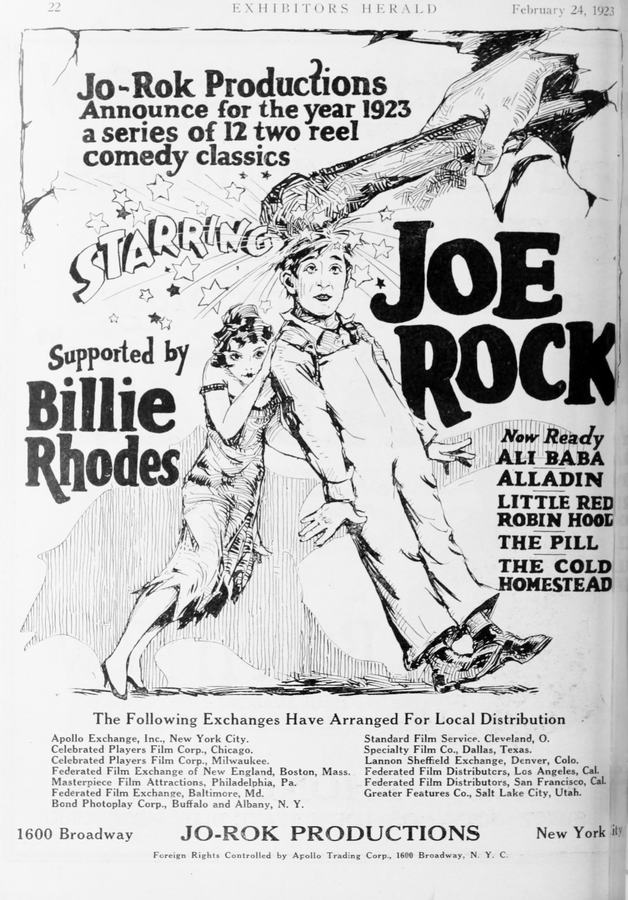
There’s a unique, almost ethereal quality to revisiting films from the silent era, particularly those that have perhaps faded from mainstream memory but retain a potent, if often understated, cinematic resonance. Such is the case with “In Bad in Bagdad,” a veritable treasure from an age when storytelling relied solely on visual poetry and the expressive power of the human form. This delightful romp, starring the effervescent Billie Rhodes and the master of physical comedy, Joe Rock, transports audiences to a fantastical, anachronistic Baghdad, a vibrant canvas upon which a tapestry of comedic chaos and romantic intrigue is deftly woven. It's a testament to the enduring appeal of pure, unadulterated entertainment, proving that laughter, adventure, and even a touch of exotic mystique transcend the passage of time and the absence of spoken dialogue, offering a window into the inventive spirit of early cinema.
The narrative thrust of “In Bad in Bagdad” is elegantly simple yet remarkably effective in its execution, serving as a perfect vehicle for its stars’ considerable talents. We are introduced to Penelope Pennyworth (Rhodes), an American heiress whose adventurous spirit far outstrips her practical sense. Her grand tour of the Orient, a fashionable pursuit for the moneyed elite of the era, takes an unexpected detour into outright pandemonium upon her arrival in a bustling, hyper-stylized Baghdad. Accompanying her is the perpetually flustered and endearingly clumsy Jebediah ‘Jeb’ Jenkins (Rock), an attaché whose loyalty is matched only by his uncanny ability to stumble into disaster. Penelope’s insatiable curiosity, a trait both charming and perilous, leads her to a dusty, forgotten corner of a bazaar where she inadvertently acquires a cryptic map, hinting at a legendary, long-lost artifact. This seemingly innocuous trinket ignites a powder keg of events, propelling our protagonists into a bewildering maelstrom of mistaken identities and perilous pursuits. The film’s opening sequences establish this dynamic beautifully, with Rhodes’s wide-eyed wonder juxtaposed against Rock’s increasingly frantic attempts to maintain decorum and safety, setting the stage for the uproarious incidents to follow.
Their innocent acquisition of the map immediately draws the ire of the film’s deliciously nefarious antagonist, Sultan Scimitar, the Grand Vizier. Scimitar, a caricature of orientalist villainy, is portrayed with a theatrical menace that perfectly suits the silent film idiom – all exaggerated gestures and malevolent glares. He, too, covets the artifact, believing it holds the key to unimaginable power or wealth, and swiftly mistakes Penelope and Jeb for cunning foreign spies intent on undermining his authority. This misunderstanding forms the core comedic engine of the film, as our hapless heroes find themselves pursued through the labyrinthine alleyways, opulent palaces, and vibrant souks of Baghdad. The chase sequences are a masterclass in silent slapstick, reminiscent in their kinetic energy of the great Mack Sennett productions, albeit with an exotic backdrop. One particularly memorable scene involves Jeb attempting to disguise himself as a belly dancer, a moment of pure, unadulterated physical comedy that elicits genuine guffaws even today. The artistry lies in the precision of Rock’s movements, his contorted expressions conveying a universal language of panic and indignity, a truly remarkable feat of non-verbal communication.
The plot thickens with the introduction of Ali Baba Junior, a charmingly roguish local guide. Initially, Ali Baba Junior embodies the classic trickster archetype, attempting to exploit Penelope and Jeb’s predicament for his own gain. However, as the narrative unfolds, his mercenary intentions gradually give way to a grudging admiration and eventual alliance with the bewildered Westerners. This character arc, while perhaps predictable, provides a welcome layer of moral ambiguity and narrative progression beyond mere chase and escape. It also allows for some excellent comedic interplay, as Ali Baba Junior’s street smarts often clash hilariously with Jeb’s refined clumsiness. The bond forged between these disparate individuals, born out of shared peril and mutual exasperation, becomes one of the film’s most endearing elements. It subtly underscores a theme of unlikely camaraderie, a sentiment often explored in silent comedies where disparate characters are forced together by circumstance, much like the ensemble cast navigating urban chaos in Live Wires, though with a far more exotic flavor here, emphasizing cultural collisions.
Billie Rhodes delivers a performance that is both captivating and remarkably nuanced for the era. Her Penelope is not merely a damsel in distress; she is an active participant in her own misadventures, driven by an unyielding spirit and a boundless sense of wonder. Rhodes’s expressive eyes and vivacious gestures convey a spectrum of emotions, from wide-eyed curiosity to determined defiance. She commands the screen with a natural charisma, making her character’s often reckless decisions feel entirely in keeping with her spirited persona. Her comedic timing, particularly in reaction shots to Rock’s escalating predicaments, is impeccable, demonstrating a keen understanding of the silent medium. Joe Rock, on the other hand, is the undisputed king of physical comedy in this film. His Jebediah is a masterpiece of carefully orchestrated chaos. Every pratfall, every flustered double-take, every indignant sputter is executed with a precision that belies the apparent spontaneity. Rock’s ability to convey a character’s entire emotional state through a twitch of an eyebrow or a desperate scramble is truly remarkable, placing him in the pantheon of silent comedy greats alongside contemporaries like Buster Keaton or Charlie Chaplin, albeit with his own distinct brand of bewildered charm. His performance here perhaps even surpasses some of his more overtly frantic roles, finding a compelling balance between slapstick and genuine character development, showcasing a surprising depth of comedic craft.
The direction of “In Bad in Bagdad”, though uncredited in the historical records available to us, demonstrates a keen understanding of visual storytelling. The filmmakers employ a dynamic array of camera angles and editing techniques to maintain a brisk pace, crucial for a comedy of this nature. The use of intertitles is judicious, never overwhelming the visual narrative but providing just enough context to propel the plot forward. What truly stands out, however, is the meticulous, if somewhat fanciful, production design. The Baghdad envisioned here is a glorious confection of orientalist fantasy – towering minarets, bustling market stalls overflowing with vibrant textiles and exotic wares, and sumptuously decorated palace interiors. While undoubtedly a product of its time’s aesthetic sensibilities, these sets create an immersive world that feels both grand and intimate, a perfect playground for the comedic antics unfolding within. The costumes, too, are a feast for the eyes, ranging from Penelope’s fashionable Western attire to the flowing robes and turbans of the local populace, all contributing to the film’s rich visual texture. This level of visual commitment creates a world that, despite its comedic intent, feels surprisingly tangible, much like the meticulously crafted environments seen in more dramatic silent epics such as Blind Husbands, though obviously with a different thematic goal and a lighter touch.
The film’s comedic heart beats strongest in its climactic sequences. The grand finale unfolds as a dizzying, extended chase scene that traverses the entire breadth of the imagined city. From perilous leaps across rooftops to frantic dashes through crowded

IMDb —
1931
Community
Log in to comment.