DbcultAccessing Vault...
5.3/10
Senior Film Conservator
A definitive 5.3/10 rating for a film that redefined the boundaries of cult cinema. A Pair of Silk Stockings remains a cornerstone of transgressive art.
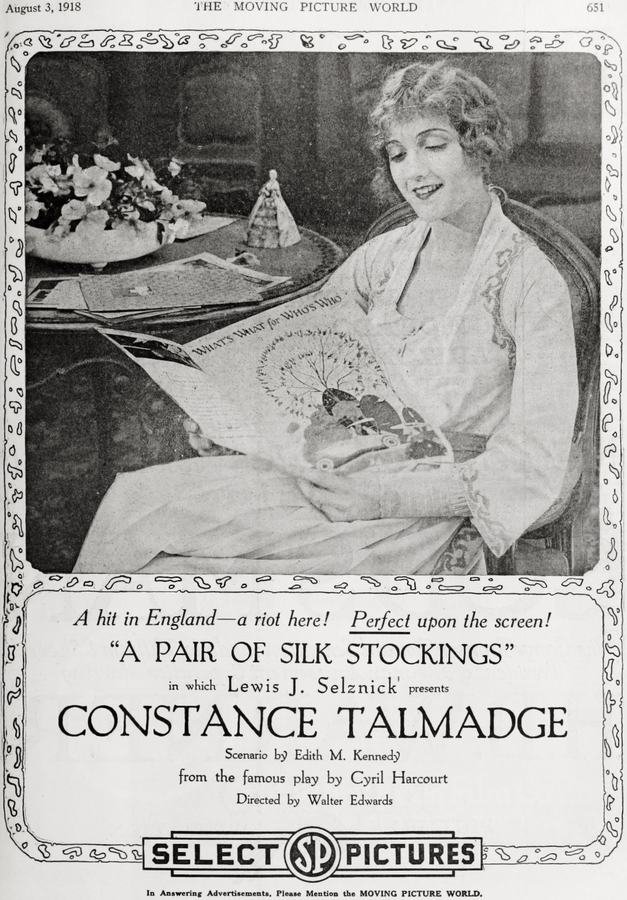
Stepping back into the hallowed halls of early cinema, one often encounters a spectrum of human emotion, from the starkest tragedy to the most effervescent joy. It is in the latter category that Walter Edwards' 1918 silent marvel, A Pair of Silk Stockings, firmly establishes its delightful presence. This isn't merely a film; it's a finely woven tapestry of domestic misunderstandings, societal anxieties, and the enduring charm of a bygone era, all delivered with an understated elegance that belies its comedic intensity. For those accustomed to the boisterous slapstick often associated with silent comedies, this film offers a more nuanced, character-driven farce, a sophisticated ballet of errors that dances on the precipice of marital discord with a wink and a knowing smile. It’s a testament to the era’s burgeoning understanding of cinematic storytelling, demonstrating that profound emotional resonance and uproarious laughter could be achieved without a single spoken word.
At the heart of this captivating narrative lies the seemingly idyllic marriage of Molly (Constance Talmadge) and Sam Thornhill (Harrison Ford). Their world, a tableau of early 20th-century comfort and social propriety, is abruptly yet comically upended by an innocent act of gift-giving. Molly, ever the thoughtful wife, procures a pair of exquisite silk stockings, not for herself, but as a thoughtful present for a dear friend. This simple transaction, however, becomes the unsuspecting catalyst for a cascade of increasingly ludicrous misinterpretations. The stockings, a symbol of luxury and perhaps, in the societal consciousness of the time, a hint of impropriety if found in the wrong hands, are inadvertently misplaced. Sam discovers them, and his imagination, fertile ground for suspicion, instantly conjures images of infidelity. It's a classic comedic setup, yet executed with a remarkable freshness that transcends its age. The beauty lies in the film's commitment to its premise: every subsequent action, every well-intentioned lie, every accidental encounter, serves to deepen the chasm of misunderstanding between husband and wife, transforming a trivial object into a formidable barrier to conjugal harmony. The escalating absurdity is masterfully handled, drawing the audience deeper into the Thornhills' predicament with each passing reel.
The brilliance of the screenplay, adapted by Edith M. Kennedy from Cyril Harcourt's successful Broadway play, resides in its intricate plotting. It’s not just a single misunderstanding, but a series of interconnected blunders that snowball into a full-blown farcical crisis. Molly, attempting to retrieve the incriminating hosiery before Sam's suspicions solidify, finds herself in increasingly compromising situations. Each attempt to clarify or conceal inadvertently provides Sam with further 'proof' of her supposed indiscretion. The audience, privy to Molly's innocent intentions, experiences a delightful tension, a simultaneous frustration and amusement at Sam's stubborn obtuseness. This narrative structure, where dramatic irony is deployed with surgical precision, keeps the viewer thoroughly engaged, eager to witness the inevitable, and presumably hilarious, unraveling of the truth. It's a testament to the writers' skill that the plot, while inherently absurd, never feels unbelievable within the heightened reality of a marital comedy. The subtle nuances of human behavior, the quick glances, the nervous fidgeting, all contribute to a rich comedic tapestry that feels both specific to its era and universally relatable in its exploration of human fallibility.
No discussion of A Pair of Silk Stockings would be complete without revering the luminous performance of Constance Talmadge. As Molly Thornhill, Talmadge is simply captivating. She embodies the character with a vivacity and expressive charm that makes her plight instantly sympathetic and her reactions genuinely humorous. Her facial expressions, a cornerstone of silent acting, convey a complex array of emotions – from innocent confusion to exasperated frustration, and ultimately, a mischievous determination to set things right. Talmadge possesses an innate comedic timing, a natural grace that elevates the material beyond mere pantomime. She doesn't just act; she lives the role, imbuing Molly with a spirited intelligence that prevents her from becoming a mere victim of circumstance. Her Molly is a woman of agency, navigating the comedic chaos with a delightful blend of wit and bewildered charm. She masterfully uses subtle gestures – a slight tilt of the head, a quick roll of the eyes, a flustered hand movement – to communicate volumes, making her character feel incredibly alive and relatable. Her performance is a masterclass in silent comedic acting, demonstrating how much can be conveyed through nuance and precise physical expression.
Harrison Ford, as the cuckolded (in his mind) husband Sam, provides an excellent foil to Talmadge's effervescence. His portrayal of a man consumed by jealousy and misdirection is both earnest and comically dense. Ford masterfully conveys Sam's internal turmoil through exaggerated gestures and a perpetually furrowed brow, making his character's unfounded suspicions both pitiable and hilariously misguided. He is the archetypal bewildered husband, convinced of his wife's infidelity despite all evidence to the contrary (evidence that, ironically, he himself misinterprets). The dynamic between Talmadge and Ford is a classic example of comedic chemistry; their contrasting energies create a delightful push and pull that drives the film's momentum. The supporting cast, including Larry Steers, Helen Haskell, Vera Doria, and Wanda Hawley, contribute effectively to the ensemble, each playing their part in the intricate dance of deception and revelation, adding layers to the comedic tapestry. Their interactions, often leading to further complications for Molly, are handled with a light touch that ensures the humor never descends into meanness.
Walter Edwards' direction is remarkably adept, especially considering the nascent state of filmmaking in 1918. He understands the rhythm of farce, allowing scenes to breathe and comedic beats to land effectively without relying on overt gags. The pacing is brisk, ensuring that the escalating misunderstandings never feel drawn out, yet he also provides crucial moments for character reactions to register fully with the audience. The blocking and camera work, while perhaps not revolutionary for the era, are competent and serve the narrative exceptionally well, guiding the viewer's eye to the crucial details that propel the plot forward. Edwards utilizes close-ups effectively to highlight Talmadge’s expressive face, allowing her to communicate directly with the audience without the need for intertitles at every turn. The film's production by Select Pictures Corporation, a prominent studio of its time, is evident in its polished presentation and well-realized sets, which, though simple, effectively convey the domestic setting and the various locations where Molly's misadventures unfold. The overall aesthetic is one of understated elegance, mirroring the film’s sophisticated comedic tone.
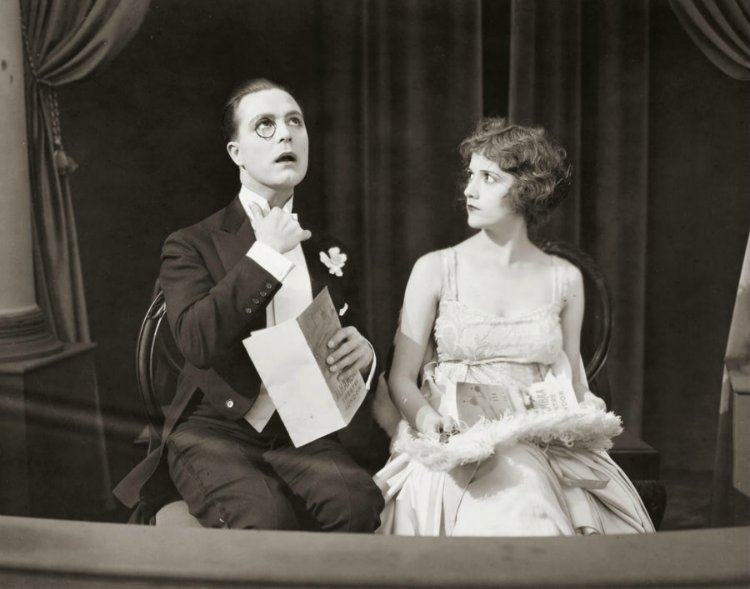
Beyond the laughter, A Pair of Silk Stockings subtly explores themes that resonate even today. It delves into the fragility of trust in a marriage, the dangers of jumping to conclusions, and the often-absurd lengths people go to maintain appearances or cover up minor, innocent transgressions. The film gently critiques the societal pressures of the era, where a woman's reputation could be so easily tarnished by circumstantial evidence, and a man's honor was tied to his wife's perceived fidelity. It's a fascinating glimpse into the moral landscape of the early 20th century, wrapped in a thoroughly entertaining package. The film suggests that open communication, rather than secretive maneuvers, is the true bedrock of a stable relationship, even if the journey to that realization is paved with comedic chaos. It also touches upon the gender dynamics of the time, with Sam’s patriarchal assumptions driving much of the conflict, and Molly’s cleverness being her primary weapon in navigating the labyrinth of his suspicions. The film, in its own charming way, champions female ingenuity and resilience.
To fully appreciate A Pair of Silk Stockings, it's essential to situate it within its historical context. 1918 was a pivotal year, with World War I drawing to a close and the world on the cusp of significant social and cultural shifts. Cinema was rapidly evolving, moving beyond mere novelty to become a powerful storytelling medium. While many films of the era, like the brooding dramas or grand epics, often sought to reflect the tumultuous times or offer profound social commentary, A Pair of Silk Stockings opted for pure escapism and lighthearted entertainment. It offered audiences a much-needed respite from the global anxieties, transporting them into a world where personal peccadillos, rather than international conflicts, formed the basis of drama.
Comparing it to other films of the period highlights its unique charm and versatility within the silent era's diverse offerings. While the gritty realism of a film exploring social issues, perhaps akin to the lost film A Square Deal, or the intense psychological depth found in a German Expressionist precursor like Das Skelett, offered profound cinematic experiences, A Pair of Silk Stockings carved its niche in the realm of sophisticated comedy. Its focus on domestic squabbles, rather than grand adventures or historical sagas, gives it a relatable intimacy. It lacks the sweeping epic scope of something like the Irish historical drama Arrah-Na-Pogue, yet it compensates with an intricate plot driven by character rather than spectacle. The film stands as a testament to the fact that not all silent films aimed for monumental narratives; many found success and artistic merit in the smaller, more intimate stories of human foibles.
The film’s exploration of marital fidelity, albeit in a comedic vein, touches upon anxieties that were also present in more dramatic works of the time. One might draw a thematic parallel, albeit with vastly different tonal outcomes, to the emotional complexities of relationships explored in films like Hearts in Exile or The Iron Strain. Where those films plumbed the depths of human suffering and sacrifice, A Pair of Silk Stockings offers a lighter, yet equally insightful, look at the intricate dance of human connection and miscommunication. It's a reminder that silent cinema was incredibly diverse, capable of delivering everything from the poetic visual narratives of La luz, tríptico de la vida moderna to the charming, intricate farces of domestic life. The sheer variety of output from studios like Select Pictures Corporation during this period underscores the experimental and rapidly evolving nature of the medium.
Constance Talmadge herself was a prolific actress, often starring in society comedies, carving a distinct persona that contrasted with the more dramatic roles of her contemporaries. Her vivaciousness in this film stands apart from the more somber portrayals seen in films like Nina, the Flower Girl, showcasing the breadth of female roles and performances in the silent era. While The Phantom Buccaneer might have thrilled audiences with swashbuckling adventure, and The Explorer transported them to exotic locales, A Pair of Silk Stockings grounded its entertainment in the relatable confines of marital life. It’s a testament to the enduring appeal of well-crafted comedy, proving that laughter is indeed timeless and that a film doesn’t need grand spectacles to leave a lasting impression. The cleverness of its plot and the charm of its cast provide a different kind of cinematic spectacle, one rooted in wit and human observation.
In conclusion, A Pair of Silk Stockings is far more than a mere relic of silent film history; it is a vibrant, engaging, and remarkably sophisticated marital comedy that continues to charm audiences over a century after its release. Its clever plot, stellar performances – particularly Constance Talmadge's magnetic portrayal of Molly – and adept direction coalesce to create a genuinely enjoyable cinematic experience. It serves as a potent reminder of the ingenuity and artistry of early filmmakers, proving that even without spoken dialogue, a story can be told with immense wit, emotional depth, and universal appeal. The film's ability to generate so much humor and subtle commentary from such a simple premise is a testament to its timeless quality.
For silent film aficionados, or indeed anyone with an appreciation for well-crafted comedy and nuanced character work, this film is an absolute must-see. It’s a delightful journey into a simpler, yet equally complex, time, where a misplaced item of clothing could unravel an entire marriage, only to be stitched back together by the threads of laughter and eventual understanding. The film’s enduring legacy lies in its ability to transcend its era, offering a timeless commentary on the foibles of human nature and the delightful chaos that can ensue when trust is tested by the most unexpected of circumstances. It’s a testament to the power of a good story, well told, that it continues to resonate, proving that some comedies, much like a fine pair of silk stockings, never go out of style. The subtle social commentary, wrapped in layers of comedic absurdity, makes it a film that rewards repeat viewings, revealing new layers of wit and observation with each watch.
IMDb —
1924
Community
Log in to comment.