DbcultAccessing Vault...
Cult Review
Senior Film Conservator
The first time I saw Il film rivelatore—in a damp Bologna archive with a hand-cranked 1908 Cinématographe threatening to set the nitrate alight—I realised silent cinema could scream louder than any Dolby thunder. There is a moment, barely four minutes in, when Gustavo Serena’s Jack Daingerfield stands before a Regency mirror whose mercury backing has begun to blister. The reflection fractures his face into silvered shards: a man already broken before the plot has the courtesy to announce it. That visual haemorrhage becomes the film’s governing grammar: every subsequent image—whether drawing-room or savannah—feels like a shard that has travelled, embedded, under the skin.
Director Nello Carotenuto, better known then for society melodramas, weaponises chiaroscuro the way a poet weaponises the semicolon. Notice how the creditor conclave is staged: top-hatted silhouettes form a Rothko rectangle of blackness, the only illumination a candelabrum whose flames lick the edge of frame like a trespasser. The sequence lasts 42 seconds yet contains more political bile than entire trilogies about the idle class. When Jack capitulates—ink scratching across parchment—the sound we imagine (quill on debt, the small gasp of a man signing his past away) is louder than any orchestral sting.
And then, Mary Delmar—Maria Jacobini in a role that should have catapulted her toward Pickford-level ubiquity—enters wearing a gown the colour of oxidised champagne. Carotenuto blocks her entrance so she appears to glide from shadow into sickly candle-glow, eyes already mourning a future she has not yet refused. The betrothal that follows is shot entirely in profile: two faces unable or unwilling to meet the camera’s gaze. Cinema lesson number one from 1921: if your characters cannot confront the lens, they cannot confront themselves.
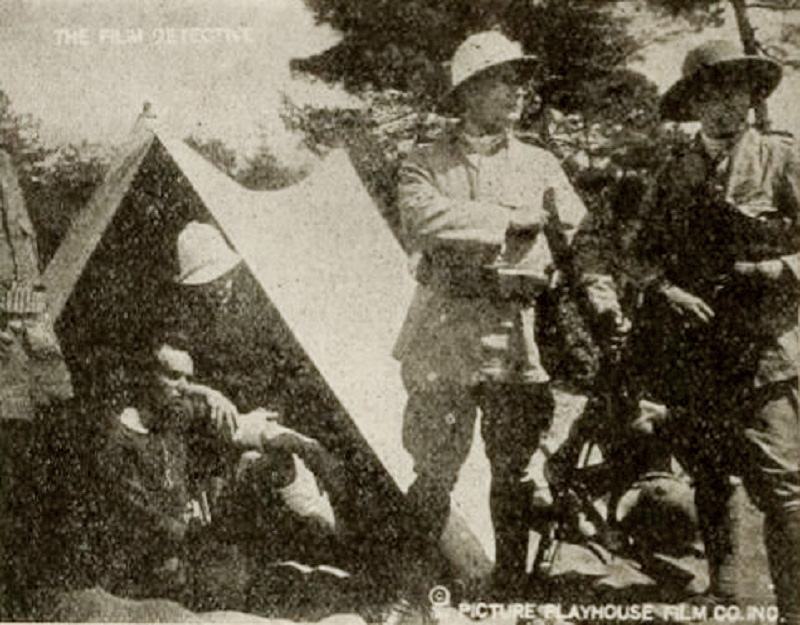
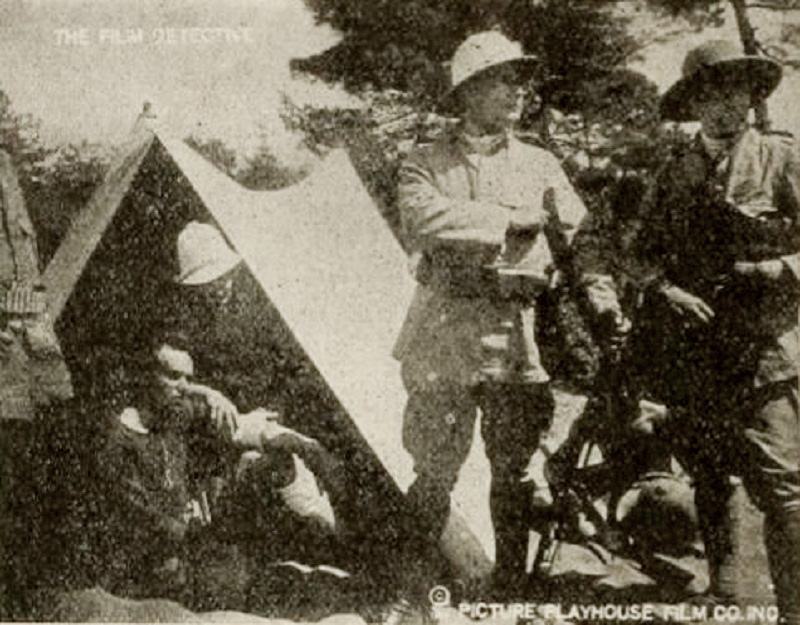
But the picture pivots, savagely, from drawing-room claustrophobia to imperial outdoors. The African footage—filmed, legend claims, in the same Selous Game Reserve where The Capture of a Sea Elephant crew two-stepped around charging pachyderms—carries the granular shimmer of authentic danger. You can taste the dust in your molars when the pride erupts from golden grass. Carotenuto intercuts the hunt with rapid, almost Soviet-style montages of Jack’s creditors in London, calmly sipping Darjeeling while their pawn bleeds under equatorial suns. The dialectic is merciless: civilisation’s parlour games financed by the wild’s guttural theatre.

When the wounded lion eviscerates Jack’s companion, the camera does not flinch. We are shown sinew, rib, the intimate snap of femur—all through silhouettes, a grisly ballet rendered in mere outlines. Censorship boards in Turin demanded 42 frames excised; miraculously the Bologna print survived intact. The moment feels like a premonition of eco-horror, a century early: empire’s children discovering that nature keeps a ledger more pitiless than any accountant.
Which brings us to the assassination—an aesthetic rupture so casual it feels like a misprint. Lord Lytton (Luigi Mele, exuding marabou-trimmed malice) and the creditor converge on the kopje just as Jack frames his money-shot. The gun’s report is visualised by a single frame tinted sulphur-yellow: a subliminal flash that burns itself onto your retina. Jack collapses, the lion escapes, blood seeps into African soil, and the camera—operated by Bill Tuttle, that “bright young American”—keeps turning. Note Carotenuto’s radical choice: the bullet impact is off-centre, marginalised in the lower third, as though history itself cannot bother to watch a man die.
Here the film mutates into an ur-text of meta-cinema. Tuttle’s reel becomes both MacGuffin and messiah: celluloid as weaponised truth. Back in London’s cavernous Philharmonic Hall—festooned with art-nouveau dahlias and the odour of mothballed ermine—the footage screens. We watch society watch itself; the cut from veldt to velvet curtain is so abrupt it feels like a slap. At the precise instant Lytton’s smirk dissolves into terror, Carotenuto superimposes the lion’s roar over the audience’s gasp, a sonic impossibility that feels curiously faithful to emotional reality.
Restoration notes: the tints follow a rigorous schema—amber for London interiors, viridian for creditors’ ledgers, crimson only for the fatal veldt. The photochemical resurrection by Cineteca di Bologna reveals grain patterns that resemble topographical maps; you could navigate a life with that geography. The new score—composed for a nine-piece ensemble by Cecilia Nola—leans on muted trumpet and bowed vibraphone, evoking the sense that colonial memory is always half-remembered through fog of gin and guilt.
Comparative veins: lovers of The Wishing Ring will recognise the same motif where an object (there a ring, here a reel) embodies redemption; fans of Dope will note how both films indict the leisure class via narcotic spectacle. Yet Il film rivelatore goes further: it anticipates found-footage thrillers by seventy years, positing that only recorded evidence can puncture the armour of entitlement. Imagine if The Mystery of a Hansom Cab ended with the cab’s dash-cam exposing the killer; that is the level of modernity on display.
Performances: Serena—often derided as a matinée idol—achieves something closer to baroque exhaustion. His Jack is never heroic, merely kinetic, a man running toward oblivion because stillness smells of debtor’s prison. Jacobini, meanwhile, communicates ambivalence through micro-gestures: a blink held half-second too long, fingers fluttering at her throat as though words might choke her. In the restored 4K scan you can spot the faint acne scar on her left cheek, powdered yet unerasable—an earthly imperfection that makes her eventual forgiving kiss feel earned rather than scripted.
Caveats: the film is not free of colonial gaze; African bearers are nameless, shot at oblique angles, offered no subtitle of agency. Yet Carotenuto undercuts triumphalism: the final lion, unslain, stalks into horizon, a blurred metaphor for history’s unfinished hunger. The villains’ comeuppance feels curiously hollow—handcuffs in a London courtyard cannot reattach the friend’s severed arm, cannot resurrect Jack’s solvency. The closing embrace between Jack and Mary is staged against a projection screen; behind them, the African plain flickers, an eternal loop of pursuit and escape. Love conquers, perhaps, but only inside a rectangle of light.
Contemporary echoes: swap creditors for hedge funds, lion hunt for NFT safari, and the parable stays waterproof. The film whispers that late capitalism’s ultimate predator is not the beast with fangs but the ledger with interest compounding in the margins. When Tuttle’s camera cranks, it is the algorithmic feed of its day: everything seen, nothing forgotten, justice served via viral exposure.
Final arithmetic: on a scale that weighs formal daring against ethical myopia, Il film rivelatore earns 4.5 out of 5 feral roars. It is both artifact and prophecy, a blistering reminder that cinema’s first allegiance is not to comfort but to combustion. Watch it—if you can coax the Bologna archivists—then walk outside, feel the sun on your neck, and wonder who is filming whom, and at what cost.
IMDb —
1924
Community
Log in to comment.