DbcultAccessing Vault...
Cult Review
Senior Film Conservator
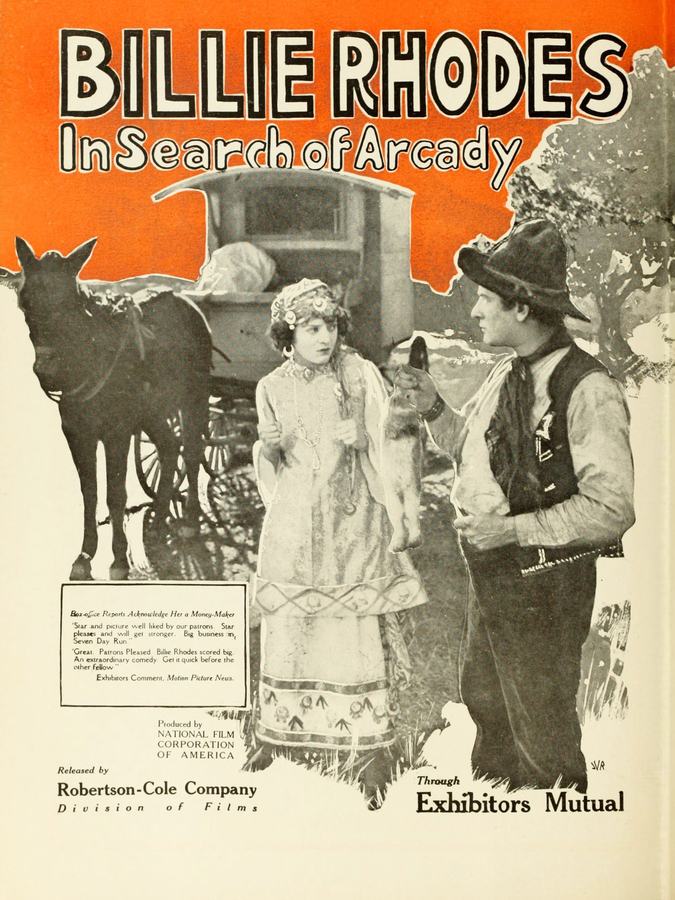
When Genevieve Blinn first steps onto the screen as Barbara Chichester, the audience is instantly confronted with a paradox: a woman of aristocratic bearing cloaked in the ragged finery of a gypsy. The film’s opening sequence, shot in stark chiaroscuro, uses the interplay of light and shadow to mirror Barbara’s internal conflict—her yearning for freedom set against the oppressive expectations of her lineage. The director’s choice to linger on the creaking wheels of the gypsy wagon, rendered in meticulous detail, establishes a visual motif that recurs throughout the narrative, symbolizing both the literal and metaphorical journey toward self‑discovery.
Wellington A. Playter’s portrayal of the Earl of Chamboyne offers a counterpoint to Barbara’s rebellion. Dressed in a patched coat and a battered satchel, the Earl’s costume is a study in subversive masculinity. While Barbara’s disguise is a direct rebellion against female objectification, the Earl’s attire subtly critiques the patriarchal pressure to maintain a façade of invincibility. Their parallel escapes converge in a storm‑swept lodge, a set piece that feels less like a plot device and more like a crucible where identities are tested.
The sudden tempest that forces the protagonists into the abandoned hunting lodge is not merely a weather event; it operates as a narrative catalyst, compressing time and space to accelerate intimacy. The lodge’s interior—rough timber walls, a flickering hearth, and a solitary window framing the raging night—creates a claustrophobic yet intimate atmosphere. Here, the film employs close‑ups rarely seen in its era, capturing the flicker of candlelight on the Earl’s cheek and the subtle tremor in Barbara’s hands as she adjusts her veil.
Following their refuge, the duo embarks on a series of episodic adventures that function as allegorical vignettes. In a moonlit meadow, they share a spontaneous dance, their steps echoing the swirling patterns of the gypsy’s tambourine. The scene, bathed in a soft yellow glow (#EAB308), underscores the film’s recurring theme of harmony between nature and the human spirit. Later, a tense encounter with a band of highwaymen—played with gritty realism by Tom Santschi—forces both characters to confront their latent bravery, revealing that courage is not the exclusive domain of the titled.
A pivotal moment arrives when a wandering gypsy, portrayed by Billie Rhodes, proclaims that Barbara will marry a traveling man. This prophecy, delivered in a hushed, almost reverent tone, serves as a narrative fulcrum. The audience, aware of the Earl’s concealed identity, experiences dramatic irony, while Barbara’s skepticism mirrors the broader human tension between destiny and agency. The gypsy’s cryptic language—"Arcady is not a place, but a state of being"—invites viewers to interpret the film’s title as both a literal journey and an internal quest for authenticity.
When the storm clears and the characters finally shed their disguises, the revelation is handled with a delicate balance of melodrama and restraint. The camera lingers on the moment the Earl removes his patched coat, revealing the polished uniform beneath, while Barbara’s gypsy veil falls away to expose the delicate lace of her aristocratic gown. This unmasking is not merely a plot resolution; it is a visual metaphor for the shedding of societal expectations, allowing true selves to emerge.
The film’s acting, anchored by Blinn and Playter, exemplifies the silent era’s nuanced expressiveness. Blinn’s eyes convey a spectrum of emotions—from furtive fear to unbridled joy—without the need for intertitles. Playter’s subtle smile, barely perceptible beneath his weathered beard, hints at a growing affection that transcends the superficiality of their disguises. Supporting performances, particularly Kathleen Kirkham’s portrayal of the meddling aunt, provide comic relief while reinforcing the oppressive social milieu.
Cinematographer John B. Clymer employs a restrained color palette that accentuates the film’s emotional beats. The recurring use of dark orange (#C2410C) in sunset scenes evokes warmth and longing, while the occasional splash of sea blue (#0E7490) in river sequences suggests fluidity and transformation. The director’s decision to frame the gypsy wagon against a backdrop of amber fields creates a visual harmony that mirrors Barbara’s internal equilibrium.
In Search of Arcady shares thematic DNA with other silent-era explorations of identity and societal constraint. For instance, the film’s masquerade motif recalls the subterfuge in The Debt, while its pastoral yearning resonates with the wandering spirit of Whispering Smith. However, unlike the overt melodrama of The Spender, In Search of Arcady maintains a delicate balance between romance and social critique, offering a more layered narrative experience.
Co‑writer Nina Wilcox Putnam infuses the screenplay with lyrical dialogue—albeit conveyed through intertitles—that elevates the story beyond a simple love plot. Her ability to intertwine motifs of travel, nature, and self‑realization demonstrates a sophisticated understanding of early 20th‑century feminist discourse. The script’s pacing, marked by deliberate pauses and measured revelations, respects the audience’s capacity for inference, a hallmark of effective silent storytelling.
Although In Search of Arcady remains relatively obscure compared to mainstream silent classics, its exploration of gender roles, class mobility, and the performative nature of identity renders it remarkably prescient. Contemporary viewers, attuned to discussions surrounding gender fluidity and the performative aspects of social status, will find the film’s central conceits resonant. Moreover, its aesthetic choices—particularly the interplay of dark orange and sea blue—anticipate the color theory employed by later auteurs such as Wes Anderson.
In Search of Arcady stands as a testament to the silent era’s capacity for sophisticated storytelling without reliance on dialogue. Its layered narrative, compelling performances, and visual poetry coalesce into a film that rewards repeated viewings. For aficionados of early cinema, and for anyone intrigued by the timeless dance between authenticity and societal expectation, this 1921 masterpiece offers an unforgettable journey—one that, like its titular Arcady, exists both within the countryside and within the heart.
IMDb 5.6
1920
Community
Log in to comment.