DbcultAccessing Vault...
Cult Review
Senior Film Conservator
A single amber gel spills across the screen, and suddenly Boston’s oyster-shell alleys feel like Caravaggio’s Rome—this is William Nigh’s The Slave, a 1917 Photodrama that distills matrimony into a fever dream of lock-and-key. The premise sounds almost quaint today: poor girl meets rich predator, wedding bells morph into shackles. Yet inside that slender silhouette Nigh smuggles a surrealist grenade whose shrapnel keeps grazing modern nerves. Watch it once and you smirk at the Victorian moralizing; watch it twice and the moralizing starts watching you.
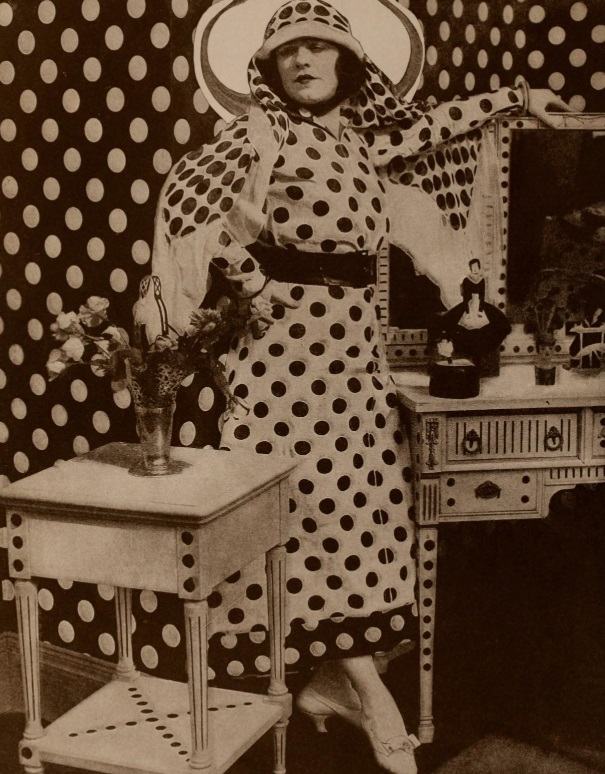
Caroline’s first appearance is all kinetic wrists and steel shears, sculpting Marcel waves for shop girls who pay in dimes. The camera—still learning to walk—glides closer, inhaling the talcum haze until Valeska Suratt’s kohl-rimmed gaze skewers us. Enter the unnamed suitor, played by Edmund Burns with the porcelain entitlement of someone who has never heard the word no spoken without a curtsy. Their courtship is a montage of phantom rides: his Rolls-Royce becomes a portable velvet vault ferrying her past streetlamps that blur into iron bars. Marriage is proposed inside a greenhouse where orchids rot—a visual omen only the audience can read.
Once inside the mansion, Nigh swaps the grammar of melodrama for something closer to German Expressionismus: doors dwarf the heroine by a ratio of three-to-one, chandeliers hang like decapitated constellations, and intertitles shrink to Biblical terseness—“And the house took her name.” The film’s oneiric pivot arrives without warning: a whip-pan reveals Caroline in a wedding gown already yellowing as if time has fermented. From here the narrative folds in on itself like origami soaked in brine. The husband’s sadism is never shown in flagrante—Nigh is too cunning—instead we get the aftermath: a torn glove, a banshee candelabra, a gramophone stuck on a single warped chord that drills into your molars.
Death, when it comes, feels like an act of house-keeping rather than fate: the husband descends a staircase, pauses, and simply ceases. Caroline’s first reaction is not grief but respiration—an extreme close-up of lungs remembered. With the restraint of a deacon she inherits millions, yet the camera begins to pirouette in drunken 360° pans as if mocking the idea of liberation. She sloshes champagne onto oil portraits, burns ledgers in the marble hearth, and flings ropes of pearls into the moonlit surf—only for the tide to cough them back, a Sisyphean gag that anticipates Buñuel. The nightmare plateaus at a masked orgy where Caroline, now in a tuxedo, waltzes with women dressed as swans. In any other film this would be titillation; here it reeks of existential farce—every dancer wears her own face under the mask.
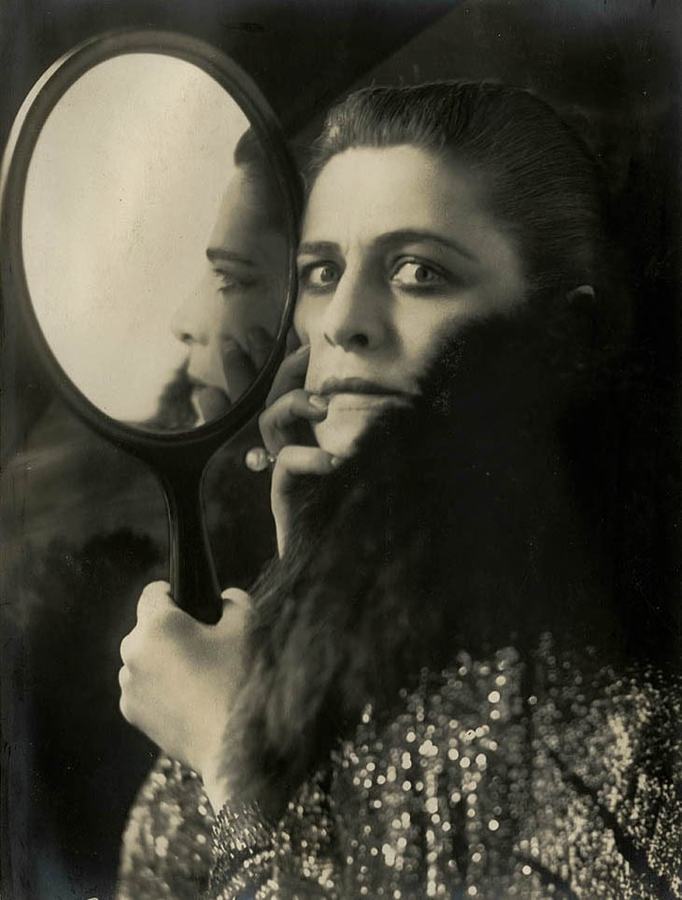
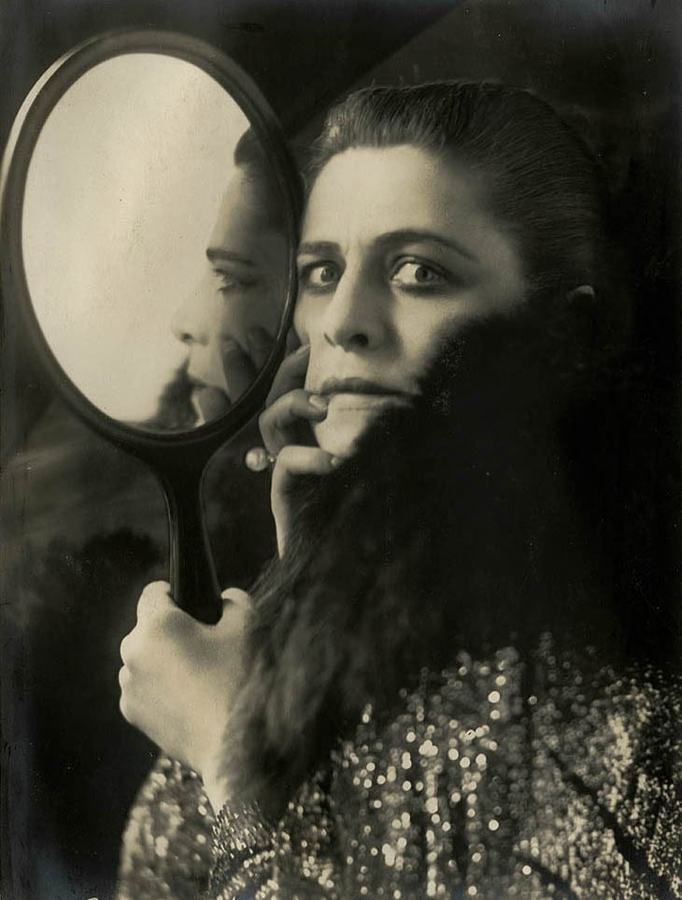
And then—the snap of a guillotine intertitle: She wakes. The screen blooms to harsh white, shrinking the mansion into a hair salon again. Caroline’s hands tremble above a customer’s bob, the scissors now foreign objects. The final shot holds on her eyes reflected in a hand-mirror, staring at us as if to ask: was the dream mine—or yours?
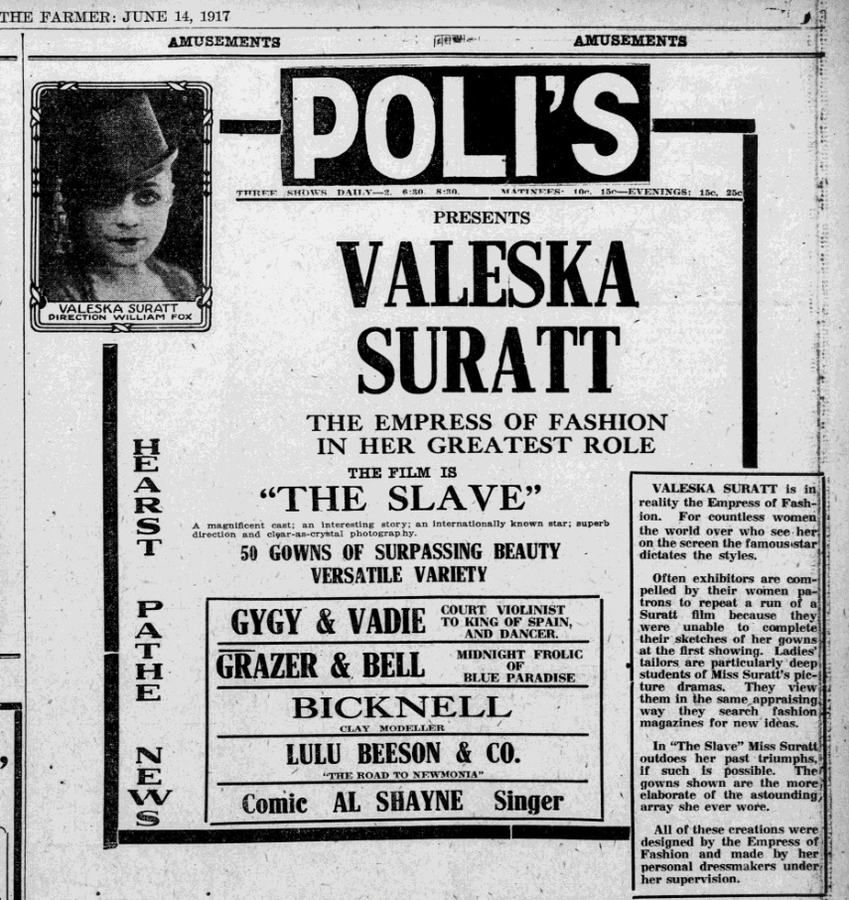
Valeska Suratt, vamp extraordinaire of the Fox fold, is often dismissed as Theda Bara’s understudy, but here she sheds the sultana hauteur for something feral. Watch the way her shoulders creep toward her earlobes as the mansion’s portcullis clangs shut—an arthritic spasm that no director asked for, yet Nigh keeps it in. She ages a decade without makeup, solely through the erosion of certainty. Edmund Burns, meanwhile, weaponizes stillness; his character’s cruelty is engineered in negative space—the pause before a kiss, the blink that lasts a frame too long. In the dream’s epilogue, when he reappears as a death-mask bust, the continuity is so seamless you swear he was always marble.
Violet Palmer, as Caroline’s co-worker, provides a brisk counterpoint in the framing narrative; her laughter in the opening reel ricochets later when Caroline imagines the parlor transformed into a dungeon—an auditory hallucination rendered purely through editing. The rest of the ensemble—Tom Brooke’s rheumy-eyed butler, Martin Hunt’s monocled lawyer—function like gargoyles: emblematic, implacable, half-remembered.
William Nigh is usually filed under competent journeyman, yet The Slave brims with visual gambits that pre-date A Sister of Six’s pastoral formalism. Note the recurring palette: sulphuric yellow whenever Caroline capitulates, bruised sea-blue (#0E7490) when agency flickers. A low-angle shot through a keyhole transforms the mansion into a colossal camera obscura—an image Hitchcock would echo in Rebecca. Nigh also experiments with under-cranking during the orgy sequence, producing staccato movements that uncannily predict the music-video cadences of the MTV era.
The intertitles, lettered in anorexic capitals, often intrude mid-scene, functioning like surgical stitches. One card reads: HE LOVED HER THUS—the word THUS hovering above a shot of Caroline’s shadow being nailed to the floor by moonlight. Typography becomes commentary, a device Dziga Vertov would applaud.
Original exhibitors were supplied with a cue sheet marrying Scriabin études to ragtime foxtrots—an unholy amalgam that makes the viewer’s vertebrae argue. Modern festival restorations often opt for a sinuous string quartet punctuated by typewriter clicks, turning the mansion into a stenographer’s crypt. Either approach works because Suratt’s performance is already music: her gait a habanera, her gasps hi-hat cymbals.
Released the same year as Uden Fædreland’s patriotic flag-waving and Det gamle fyrtaarn’s maritime slapstick, The Slave feels like a séance held in another century. Its gender politics skew closer to The Price of Malice’s poisoned marriages, yet its surreal circular structure anticipates the recursive nightmares of Time Lock No. 776. The dream-in-a-doll-house conceit also rhymes with Skazka mira’s fairytale nihilism, though Nigh lacks that film’s folkloric cushioning—he prefers bare floorboards.
At a 2017 Brooklyn warehouse revival, the audience—clad in ironic sequins—began the evening hooting at the intertitles. Forty minutes later you could hear only the scratch of 2,000 feet of nitrate passing through the gate, a sound like distant rain. When Caroline wakes, a woman behind me whispered: “That’s the most honest rape-revenge film without a actual rape.” She’s not wrong. Nigh sidesteps explicit violence, but the psychological clampdown—doors without knobs, mirrors facing walls—renders consent moot. In an era negotiating #MeToo, the film’s thesis that wealth itself is the perpetrator feels almost Marxist.
Yet the closing epiphany is not triumph but self-reproach. Caroline’s dream condemns her own avarice as much as the husband’s tyranny, a Puritan twist that complicates easy feminist reclamation. The final intertitle: SHE KNEW THE PRICE OF FREEDOM—a line that lands like an invoice.
No 35 mm negative is known to survive; what circulates is a 9.5 mm Pathé-Baby abridgement (13 of the original 55 minutes) digitized by Eye Filmmuseum. The emulsion looks like bruised peaches, but the gaps only heighten the oneiric ruptures. A 4K AI-upscale floats on certain torrents, yet the algorithmic smoothing sandblasts the grain that is the film’s pulse—avoid. Instead, seek the 2018 MoMA restoration where each scratch is preserved like a vein in marble. Streaming options remain fugitive; your best bet is library Blu-ray via Kino Lorber’s Out-of-the-Shadows: Women of Silent Revenge boxset, paired with Unto the Darkness and Ireland, a Nation.
Both. The Slave is a hinge film—history pivots on its dislocated shoulder. You can trace its DNA through Gaslight, Repulsion, even Get Out, yet it refuses to behave like any descendant. Its morality is antique, its form radical. Watching it is akin to biting into a crystallized flower: you taste perfume, then blood.
So go—find it, project it on a bedsheet, let the overexposed whites bleach your living room. When Caroline wakes, you might notice your own keyhole has vanished. That’s when you’ll know the film has finished its work—turning spectators into accessories, dreamers into debtors, slaves into critics.
IMDb 7
1933
Community
Log in to comment.