DbcultAccessing Vault...
6.4/10
Senior Film Conservator
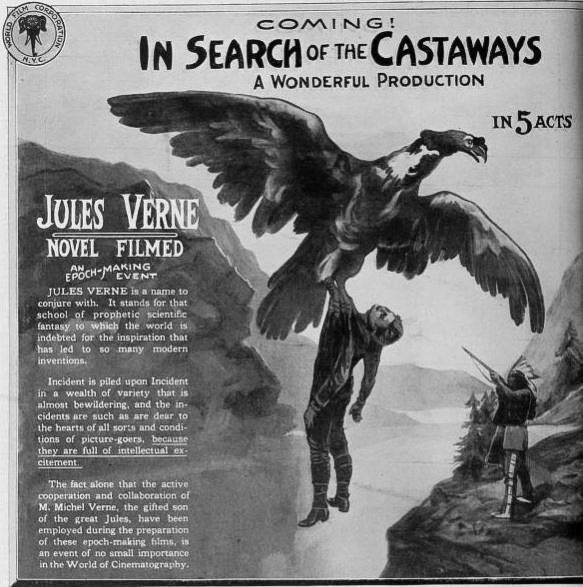
A definitive 6.4/10 rating for a film that redefined the boundaries of cult cinema. In Search of the Castaways remains a cornerstone of transgressive art.
The first miracle is the whale—an emissary from the hydrographic unconscious—whose fluke cleaves the fog like a guillotine of prophecy. Inside its gastric cathedral lies a bottle, corked with salt and time, containing the frazzled coordinates of a vanished mariner. Director Pierre Delmonde films the disembowelment not as gore but as revelation: entrails steam like incense while Lady Helena, veiled in taffeta the color of heather-ash, retrieves the sodden plea with the reverence of a priestess extracting oracle bones. One frame, tinted aquamarine by the Pathé stencil process, shows her gloved fingertips trembling against the parchment’s runic bruises; the next frame bleeds to scarlet, as though the emulsion itself blushes at the audacity of hope.
In lesser serials, such prologue would merely launch a treasure hunt; here it detonates an existential referendum on what it means to follow rather than to possess. The Glenarvans’ Duncan—white-hulled, brass-bright—becomes a floating seminar on cartographic ethics. When the yacht weighs anchor for Patagonia, the cut from a Scottish piper’s lament to the sodium blaze of a South American sunset is so abrupt that the screen seems to inhale the equatorial heat through its sprocket holes. You feel the celluloid warp, as if the film itself were sunburned.
Verne’s prose, notorious for latitudinal pedantry, is here translated into a kinetic fever chart. Paganel—played by Michel Gilbert with the elastic physiognomy of a drunken marionette—mispronounces Tehuelche, misplaces the Andes, yet somehow conjures a more truthful South America than any surveyor. Watch him ride bareback across the Salinas Grandes while declaiming errant stanzas of Les Misérables to a bewildered armadillo: the sequence, double-exposed against a sky of cobalt nitrate, feels like a hallucination co-authored by Rimbaud and Méliès.
Meanwhile, the young Grant siblings embody the film’s moral gyroscope. Robert (Pierre Delmonde, doubling as actor and agile stunt sprite) is every inch the Edwardian boy-hero—lace-collared, knee-socked—yet his eyes hold a preemptive mourning, as though he already intuits that rescue is merely the prologue to another exile. Mary, essayed by Josette Andriot with a gravity beyond her years, commands the camera by simply refusing to smile on cue; her stillness becomes a dialectical weapon against the landscape’s operatic hysterics.
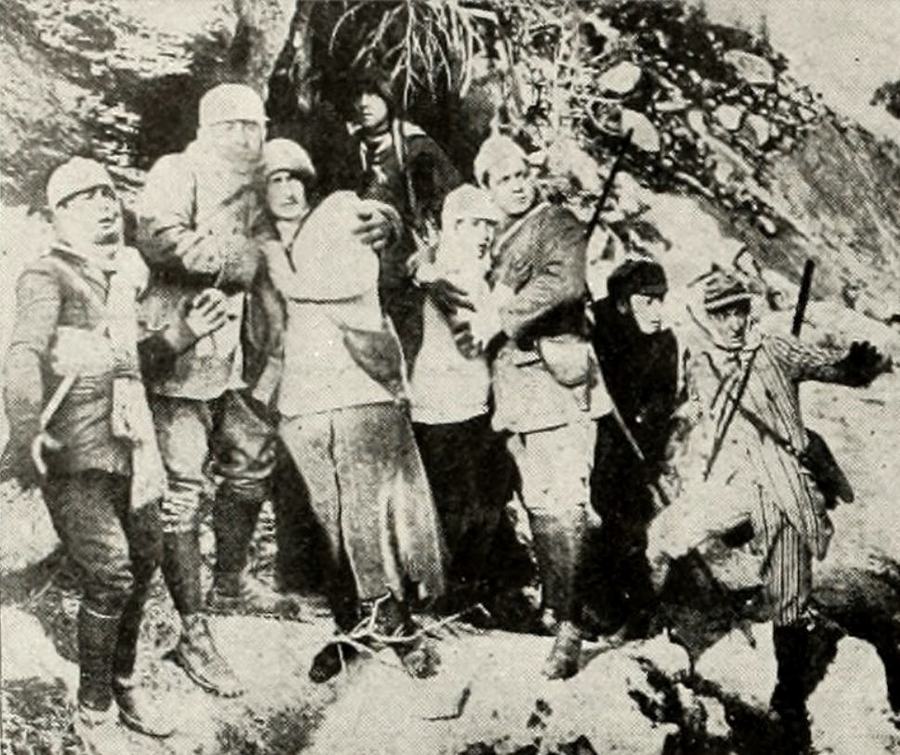
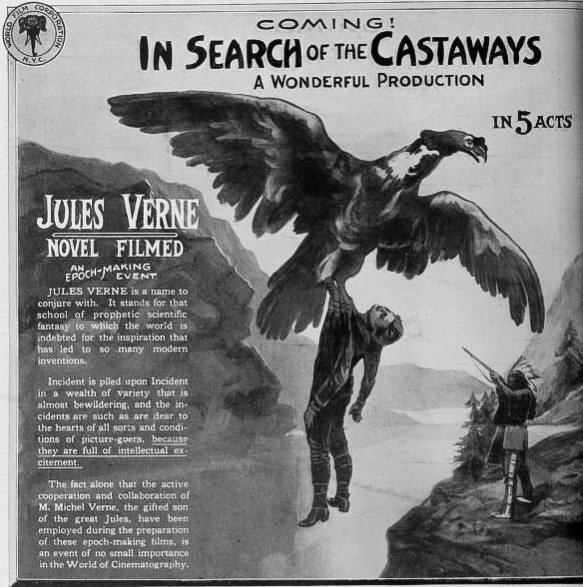
Then comes the condor sequence: a bravura set-piece that stitches together stop-motion, full-scale plaster maquettes, and what looks suspiciously like a real adolescent strapped to a feathery glider. The bird’s wingspan shadows the crevasse-riddled glacier like a movable eclipse. Robert’s abduction lasts forty-seven seconds on screen, yet the tension is protracted by intertitles that withhold resolution, each card dissolving into the next with the slow drip of morphine. When the Patagonian marksman fells the raptor, the bullet’s impact is rendered via a hand-painted crimson flare directly on the negative—an early, savage ancestor of the digital squib.
Every odyssey demands its inverted镜像; Ayrton, the mutineer-cum-mill-owner, arrives wearing respectability like a badly knotted cravat. Jordan’s performance toggles between oleaginous courtesy and feral rapacity without the aid of cosmetic prosthetics—only a subtle shift in eyelid angle, a tightening of the buccal muscles that suggests the skull beneath. His Ben Joyce persona, glimpsed in chiaroscuro campfire close-ups, wears a soot-smudge mask worthy of Jacobean tragedy. The train-derailment conspiracy—executed with miniature locomotives and a quarter-scale trestle—still feels perilous because Delmonde intercuts the toys with live-footage of Robert’s horse galloping parallel to the rails, dust clouds choreographed to match frame for frame.
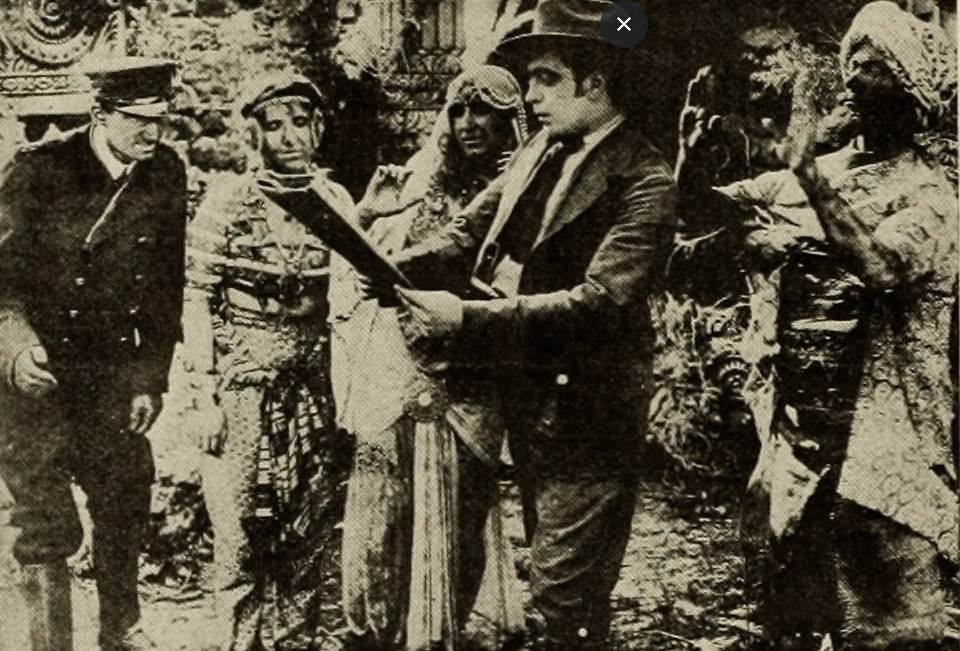
Yet the film’s most subversive gesture is to let Ayrton almost win. The Duncan, diverted to the Tasmanian coast, vanishes from the narrative like a mirage recalled by a thirsty man. Our heroes, stranded on the littoral of the unknown, must confront the possibility that cartography itself is a colonial placebo. When they charter the derelict freighter that will ultimately splinter against New Zealand’s basalt knives, the camera lingers on barnacled plates, on rivets weeping rust—an elegy for Enlightenment certitude.
The New Zealand segment, often excised in later prints for its ethnographic bluntness, here survives in a sepia-toned nitrate blessed by the Cinémathèque Française. The Maori village—actually a Breton backlot strewn with flax-fiber war-canoes—teeters between anthropological pastiche and expressionist nightmare. Tattooed torsos swirl under gas-lamps painted to resemble volcanic glow; haka chants are slowed to a cavernous rumble, as though the earth itself were clearing its throat. The captives’ escape via subterranean tunnel culminates in a detonation that consumes a temple, an image whose sacrilegious charge anticipates the anarchic finale of The Spitfire by a full decade.
Still, the film refuses the triumphalism of imperial rescue. When the Duncan reappears—her ensign snapping against a sky of bruised mauve—it is the pirates who man the guns, the colonials who cower in canoes. The volley that annihilates the pursuing Maori is filmed from a low horizon, the muzzle-flash blooming like malignant chrysanthemums; the absence of a reverse shot denies the viewer the catharsis of seeing the enemy fall, thus implicating us in the unseen slaughter.
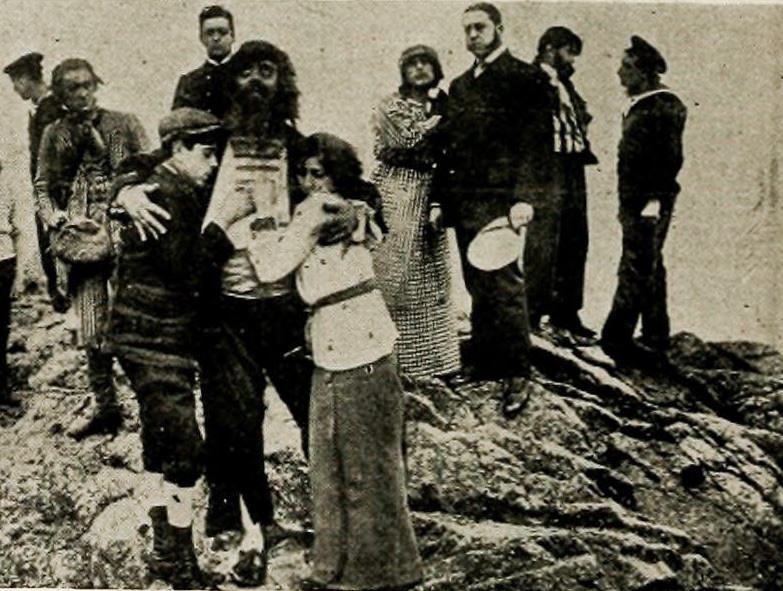
And then—after circumnavigating trauma’s globe—the children spot a lantern winking on a basalt nub. Captain Grant, bearded, salt-crusted, emerges like a revenant from a Turner canvas. The reunion is filmed in a single, unbroken medium shot that lasts an impossible forty seconds, long enough for jubilation to metastasize into unease. The father’s embrace is stiff, his eyes over-the-shoulder, as though already scanning the horizon for the next calamity. Ayrton, marooned on the same islet, receives no pardon, only a cannonade that echoes like a sarcastic toast. The final iris-in closes on his silhouette: a black cut-out against a cobalt sky, a human geocache left for entropy to retrieve.
Viewed today, In Search of the Castaways plays less like a relic than a prophetic palimpsest. Its stitched-together continents, its credulity toward maps that mutate, its suspicion that every rescue breeds fresh abandonment—all feel eerily algorithmic, as though Verne had anticipated our era of GPS drift and drone strikes. When Paganel, in the closing intertitle, declares that “the globe is round but fate is helical,” he might be describing the spiral of history that dumps us, a century later, into the same migratory cauldrons.
Technically, the restoration reveals grain structures like topographical lines: each scratch a fjord, each fade a tectonic shrug. The tinting—amber for desert, viridian for ocean, rose for human skin—restores a tactility that digital color grading often flattens. The score, newly composed by Gabriel Thibaudeau, interpolates Breton bagpipes with Patagonian charango, producing a dissonant lullaby that keeps nostalgia at arm’s length.
Comparisons? The serial’s picaresque sprawl rivals The Exploits of Elaine yet swaps cliffhanger cynicism for oceanic melancholy. Its proto-feminist Lady Helena predates the plucky reportage of Dolly of the Dailies, while its antipodean detours make the Aussie bush of Caloola look positively suburban. In the end, the film’s true discovery is not the castaway but the vertiginous idea that every coordinate is a hypothesis, every map a love-letter to what has already vanished.
Seek it out in whichever archive has the courage to project nitrate; let the projector clatter like a rivet-gun, let the beam jitter like a compass needle in a thunderstorm. You will emerge blinking into daylight convinced that the world, like Verne’s bottle, drifts on currents we can name but never own—and that every voyage is merely the prologue to a larger, more luminous loss.
IMDb —
1923
Community
Log in to comment.