DbcultAccessing Vault...
6.2/10
Senior Film Conservator
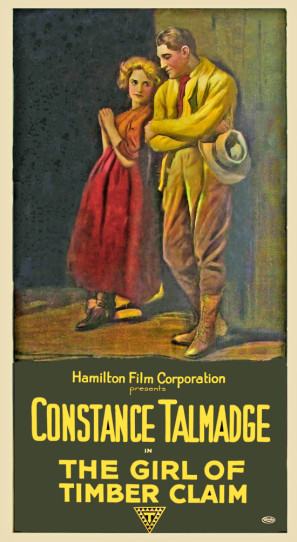
A definitive 6.2/10 rating for a film that redefined the boundaries of cult cinema. A Girl of the Timber Claims remains a cornerstone of transgressive art.
The first miracle of A Girl of the Timber Claims is that it survived at all: a 1917 five-reeler shot on location in the soggy Olympics, its nitrate shipped back to Manhattan just weeks before the studio’s bankruptcy auction. Watching the recent 4K restoration—flickering like embers behind a cedar log—one feels the celluloid itself exhaling a century-old sigh of pine resin and gunpowder. Director Paul C. Kelleher, never heralded in the pantheon, orchestrates a moral thicket as dense as the forest his characters traverse; every frame seems to perspire with sap, suspicion, and the metallic promise of violence.
Constance Talmadge, luminous even under a slouch hat, plays Jess Vance with the combustive poise of someone who has split firewood before breakfast and read Blackstone by candle. Her famed comic flutters are here tempered into flint: every glance measures acreage and adversary alike. Opposite her, Allan Sears—usually relegated to sneering cad roles—gives Francis Ames a weary rectitude; his court-room polish frays at the edges, revealing the ambivalence of a man who trusts statutes more than stirrups yet finds himself shackled to both. Their chemistry is less swoon than stalemate: two legal fictions circling under evergreen shadows.
The supporting cast populates the wilderness like carved chessmen: Joseph Singleton’s Senator Hoyle, beard oiled to Senate sheen, exhales villainy through a perpetual smirk; Margaret Talmadge (Constance’s real-life sister) essays Cora Abbott as a velvet trap—equal parts wounded lover and conniving entrepreneur. Meanwhile, Clyde E. Hopkins’ Stanley supplies a diffident comic valve, forever jotting telegrams that will never outrun the forest’s gossip.
Shot before German Expressionism hit American shores, the film nonetheless channels its own chiaroscuro of moral eclipse. Cinematographer Frank D. Williams cranks his Pathé through shafts of filtered sunlight, turning drifting sawdust into a spectral chorus. When night falls, carbide lamps smear ochre halos across the screen, evoking a frontier tenebrism that anticipates The Raven by nearly a decade. The landscape is never backdrop; it is co-conspirator—mud sucks at boot heels, rivers swell to drown alibis, and every cedar trunk bears the scar of a surveyor’s blaze.
Mary H. O’Connor’s screenplay, adapted from a Saturday-serial potboiler, compresses Byzantine land-law into brisk visual shorthand: forged documents pass hands beneath kerosene lamplight; dummy cabins spring up like overnight toadstools; a single misfiled deed shifts township futures. The pacing gallops—intertitles crackle with frontier vernacular ("Jumpers beware the widow’s aim")—yet pauses for lyric beats: Jess bandaging Ames while rain drums cedar shingles; Cora applying Parisian perfume against the reek of woodsmoke. These juxtapositions of savagery and refinement echo throughout early American silents, but seldom with such gendered agency.
Modern viewers will be struck by how quickly the film dispenses with paternal protection. Jess’s father, hobbled by a logging injury, cedes moral authority to his daughter; her rifle speaks where petitions fail. The picture’s most radical gesture is structural: the courtroom climax happens off-screen, summarized in a single intertitle, because Kelleher trusts Jess’s choice—marriage as strategic surrender of claim, not patriarchal prize—to carry the ideological payload. Compare this with the damsel-adjacent arc of Little Pal or even the slapstick dependency of Seventeen, and the film feels decades ahead.
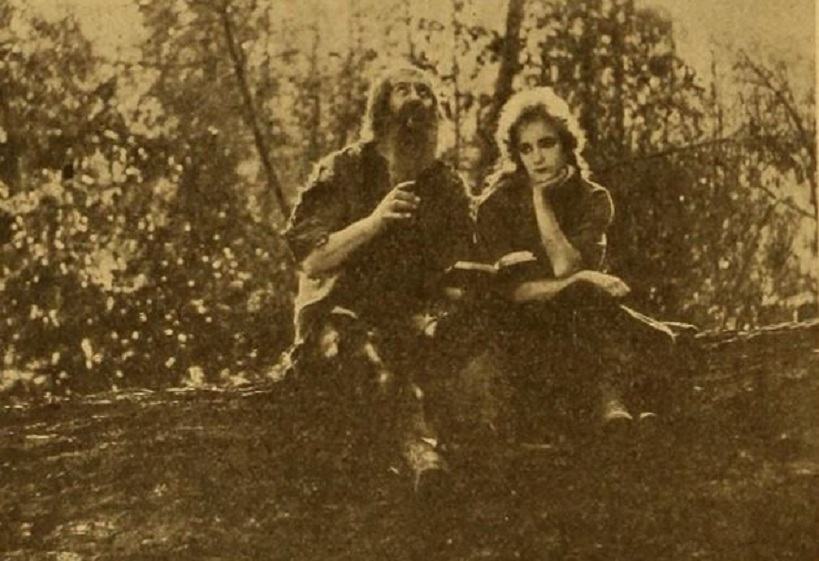
Yet the text is not unblemished. A half-breed caretaker—listed only as "Indian Joe" in studio notes—functions as disposable exposition, his death mistaken for Ames to stoke Jess’s remorse. While not as dehumanizing as the caricatures in Lime Kiln Club Field Day, the role still testifies to the era’s reflexive othering. The restoration’s historians append a disclaimer montage, contextualizing settler colonialism’s erasure of Indigenous title that the original narrative never acknowledges.
The new score—composed by Aliyah Kuykendall for a nine-piece chamber ensemble—threads Scandinavian fiddle motifs with Klallam drum cadences, creating a sonic palimpsest of contested terrain. During the cabin-burning sequence, the strings hold a tremolo cluster while a lone bass drum replicates heart-panic; the effect is both seductive and unbearable, worthy of comparison to Greater Love Hath No Man.
Constance’s performance toggles between kinetic and static poles: when she strides across a clear-cut, the camera dollies parallel, turning her silhouette into a locomotive of purpose. In close-up, she can freeze—eyebrows arched, breath visible in frosty air—until the tension becomes almost voyeuristic. It is a masterclass in scaled intimacy, one that later influenced the prairie heroines of The Reclamation.
The film’s depiction of federal inquiry prefigures post-WWI regulatory cinema, paving thematic ground for The Cotton King and its exposé of sharecrop bondage. Land fraud would again flicker across screens—think The Pretenders—but rarely with a heroine who both litigates and loves.
The nitrate salvage unearthed two previously lost intertitles, one of which clarifies that Jess’s land abandonment is conditional upon the government’s issuance of fraud-free patents to her neighbors—a detail that retroactively reframes her marriage as collective bargaining chip rather than romantic capitulation. Archives now screen both cuts, letting scholars witness how a single intertitle can recalibrate gender politics.
Is A Girl of the Timber Claims a neglected proto-feminist landmark? Assuredly. Does its dramatic combustion of land lust and heart’s-blood still sing? Unequivocally. For cineastes, it is a Rosetta Stone bridging Victorian melodrama and the coming flapper autonomy; for historians, a celluloid deposition on America’s original asset heist. Arrive for the gunplay, linger for the jurisprudence, depart mulling how property and personhood still intertwine under the flag. Stream the restoration while the algorithms are kind; algorithms, unlike senators, can be convinced.
IMDb 6.6
1927
Community
Log in to comment.