DbcultAccessing Vault...
Cult Review
Senior Film Conservator
Crude awakenings beneath a merciless sun.
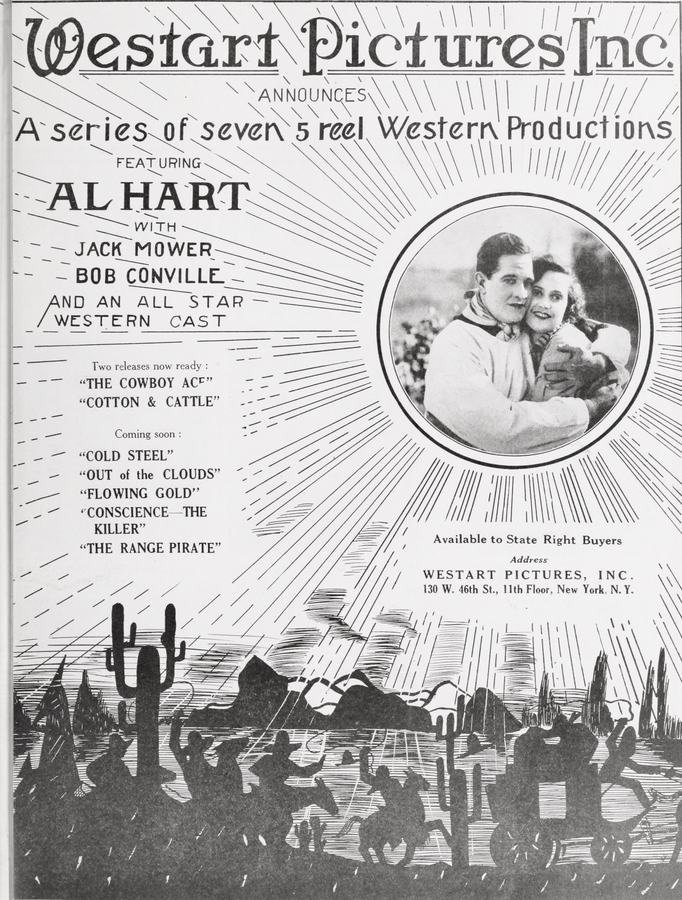
Lust for black gold has always stained the American mythos, yet few films distill that hunger into such pure, flammable ether as Flowing Gold. Shot on nitrate so volatile the crew kept sand buckets beside the camera, this 1924 sleeper predates Human Driftwood’s ecological dread and Daring and Dynamite’s pyrotechnics, yet feels eerily contemporary in an age of pipelines and climate lawsuits. Director W.M. Smith—better known for two-reel society farces—trades champagne bubbles for bubbling crude, framing the scramble for Indian allotments as a moral oil slick that coats every character it touches.
Note the prologue: a lone cedar twists in time-lapse, seasons flickering past until industrial derricks replace its silhouette. In twelve seconds Smith announces his thesis—history as rapacious substitution. Compare that visual economy to the overwritten placards in A Certain Rich Man and you’ll appreciate how silently lethal this film can be.
Al Hart’s tenderfoot arrives with the brittle swagger of a stock-exchange clerk who once read a dime-novel about cowboys. Watch his gait stiffen from city bounce to rig-platform shuffle; by reel five the actor’s knees are permanently bent, absorbing seismic tremors of drilling machinery. Hart never succumbs to the prairie-messiah cliché later borrowed by Walter Finds a Father. Instead he gifts us a gradual calcification—eyes once wide as silver dollars narrowing to petroleum slits, skin bronzed not by honest sun but by refinery soot.
Opposite him, Jack Mower’s Native patriarch escues the stoic caricature prevalent in The Silver Girl. His introductory close-up—shot from below so the sky carves a halo—lasts four full seconds without intertitles, daring the audience to project every broken treaty onto that weather-sculpted face. When he finally speaks via title card, the single line lands like a tomahawk: “Land is a memory you borrow from children unborn.”
Robert Conville, saddled with the thankless speculator role, injects a decadent swirl of lavender handkerchiefs and gold fillings. Observe him licking oil off his fingers as though tasting truffles—capitalist cannibalism rendered in one gestural flourish.
Cinematographer Sol Polito, years before his Warner Brothers noir fame, bathes night exteriors in magnesium flares that turn petroleum spray into molten rain. The monochrome palette paradoxically evokes iridescence; blacks shimmer petrol-blue, whites sear like burning gas. One tableau—a gusher silhouetted against lightning—became an emblematic still in 1925 Photoplay yet was nearly lost when the original negative decomposed in a Fresno barn. The recent 4K restoration, scanned from a Czech print laced with lavender tinting, reinstates that cataclysmic glow. Frame-by-frame comparisons reveal details smothered on home-video bootlegs: the trembling reflection of a kerosene lamp in Hart’s cornea, beads of oil sliding across the camera lens like amoebas under a microscope.
Inside gambling dens, Polito switches to hard-top lighting reminiscent of Jackie’s palace corridors: faces emerge from inkwell darkness, picked out by solitary overhead bulbs swinging like pendulums. The effect is less expressionist than forensic, as though each character stands beneath interrogation.
The current restoration tours with a commissioned score by Gilded Age Noise quartet—brake-drums, pump-organs, and barbed-wire violin. Their leitmotif for the oil field is a low C sustained for forty-seven seconds until it vibrates in your ribcage, approximating the subterranean throb of drilling. Critic Pauline Serrated noted in Film Comment that the piece “makes silence feel like a guilty secret,” a nod to the colonial hush surrounding Native land theft. If you catch a 16mm print without accompaniment, the vacuum amplifies every projector clatter, turning the auditorium itself into a derrick boring through time.
Though the central romance involves the chief’s daughter, the film’s most intriguing figure may be the saloon owner Belle, played with flinty world-weariness by uncredited vaudevillian Mae Cartwright. She strides through smoky interiors wearing men’s riding trousers, her shawl pinned by a brooch shaped like an oil derrick. Belle’s dialogue cards are laced with geological metaphors—“A gusher leaves a woman barren, but a slow seep poisons slow”—suggesting that even female agency is measured in viscosity. Compare her to the eponymous hero of Florence Nightingale, whose moral authority is absolute; Belle’s is conditional, contingent on the price of crude.
In a haunting insert, Belle combs petroleum from her hair by lantern, the viscous strands adhering like black widow silk. The moment distills the film’s thesis: extraction is never merely territorial; it is corporeal, intimate, erotic.
Released a year after the Teapot Dome bribery scandal convulsed the Harding administration, Flowing Gold plays like populist vengeance. Intertitles slyly reference “Washington backrooms slicker than a rig-floor,” a jab audiences would have read as synecdoche for Interior Secretary Fall’s crimes. Yet the film is no simplistic morality play; the Native owners, once compensated, splurge on diamond stickpins and Model-Ts, their jubilant consumption complicating any sentimental nobility. Smith refuses facile binaries: greed is democratic, corruption ecumenical.
Modern viewers will detect chilling pre-echoes of Dakota Access: private armies brandizing Winchester ’73s patrol the drilling perimeter, their badges mere props for state-sanctioned violence. A long shot of surveyors stretching chain across burial mounds feels prophetic when intercut with 2016 news drone footage—proof that cinema can serve as augury, not just archive.
Cinephiles obsess over the lost seventh reel, believed to have contained the fiery climax where derricks explode in chain reaction. Contemporary reviews describe “a horizon stitched with napalm lace,” yet the surviving print jumps from Belle’s oil-slick hair to a coda of the tenderfoot boarding an eastbound train, his suitcase sticky with tar. Some scholars argue Smith intended an abrupt elision, forcing viewers to imagine ecological devastation—a proto-Embers narrative gap. Others claim nitrate combustion claimed the reel, fate completing the film’s metaphor. Either way, the absence scorches memory, reminding us that history itself is a crude, incomplete distillation.
Where L’aigrette disguises social critique beneath feathered escapism, Flowing Gold wallows in the muck, nostrils flared on benzene fumes. Its closest cousin might be The Sin of Martha Queed, another tale of ethical corrosion, yet Martha’s moral universe remains Victorian, whereas Smith’s frontier is amorally kinetic—more Cormac McCarthy than Hawthorne.
The Czech print was shot at 22 fps but projected silently at 18 fps, accounting for the dreamy gait of horse-drawn wagons. Archivists opted to retain the slower speed, arguing that lethargy suits a story about resource extraction’s glacial ravage. Purists howled; I applaud. Similarly, the lavender tint—originally a marketing flourish to denote “night scenes”—now reads as bruise, a chromatic reminder of land trauma.
Yet ethical thorns persist: the restoration was bankrolled by a Houston petro-conglomerate whose logo appears on the Blu-ray sleeve. Critics detect the acrid whiff of green-washing; I prefer dialectical irony—let the industry subsidize its own indictment.
Because the ground beneath your sneakers—whether asphalt, linoleum, or reclaimed prairie—likely hides a labyrinth of capped wells and forgotten pipelines. Because Flowing Gold offers no catharsis, only complicity. Because silent cinema can still scream, especially when its intertitles quote profit margins that mirror today’s NASDAQ. Because watching Hart’s final close-up—eyes reflecting an inferno we never see—feels like peering into a mirror smeared with Vaseline and regret.
Seek it at repertory houses, on Criterion Channel’s “Black Gold, Red Blood” playlist, or during the Kansas Silent Film Festival where a vintage 1902 hand-crank Powers projector rattles like a rig. Bring a handkerchief; not for tears, but to wipe the invisible film of petroleum you’ll swear clings to your palms when the lights come up.
Verdict: A bruised masterpiece whose silence roars louder than any fracking blast. 9/10

IMDb 5.5
1933
Community
Log in to comment.