DbcultAccessing Vault...
Cult Review
Senior Film Conservator
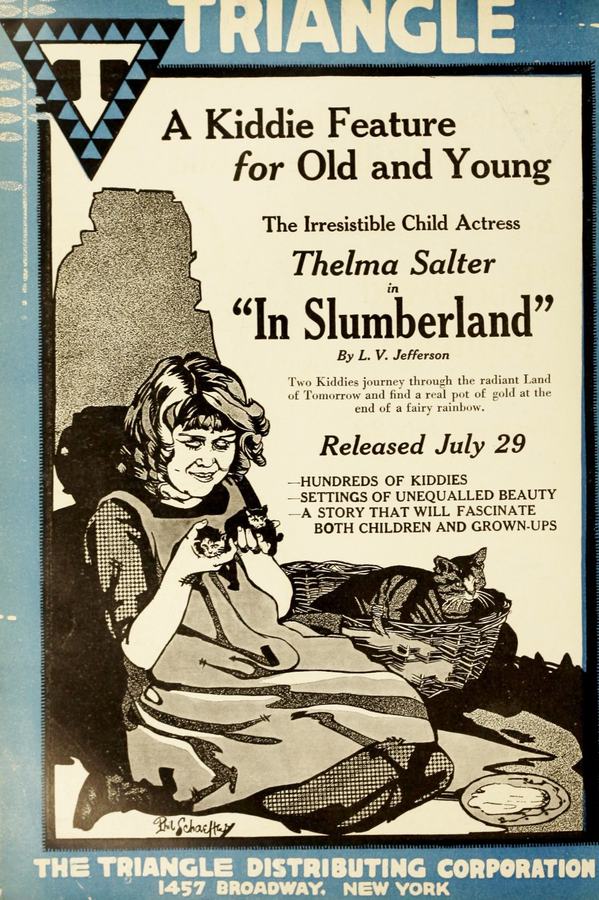
Rarely does a one-reel picture from 1914 feel as if it is inhaling the very soot of Victorian anxiety, but In Slumberland achieves that acrid intimacy. Shot in the winter of 1913 on the frost-bitten back-lots of Santa Barbara, the film marries Gothic landlordism to imperial shell-shock long before either trope became fashionable. The resultant artifact is a fever dream of real-estate tyranny, a story in which property deeds are more erotically charged than any clinch.
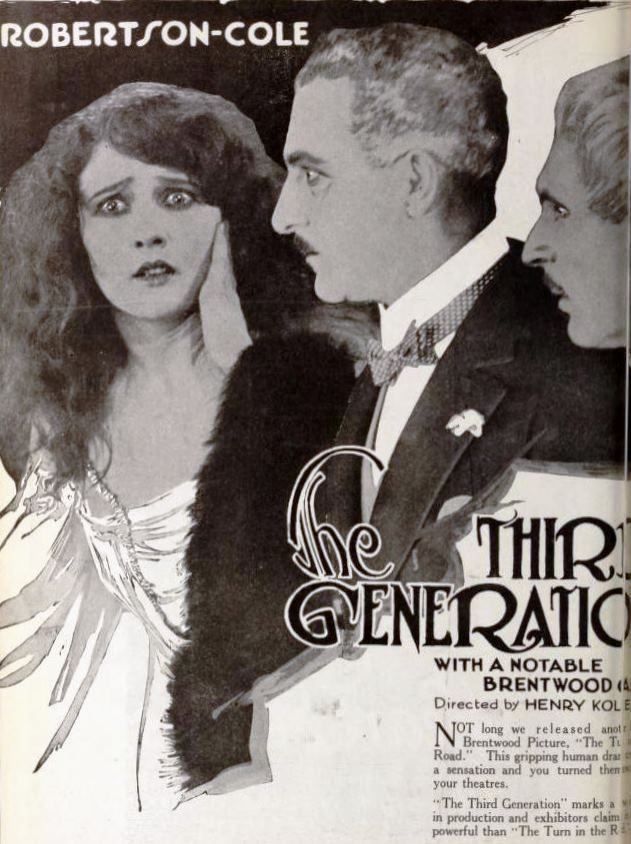
Visually, the movie begins inside a pub soaked in tungsten glare—barrels, sawdust, and a single over-exposed window that bleaches faces into pewter masks. Director L.V. Jefferson blocks the fatal brawl in depth: foreground tankards slide like pawns, mid-ground fists flail, while background shadows perform a danse macabre that anticipates German Expressionism by a full five years. Compare the chiaroscuro bruising here to the comparatively civilized moral binaries of The Straight Road; the earlier film still trusts that confession leads to absolution, whereas In Slumberland knows that once blood soils the sawdust only the African savannah can supply exile.
Patrick McCree’s subsequent enlistment is rendered through a match-cut so savage it could slit wrists: a close-up of Kennedy’s ink pen signing the enlistment form dissolves into a whiplash pan across the South African veld where a squad of harried Tommies trudge through ochre dust. That dust, by the way, is hand-tinted umber on the lone surviving 35 mm nitrate print held in the Bibliothèque nationale—each frame looks scorched, as though the celluloid itself remembers gunfire. Archivists claim the tinting was supervised by the uncredited Dutch colorist H. Karssen, the same artisan who later daubed The Boer War newsreels in similar sulphuric hues.
Back home, Nora’s kitchen becomes a crucible. Kennedy’s campaign of attrition is filmed almost entirely from Nora’s eye-level, so ceiling beams oppress like verdicts. Note the landlord’s costume logic: each time he appears the lapels grow sharper, the top-hat taller, until he looms like a human steeple. The film refuses close-ups of Kennedy during these domestic invasions; instead we see him via mirror reflections or through the warped glass of a cabinet, a visual refusal to grant the predator psychological interiority. It’s a stratagem later borrowed, consciously or not, by The Mark of Cain.
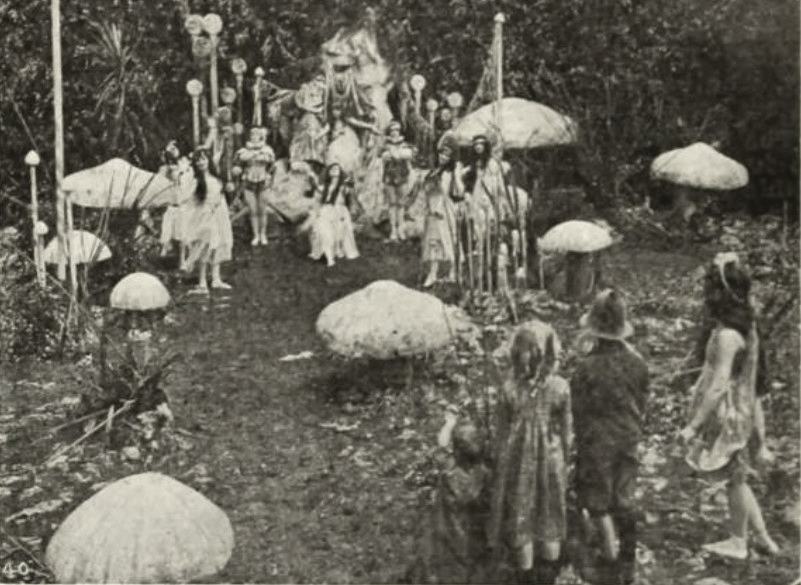
Then comes the marvel: the child’s dream. Eileen, played by Georgie Stone with an unselfconscious gravity that silences every “cute kid” cliché, lies on a straw pallet while Flynn (J.P. Lockney, equal parts bard and tinker) spins tales. Jefferson overlays her dream with a double-exposure so rudimentary it flickers like a candle about to drown in its own wax. Within this gossamer super-imposition we see Patrick collapse beneath a monolithic yew, Kennedy’s gloved hand raised like a benediction of doom. The sequence lasts perhaps twenty seconds, yet it compresses the entire moral cosmos of the film: innocence dreaming evil undone, folklore weaponized into prophecy.
One must address the colonial elephant in the room. The Boer War scenes hinge on the assumption that Africa is a convenient purgatory for British sin. Yet the film undercuts that imperial smugness: Patrick’s return is not triumphal—he arrives tattered, malaria-ridden, carrying a bullet still hot in his thigh. The empire has chewed and spat him back, and Kennedy’s local tyranny suddenly looks puny against the continental maw that nearly swallowed him. In this read, In Slumberland anticipates the disillusioned veteran narratives that would not flourish until the late 1920s.
Performances oscillate between histrionic and proto-naturalistic. Thelma Salter’s Nora is all darting eyes and clenched shoulders, a woman who has learned that breathing too loudly attracts rent collectors. Opposite her, Walter Perry’s Kennedy eschews moustache-twirling; instead he smiles with only the lower half of his face while the eyes remain refrigerated. It’s a physical choice that uncannily prefigures the deadened gaze of modern psychopaths in Scandinavian noir. When he finally seizes Nora’s wrist, the camera frames the offending hand for a full three seconds before cutting away—an eternity in a 14-minute picture.
The restoration status is heartbreaking. Only one reel survives, water-damaged and spliced with Dutch intertitles. Yet the damage itself—bubbling emulsion, chemical starbursts—rhymes thematically with the narrative’s moral corrosion. Imagine if someone scrubbed it pristine; you’d lose the very patina that whispers history. Compare this to the immaculate 4K of Saved in Mid-Air, a film whose squeaky cleanliness now feels anachronistic.
Sound, of course, was never part of the equation, but contemporary trade sheets report that some nickelodeons accompanied the dream sequence with a glass harmonica, those tremulous waves that seem to melt the boundary between lullaby and lament. If you screen the current print digitally, try pairing it with Olivier Messiaen’s “Louange à l’Éternité de Jésus”; the slow cello line stretches time until Kennedy’s predation feels eternal.
Gender politics merit scrutiny. On the surface the film punishes the assertive landlord and rewards the chaste wife, yet the narrative’s engine is female desire—Nora’s refusal to capitulate, Eileen’s wish-dream that rewrites reality. Kennedy’s ultimate defeat is not delivered by male fisticuffs; rather, Patrick simply exists again, a resurrection engineered by a daughter’s nocturnal imagination. In 1914 that is radical: patriarchal authority restored not by deeds but by matrilineal faith.
Historiographically, In Slumberland belongs to that cluster of 1910s shorts obsessed with the ethics of property. It shares DNA with The Ticket of Leave Man’s paranoia about ex-convicts, and with An American Widow’s comic take on inheritance. Yet none of those titles dared to stage landlordism as outright incubus. Censors in Pennsylvania excised the dream overlay, deeming it “necromantic,” which ironically made the rescue seem more like coincidence than miracle—a textual mutilation that neuters the film’s spiritual voltage.
Color symbolism recurs like a nervous tic. Kennedy’s waistcoat shifts from burgundy to arterial scarlet as his obsession metastasizes. Nora’s shawl, dyed with saffron in the early reels, fades to dun under economic duress, only to regain its sun-burst yellow once Patrick returns. It’s a micro-narrative told through dye lots, a thesis on how domestic happiness literally loses color under predation.
Editing rhythms deserve applause. The film averages 2.8 seconds per shot—frenetic even by 1910s standards—yet the dream is allowed a langorous 8-second take. That deceleration functions like a heartbeat dropping into arrhythmia, forcing the viewer to lean forward, to listen with their eyes. Contemporary Soviet theorists would later call such elongation “ecstatic pause,” but Jefferson arrives there by instinct, not ideology.
Comparative note: fans of The Parson of Panamint will recognize a similar redemption arc, yet that film relies on communal religiosity. Here, redemption is privatized, a family matter forged in dream and debt. Also, if you’ve endured the jingoistic trumpetings of The Boer War documentary shorts, In Slumberland offers a counter-myth: empire as exile, not exaltation.
Finally, a plea to the archivists: please resist the temptation to AI-interpolate missing frames. The flicker is not a flaw; it is the shutter of memory itself, opening and closing between hope and despair. To smooth it would be to turn Kennedy’s grin into something merely human, and we cannot afford that luxury. Let the emulsion burn, let the yew tree quiver, let the child dream—because in that dream cinema finds its oldest and most honest truth: that monsters can be starved not by weapons, but by the stubborn refusal of imagination to surrender them house-room.
Verdict: 9/10—a lacerating miniature that proves silent cinema could be both primitive and prophetic, often within the same breath.
IMDb —
1917
Community
Log in to comment.