DbcultAccessing Vault...
Cult Review
Senior Film Conservator
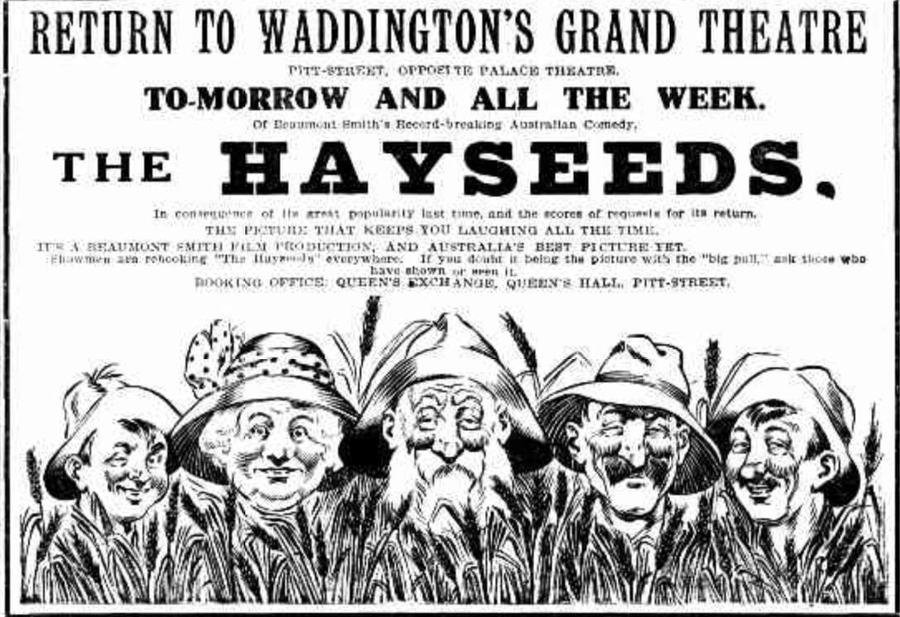
To understand the cinematic landscape of 1917 is to recognize a medium in the throes of a violent, beautiful adolescence. While Europe was ensnared in the harrowing machinery of the Great War, the Australian film industry was forging a distinct vernacular—one rooted deeply in the red dust and the resilient spirit of the selection era. Beaumont Smith’s Our Friends the Hayseeds stands as the definitive progenitor of this movement. It is a film that eschews the dark, outlaw romanticism of The Story of the Kelly Gang or the grim historical weight of Dan Morgan, opting instead for a celebratory, if slightly caricatured, embrace of rural life.
Smith, a man of immense theatrical intuition, understood that the Australian audience craved a mirror—not necessarily one that reflected their reality with photographic precision, but one that magnified their virtues and poked gentle fun at their parochialism. The Hayseeds are not merely characters; they are icons. They represent the 'backblocks' identity, a demographic that felt increasingly alienated by the rapid urbanization of Sydney and Melbourne. In this review, we peel back the layers of this silent gem to see how it functioned as both entertainment and a sociological document.
The casting of Roy Redgrave as the patriarch was a stroke of genius. Redgrave brings a certain Shakespearean weight to a role that could have easily descended into mere buffoonery. His Dad Hayseed is a man of the earth, his movements heavy and deliberate, a stark contrast to the jittery, nervous energy of the city-bound antagonists he eventually encounters. Beside him, the ensemble—including Walter Cornock and Olga Agnew—creates a familial unit that feels lived-in, despite the exaggerated pantomime required by the silent format.
Unlike the more structured narratives found in contemporary European imports like Die weißen Rosen or the Swedish drama För sin kärleks skull, Our Friends the Hayseeds operates on a logic of episodic joy. It doesn't rush toward a climax; it lingers in the atmosphere of the Australian bush. We see the labor, the sweat, and the communal festivities that defined rural existence. Smith’s direction is surprisingly fluid for the era, utilizing deep focus shots that capture the vastness of the landscape, making the environment a character in its own right.
"The Hayseeds were the first true cinematic ambassadors of the Australian bush, bridging the gap between the vaudeville stage and the silver screen with an infectious, unpretentious energy."
The plot, while seemingly simple, is a masterclass in the 'fish out of water' trope. The first half of the film establishes the Hayseed domain. We witness the intricacies of bush life—the picnic scenes are particularly noteworthy for their chaotic, almost documentary-like energy. There is a sense of genuine community here that is often missing from the more polished American productions of the time, such as Money Magic or The Key to Yesterday.
When the narrative shifts to the city, the tone undergoes a subtle transformation. The humor becomes sharper, more satirical. The Hayseeds, in their Sunday best, navigate the urban labyrinth with a mixture of awe and suspicion. It is here that Beaumont Smith’s writing shines. He avoids the easy path of making the Hayseeds the butt of every joke; instead, the city folk often appear ridiculous in their rigid adherence to social etiquette and their obsession with material wealth—a theme explored with far more cynicism in The Almighty Dollar.
The visual storytelling in these urban sequences is remarkably sophisticated. Smith uses the verticality of the city buildings to dwarf the Hayseeds, visually representing their displacement. Yet, their inherent 'bush' common sense always prevails, providing a satisfying emotional payoff for an audience that likely felt the same pressures of modernization.
While many critics of early cinema dismiss silent comedies as technically primitive, Our Friends the Hayseeds demonstrates a keen understanding of visual rhythm. The editing, though rudimentary by modern standards, possesses a percussive quality that enhances the physical comedy. Compare this to the somewhat static presentation of Through the Wall, and you see Smith’s willingness to experiment with camera placement to heighten the comedic effect.
The use of natural light is another triumph. The harsh, unforgiving Australian sun is captured with a clarity that gives the bush scenes an ethereal, almost overexposed beauty. This isn't the stylized shadow-play of German Expressionism seen in The Golem and the Dancing Girl or the dark mysticism of Der Thug. Im Dienste der Todesgöttin. This is a cinema of light—bright, honest, and expansive.
Furthermore, the film’s pacing is surprisingly modern. It avoids the lethargic exposition often found in early dramas like The Eye of Envy or the melodramatic pacing of Her Beloved Enemy. Smith moves from beat to beat with the confidence of a seasoned storyteller, ensuring that the physical gags never overstay their welcome.
To place Our Friends the Hayseeds in its proper context, one must look at the global output of 1917. While Hollywood was refining its star system with films like Stolen Goods, and European directors were exploring the fantastic in Rumpelstiltskin, Beaumont Smith was doing something radical: he was documenting a specific national character.
Even experimental works like Panama and the Canal from an Aeroplane, which pushed the boundaries of what the camera could see, lacked the human warmth that Smith infused into his rural comedy. The Hayseeds weren't just characters; they were a collective self-portrait for a country emerging from the shadow of colonial influence.
The film’s success spawned an entire franchise, proving that the Australian public had an insatiable appetite for stories about themselves. It set the stage for the 'Ocker' comedies of the 1970s and 80s, establishing a lineage of humor that values resilience, skepticism of authority, and the bonds of family above all else.
Watching Our Friends the Hayseeds today requires a certain recalibration of the senses. One must look past the flicker of the aged celluloid and the absence of spoken dialogue to find the beating heart of the film. It is a work of immense sincerity. In an era where cinema is often dominated by cynical deconstructions and high-concept spectacles, there is something profoundly refreshing about the Hayseeds' unvarnished joy.
Beaumont Smith didn't just make a movie; he captured a moment in time when the world was changing faster than anyone could keep up with. He gave the people of the bush a voice—a silent one, ironically—that resonated across the continent. It is a testament to the power of character-driven storytelling that, over a century later, the antics of Dad, Mum, and the rest of the clan still possess the power to elicit a genuine smile. This is not just a relic of the past; it is a foundational stone in the architecture of Australian culture.
IMDb 6.7
1929
Community
Log in to comment.